One of the most important lessons I take away from my time in Norway is the art of learning when to stop and when to keep driving. One can imagine that there were endless eye-catching opportunities each day. I found myself feeling regret when something would appeal to me, and I would continue on. Should I have stopped? Am I rushing through? Ultimately, I embraced this simple mantra: pass by that which you do not love. In practice, I learned that if I had to ask myself, Should I stop?, then I had my answer. When I encountered something that truly called to me, I stopped, without any hesitation. I believe this mantra can be applied to so many aspects of our lives. But I digress….
The Article Circle Center was one place that I stopped without a second thought. Having never been above (or even close to) the Arctic Circle, I felt excitement as I approached the demarcation line and was almost giddy when I saw the Article Circle Center in the distance.
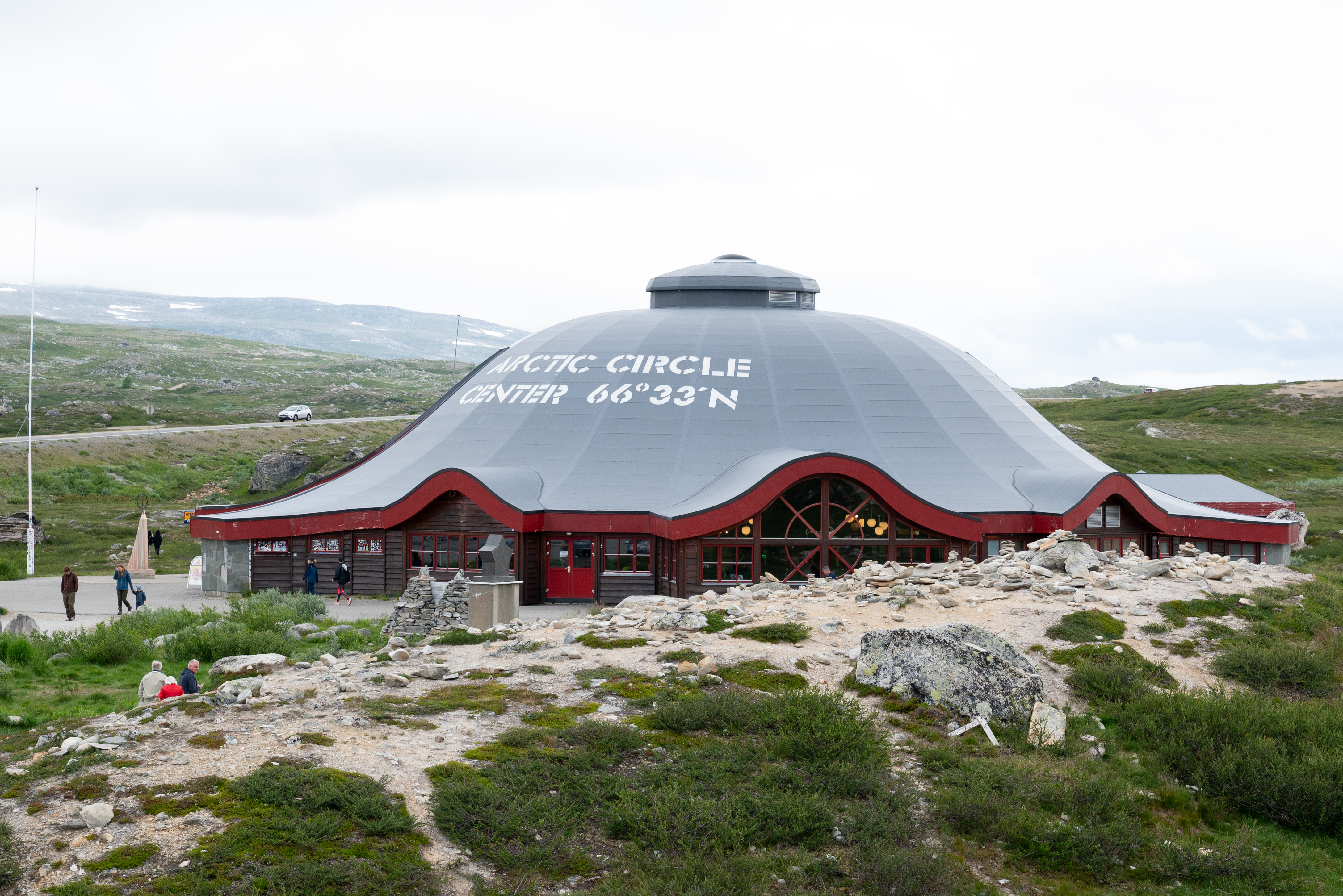
Another tourist hot spot this Center includes a gift shop, a cafe, and bathrooms. The parking lot is giant and there is actually an adjacent lot where it is permitted to camp overnight.
This location at 66° 33′ N marks the first point in the north where the sun does not set on the summer solstice and the sun does not rise on the winter solstice. As you go northward from this point, the number of days that the sun does not rise in the winter and does not set in the summer increases.
Like the highlands, this area was also a barren tundra with patches of snow and endless color. And it was cold! 37° F (3° C) and windy on July 5th. I wandered off away from the crowd and quickly felt like I was in the middle of nowhere, just wandering on the Arctic Circle demarcation line. I will admit that I felt a bit of primal fear creep in, alone in this foreign Arctic land.
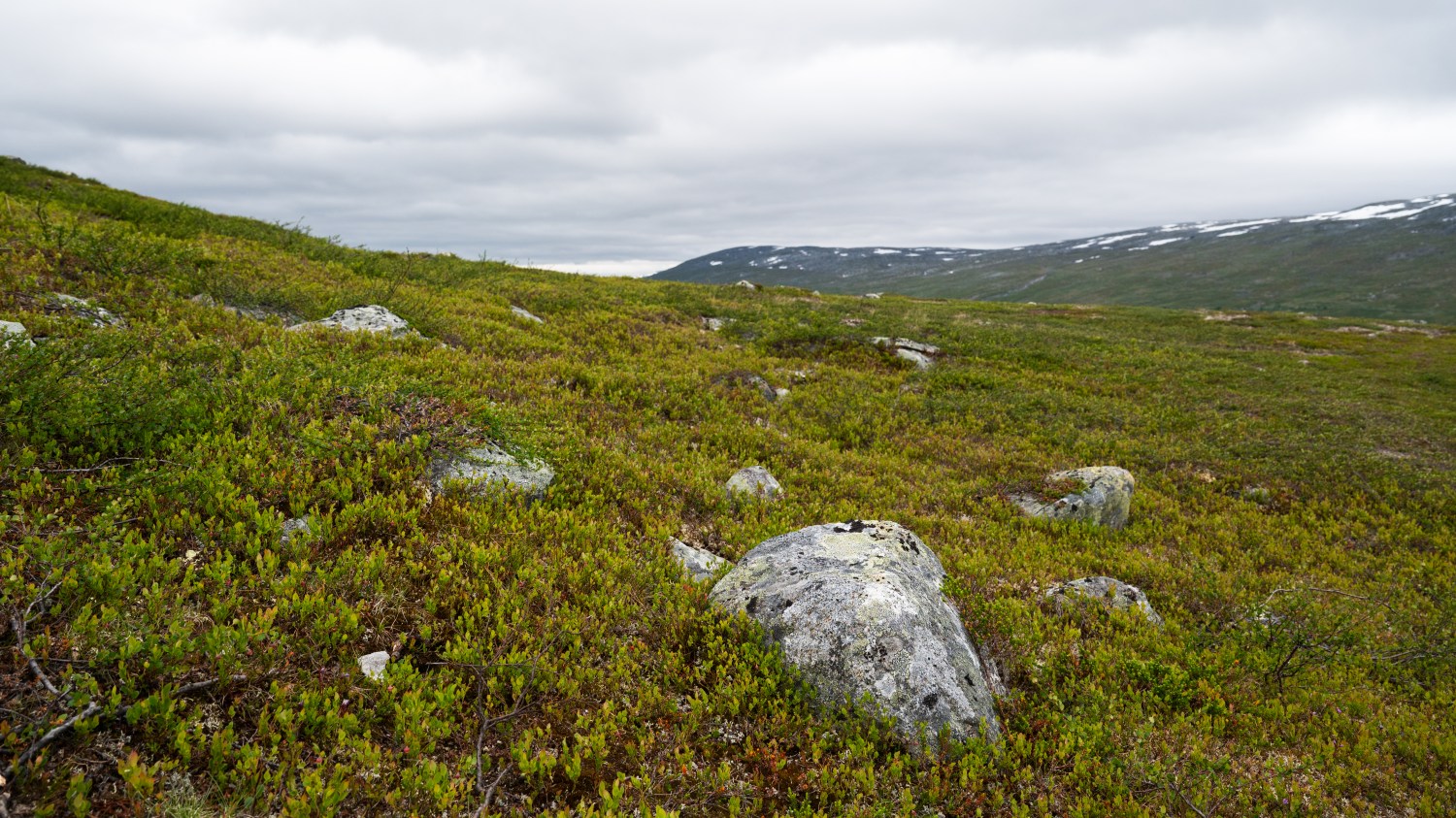
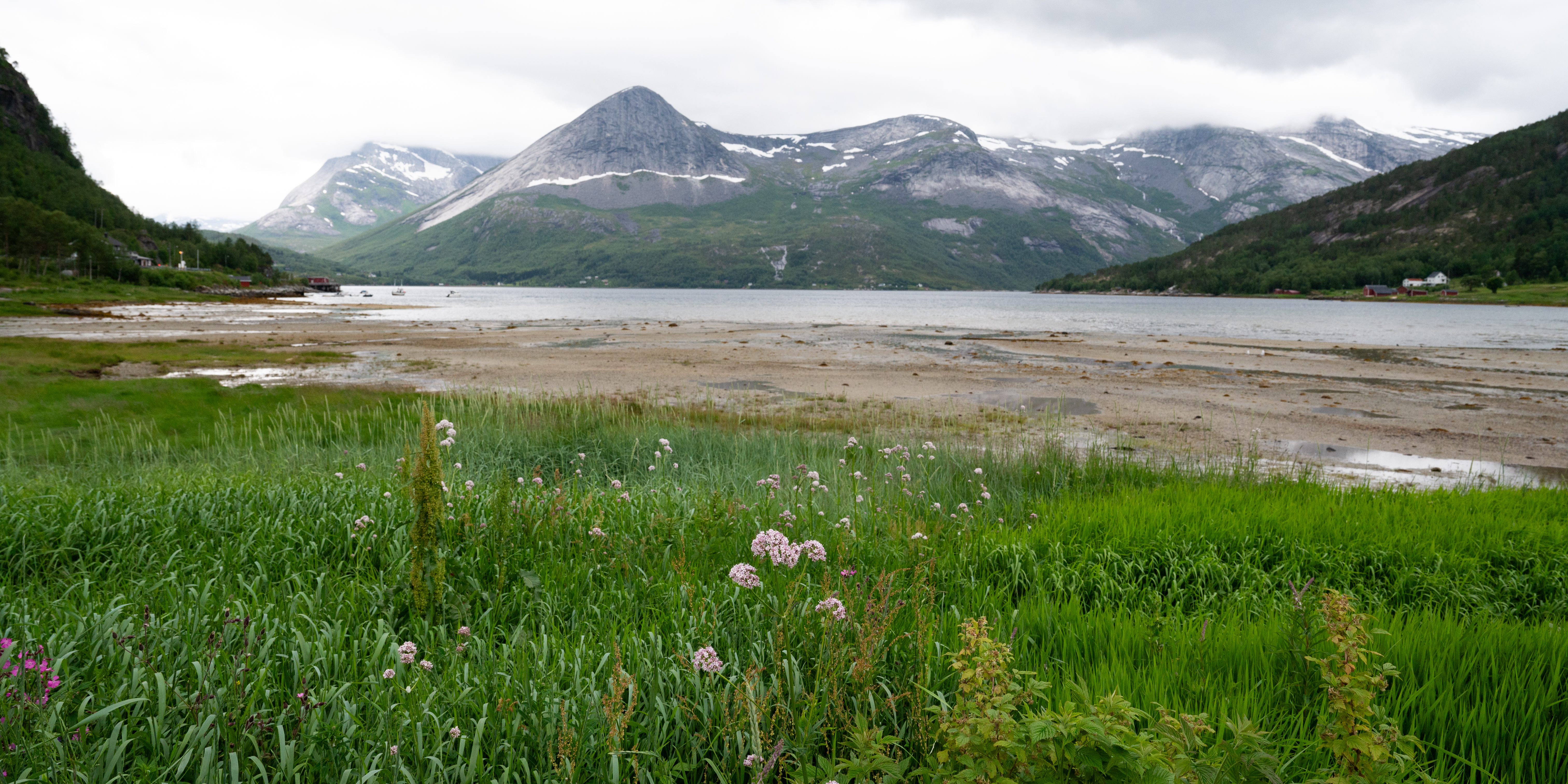
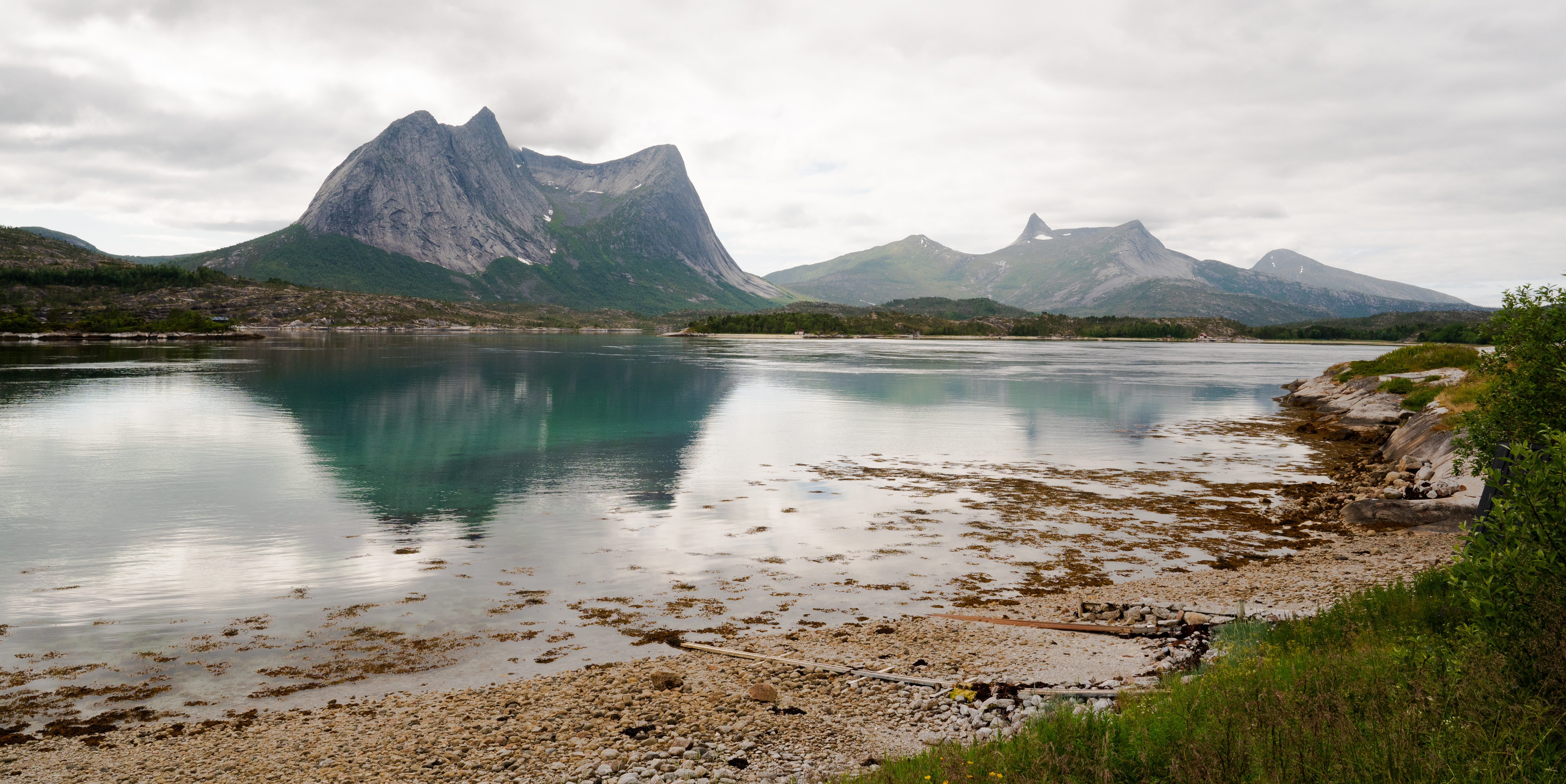
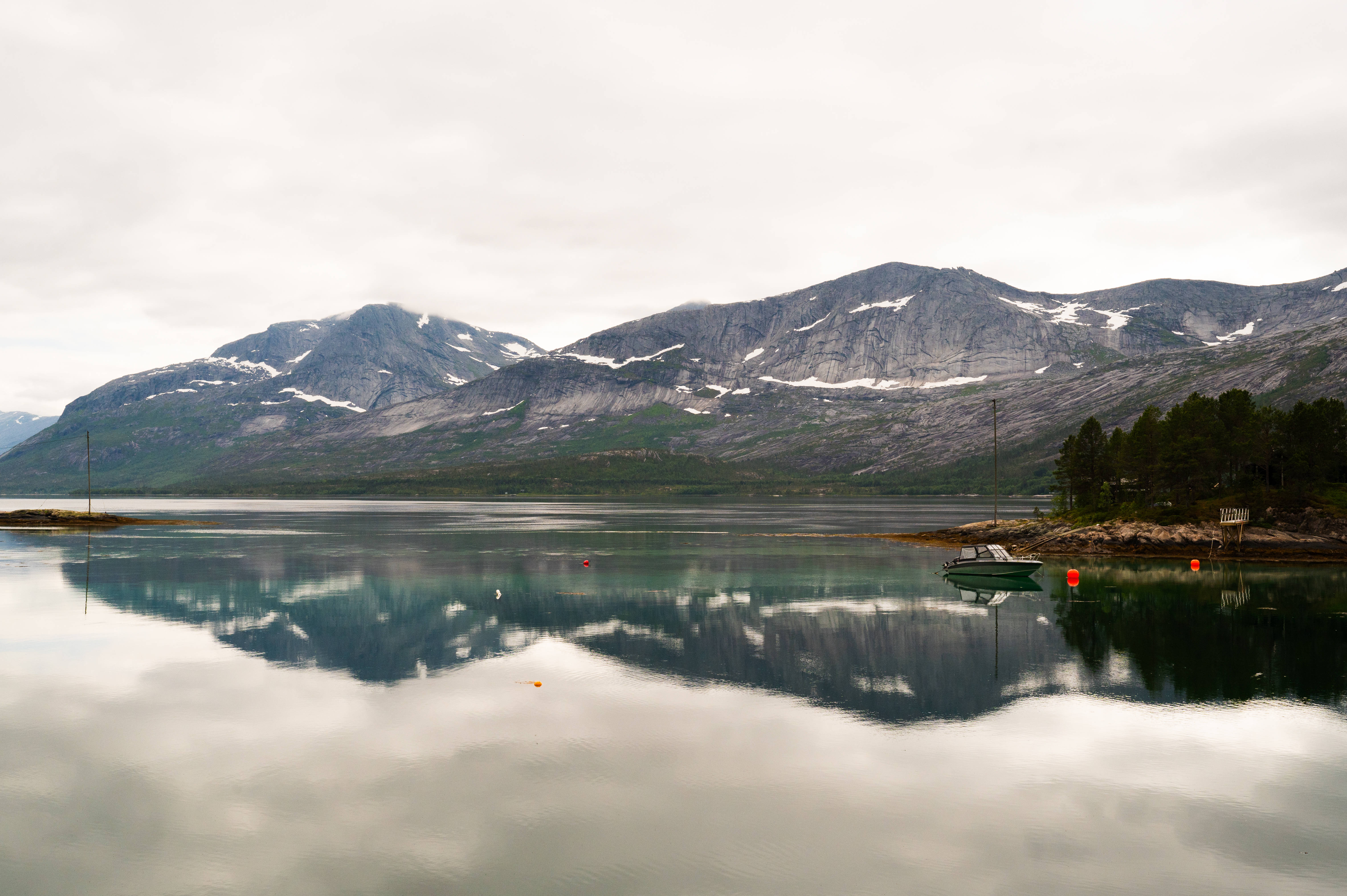
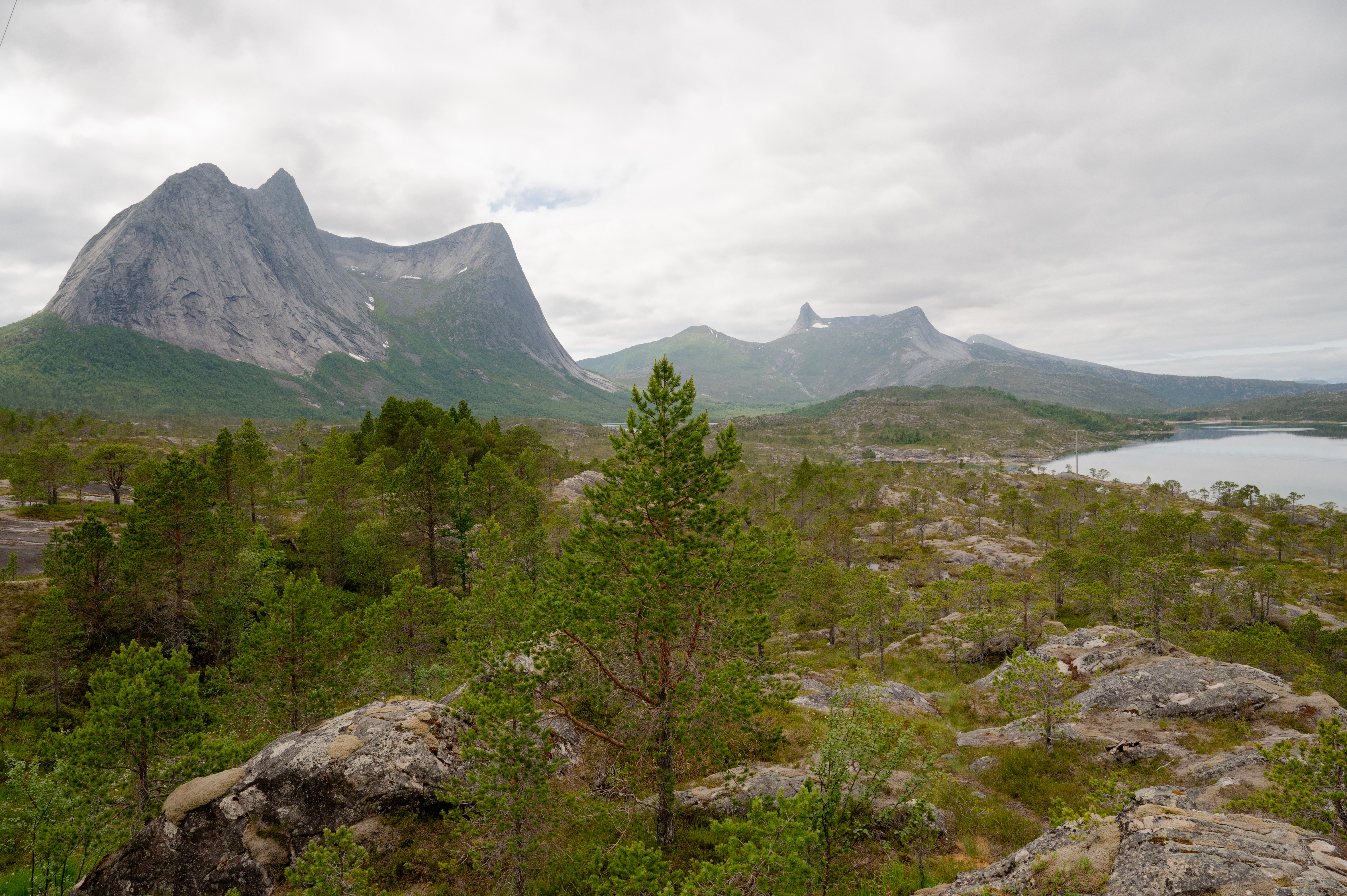
I was well aware as I drove north from this point that 24 hours of daylight was quite literally on the horizon, what I did not realize was that the area of Norway within the Arctic Circle was going to be the most astounding yet. The fjord walls are rockier and steeper, riddled with higher concentrations of grey granite, the waterfalls more abundant, the wildlife much more plentiful and the number of people far fewer, with the exception of the Lofoten Islands. The weather had also turned noticeably colder and the skies more grey.
I made my way to a campground with an exceptional view, logged onto the wifi, and practiced YouTube yoga inside a community warming hut, one of many inventive places I would practice yoga over the next several weeks. I then tucked under a blanket, trying to stay warm with my thoughts on my Oregon friends back home who were enduring a 100° F+ (38°C) heat wave. The dichotomy was striking.
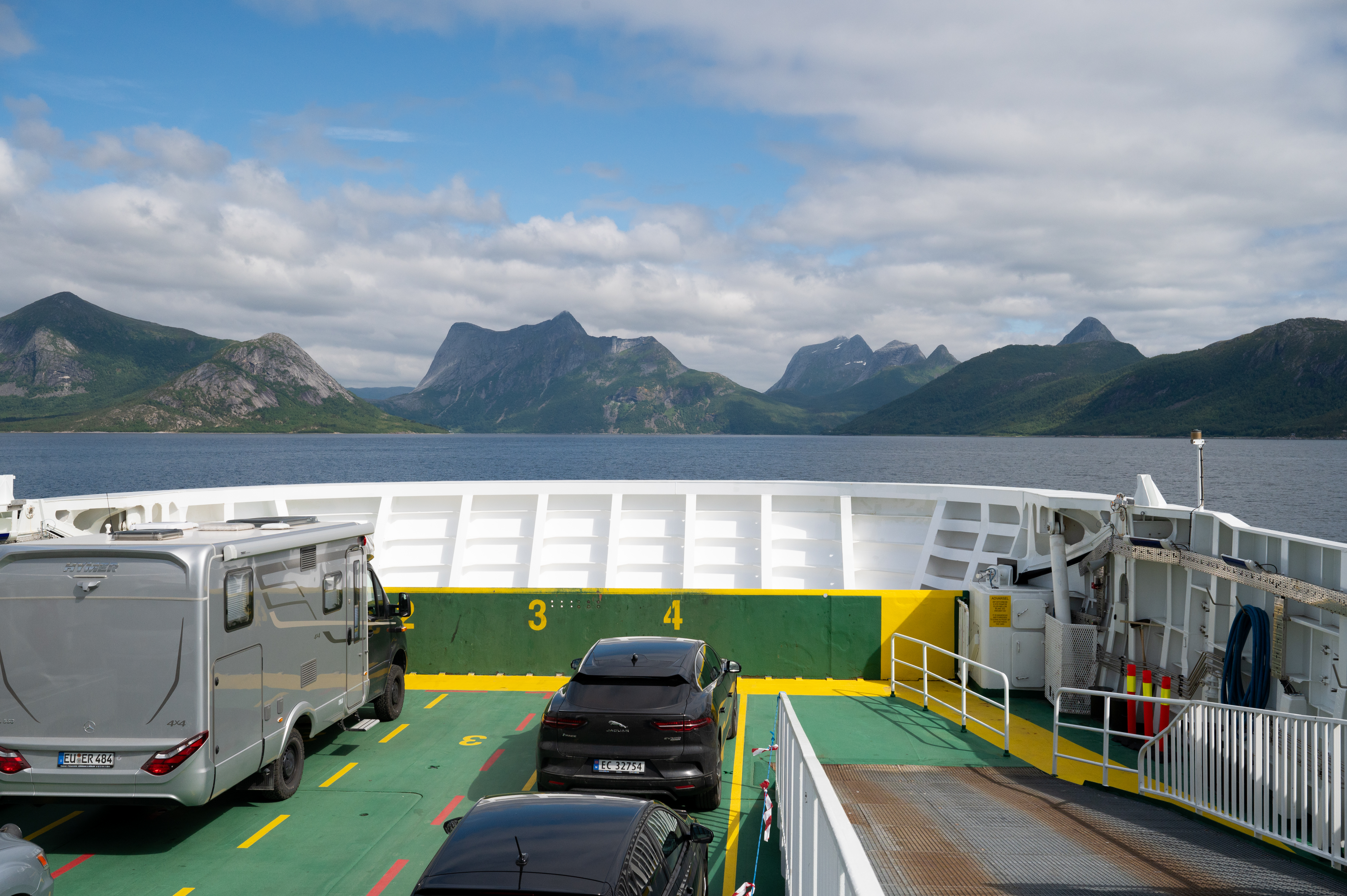
The next morning I continued north and made my way onto the most jaw-dropping ferry ride yet between Bognes and Skarberget and into a whole new land of vast beauty.
I would be spending the next 3 weeks playing above the Arctic Circle. It would turn out to be incredibly hard to leave it behind.
Lessons from: The Arctic Circle
- If you would like to enjoy fewer people, more wildlife, and more dramatic mountains, make your way to Northern Norway, and don’t forget a warmer selection of clothing!
- The Arctic Circle Center is a tourist hot spot, no doubt. There were several tour buses and dozens of campers. However, a short walk east or west (on the well-traveled trails) and you will enjoy the rugged and pristine environment completely solo.
- The wifi at literally every campground is a great way to keep up with personal exercise routines while traveling in Norway.
Something interesting: Why does the Arctic Circle not look like the Arctic?
Seeing the images above you may be thinking, that does not look like the Arctic! Compared to similar latitudes in places like Alaska, Canada, and Russia, Norway does draw a stark comparison. We can thank the Gulf Stream for this. The Gulf Stream is a warm (and swift) Atlantic Ocean current that originates in the Gulf of Mexico, and makes its way around Florida and up the eastern coast of the United States to South Carolina, where it veers east towards Northwestern Europe. At this point, it is no longer referred to as the Gulf Stream but the North Atlantic Current. This phenomenon keeps Northwestern Europe warmer than its counterparts at the same latitudes.
There will come a point on my journey northward when I do discover a more familiar Arctic landscape.
One other interesting note about the Arctic Circle: It is actually moving Northward! Tidal forces created by the orbit of the moon cause a fluctuation in the axial tilt of the earth. This “wobble” is known as the Axial precession. Due to this, the Earth’s axial tilt fluctuates within 2° over 40,000 years. As a result, the Arctic Circle is currently drifting northward at a speed of 14.5 m or 48 feet per year.
A look behind the curtain.
Having begun this week’s post with an important lesson I learned- pass by that which you do not love- let me take the time to explain where that idea even came from! Before I left Oregon, a friend with extensive (solo) travel experience gifted me a book that had been an important companion to his travel- The Art of Pilgrimage by Phil Cousineau. You may have noticed that the main quote on my site’s home page came from this book. In fact, the quote at the bottom of the same page also came from this book. As did the concept of learning when to stop and when to keep moving.
What I loved about this book and why I would recommend it to anyone traveling to a new place, especially if traveling solo, is that it managed to capture my experiences as they were unfolding and articulate them in a way that I had not yet been able to generate on my own. To put it simply, it made sense of things.
With this clarity, I was able to play with the concepts from the book in real-time and let them manifest in a way that resonated with me. The truth is that becoming comfortable with stopping only at places that required no hesitation took several weeks to take hold. It is upon reflection that I can see this process had begun in earnest when I had reached the Arctic Circle. This was when everywhere I looked screamed for my attention, and I found myself nearly strung out in opportunity. It was the coupling of this travel experience, in real-time, with the companion book, The Art of Pilgrimage, that allowed me to truly appreciate and live the concept of ‘pass by that which you did not love.’



 She Simply Wanders
Leave a comment