By now you may be wondering how my initial plan had changed after the first week. I had, by this point, decided that instead of slowly driving up the coast to Nordkapp and then making a B-line back to Oslo via Sweden, instead, I would head directly to Nordkapp via a more inland route and then turn around and slowly make my way down the coast. This would not only grant me more of Norway, but it would also allow me to spend my final days where I had begun, in the Highlands. This felt like an exceptional trade-off.
I decided on one side trip as I made my way to Nordkapp, a hike up Segla Mountain. I had discovered this hike on YouTube and had wanted to make a point of trying to fit it into the puzzle of time I had. My new plan meant a considerable amount of driving in the coming days, so this felt like the perfect opportunity to break it up with some fresh air and exercise.
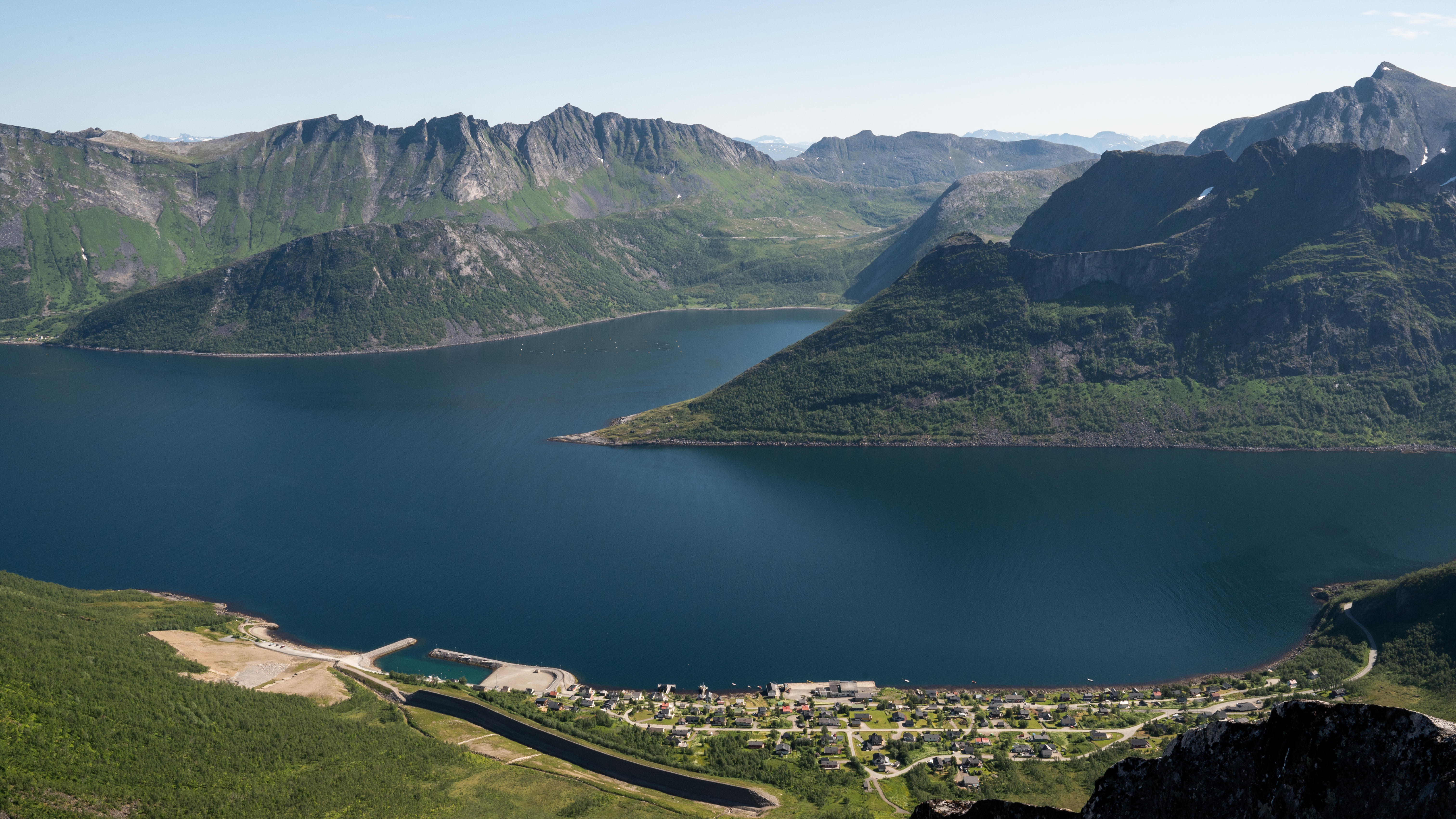
I arrived at the trailhead by 8:00 p.m. with plans to camp there for the night after a frustrating journey in which my low DEF fluid indicator had come on in the middle of nowhere. Fortunately, I had prepared by buying extra fluid but quickly discovered that was only half the equation as I had failed to also purchase a funnel. I pathetically tried to makeshift a funnel with a small ferry schedule and as it dribbled out the side onto the ground I admitted defeat. After driving several kilometers in the wrong direction I happened upon a gas station and mercifully was able to buy a funnel.
The parking at the trailhead of Segla Mountain is comprised of two sections- the parking at the actual trailhead which only allows for about 6-8 vehicles and a very large school parking lot that you actually come to first. Both areas require payment via your smartphone on the EasyPark app. The cell coverage in Norway is exceptional so I had no problem downloading the app once I had arrived. It costs 250.00 NOK + 37.50 NOK service fee (about $28 USD) to park until 3 p.m. the next day. The actual hike does not require any sort of day pass or fee. This would be the case for all hikes and areas I explored in Norway, including national parks.
As the evening progressed I couldn’t help but notice that cars were arriving late into the evening and not to camp, to hike! At 10pm, when I went to bed, there were still hikers setting off for the summit to take advantage of the midnight sun.
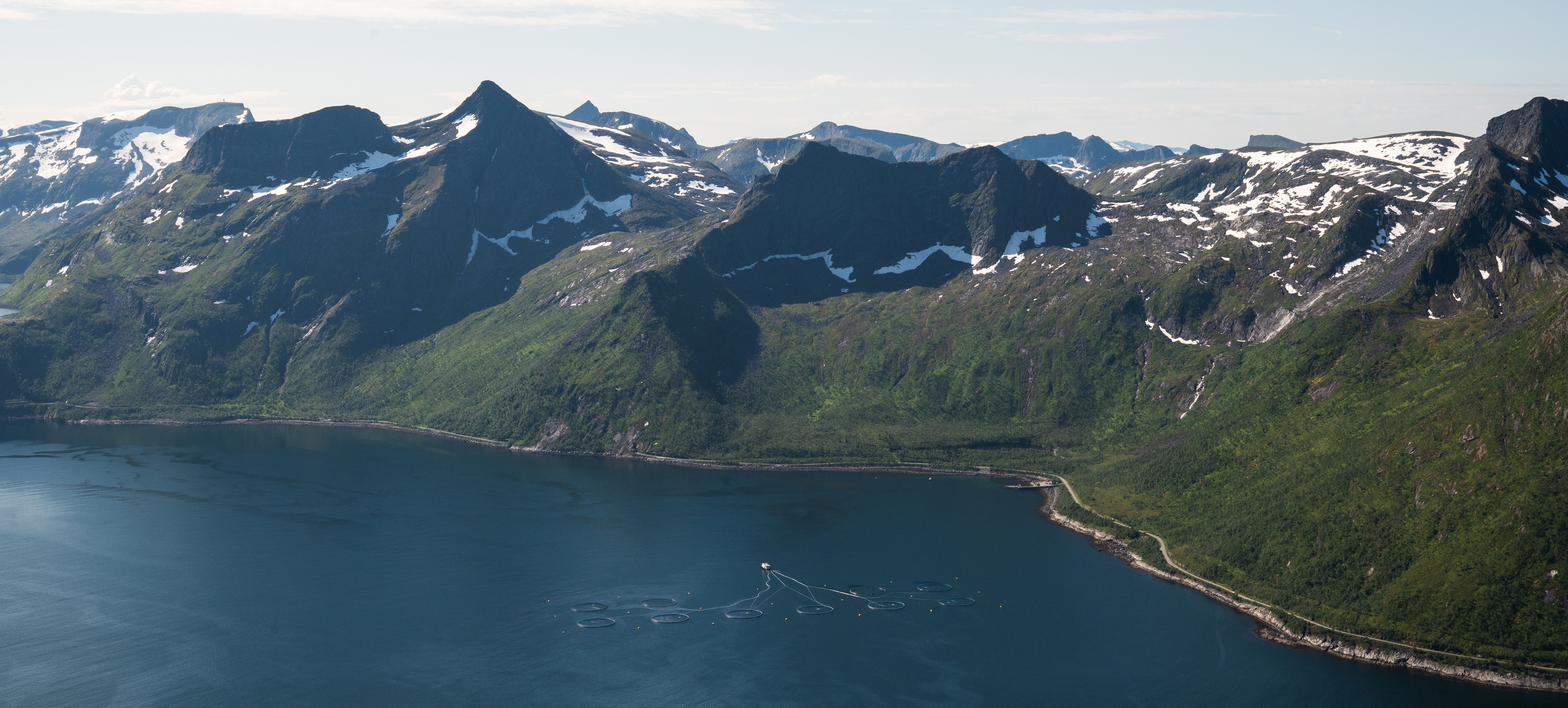
The next morning, waking up energized, I set out on the 5km hike up Segla Mountain. Though not a long hike, it is incredibly steep, gaining 610 meters (2,000 feet) of elevation in just 2.5 km (1.5 miles). It was on this day that I discovered with astonishment that Norwegians rarely fuss with switchbacks. All the hikes I would do in Norway would follow the most direct path straight up! At times, it was so absurdly steep, that I couldn’t help but laugh. Make no mistake, Scandinavians are tough folk!
Many of my fellow hikers found themselves defeated and stopped at the saddle about 1/3 of the way up. This is a fine destination in itself with incredible views.
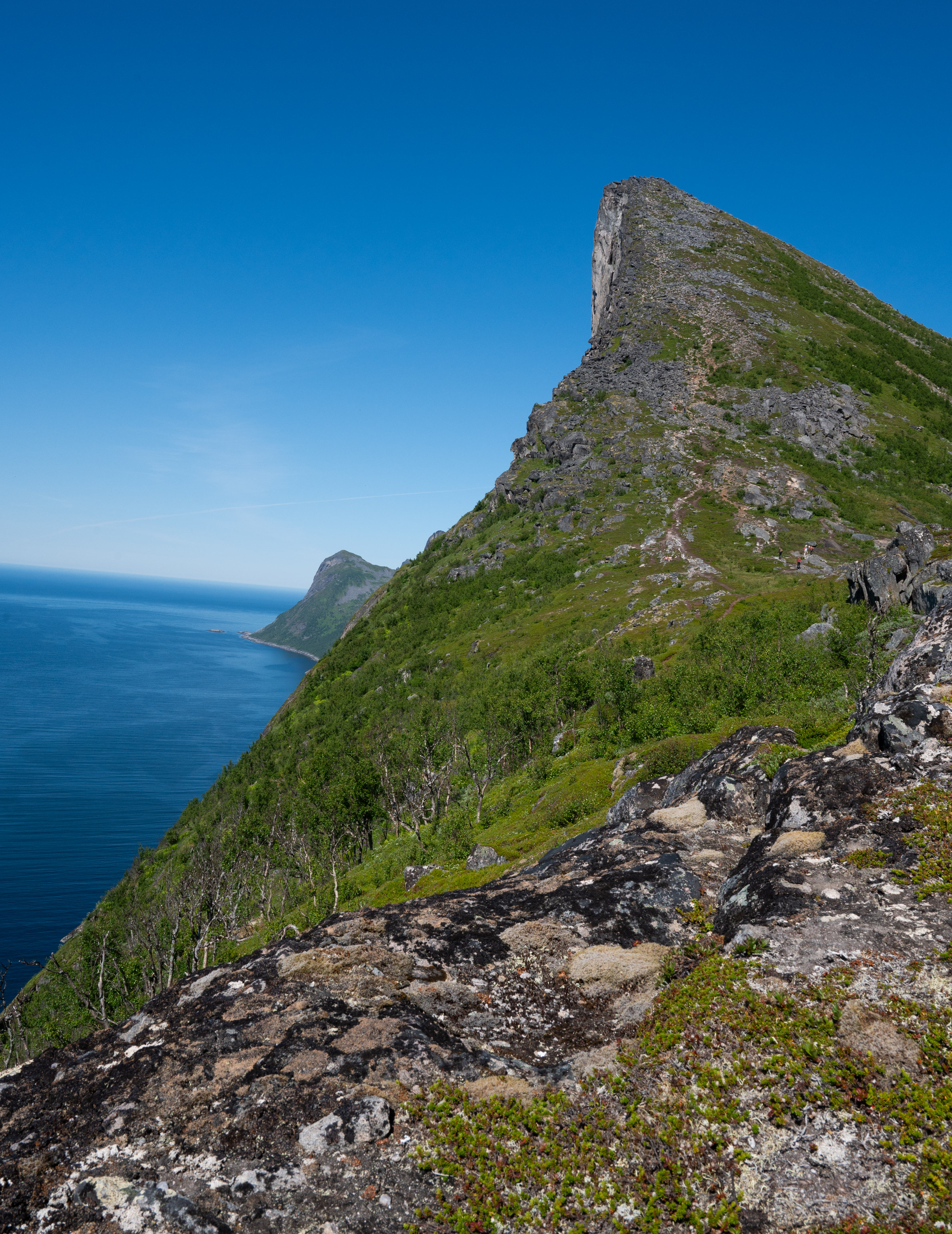
Being stubborn and a bit masochistic, I continued on to the summit and was very glad I did.
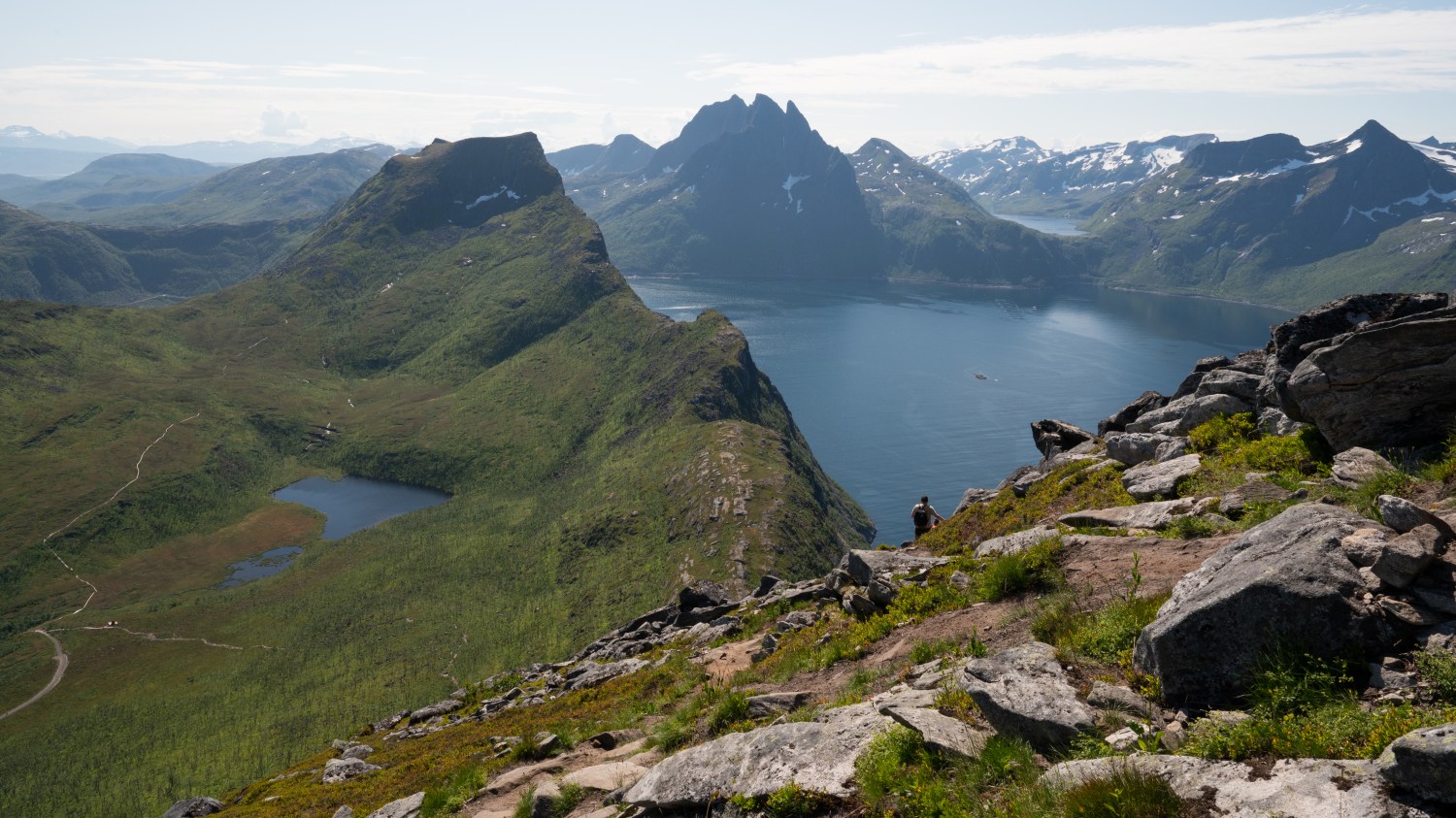
The hike took me about 3 hours which included a picnic lunch at the saddle on my way down. I arrived back at my vehicle and was aghast to see a parking ticket on my windshield. But I had paid! I checked the app and sure enough, all was in order. I headed to the market in the village of Fjordgård and asked where the parking enforcement office was. The lady at the counter was incredibly helpful and called the parking officer directly. He said he would meet me there in about 10 minutes. When he arrived we quickly realized the issue. My overly literal brain had seen “registration number” (aka license plate number) and literally just included the number, not the letters that preceded it. Embarrassing! He assured me that he would delete the ticket from the system and all would be fine.
But the day’s adventure was not over yet! As I headed out of town, I saw a very adorable couple standing on the side of the road with their thumbs in the air. I had never before picked up hitchhikers but immediately decided my time had come, perhaps inspired to give back after my recent encounter with the incredibly helpful locals.
I chatted with my Swiss passengers who were in need of a ride back to their vehicle after a hike, as I drove back through the one-lane (two-way!) tunnel I had navigated the night before. Just like the previous evening, I drove slowly, hoping another car did not come my way. What else can be done! And just like the previous evening cars did come my way and the dance began on who was going to back up (or speed up) to one of the built-in nooks that allowed for passing. Luckily for me, I was not in the tunnel when a tour bus came through because they used the same tunnel. Imagine!
Lessons from: Segla Mountain
- Many people pass by the island of Senja, where Segla Mountain is located, to focus on the nearby Lofoten Islands. It is well worth the time to explore Senja as well.
- The only way to get to Segla is to pass through a one-lane, two-way tunnel. If you are from a country where this is unheard of, it takes some bravery!
- Natural areas in Norway are free to visit, including national parks. Some require paid parking.
- Hitchhiking is not an uncommon way for hikers to return to their vehicles while in Norway.
- Don’t be a doofus like me and make sure to include the entire license plate number (and letters) when using the EasyPark app.
Something interesting: The mid-night sun
In locations experiencing 24 hours of daylight, the midnight sun is the term used to identify when the sun reaches its lowest point in the sky before ascending again. Although 24 hours of daylight may mean actual daylight farther north, the darkest of the night in Northern Norway created more of a golden hour feel as the sun hovered above the horizon.
As I type this now, I have some regret that I never did stay up to experience the midnight sun. Instead, I tried to be very disciplined about sleep, knowing how sensitive I am to the lack of it, and wanting to equip myself each day with the clearest brain to enjoy Norway. Though this made sense at the time, it feels unbearably lame now!
A look behind the curtain.
Sometime last spring I listened to a podcast that inspired a new approach in my life. It was a simple concept really. That is to challenge yourself every day by doing at least one thing that makes you uncomfortable.
It may seem like traveling alone internationally would automatically prompt many uncomfortable situations every day! And it does, or it can. Certainly, it is much easier to find oneself in these situations when out of the normal day-to-day routine of being home. But even immersed alone in a foreign country I found that many times I could easily have chosen the path of least resistance instead of willingly making myself uncomfortable. For example, I could have just not purchased the pepper in the store so I did not have to ask where it was located. Or skipped the restaurant that looked interesting because I was afraid no one would speak English. I had countless opportunities to choose the path of least resistance and often I did. But I also made a point of doing at least one thing every day that made me uncomfortable.
And what did I learn? That the fear before the encounter, the mental buildup, was always the worst part. That people are nice and helpful. That it is incredibly empowering to feel afraid but not let that dictate the outcome of a situation. That it gets easier the more it is practiced. Often I just had to force myself to put one foot in front of the other and keep breathing….


 She Simply Wanders
Leave a comment