Upon arriving in Bodø, after the four-hour ferry ride from Moskenes, I began my multiple-day journey down Kystriksveien (the Coastal Highway). Most of the days were plagued with bad weather and poor visibility. Yet, there were still many highlights from this scenic route.
My first stop was Saltstraumen, which is home to one of the strongest tidal currents in the world. 110 billion gallons of water is forced through this 490-foot wide (150 meters) straight every 6 hours. The result is powerful whirlpools. It resembled a hot tub with all the jets on!
The next day I explored incredible landscapes that were mostly obscured by low-laying clouds. It was torturous to be able to see the base of the masses but nothing more!
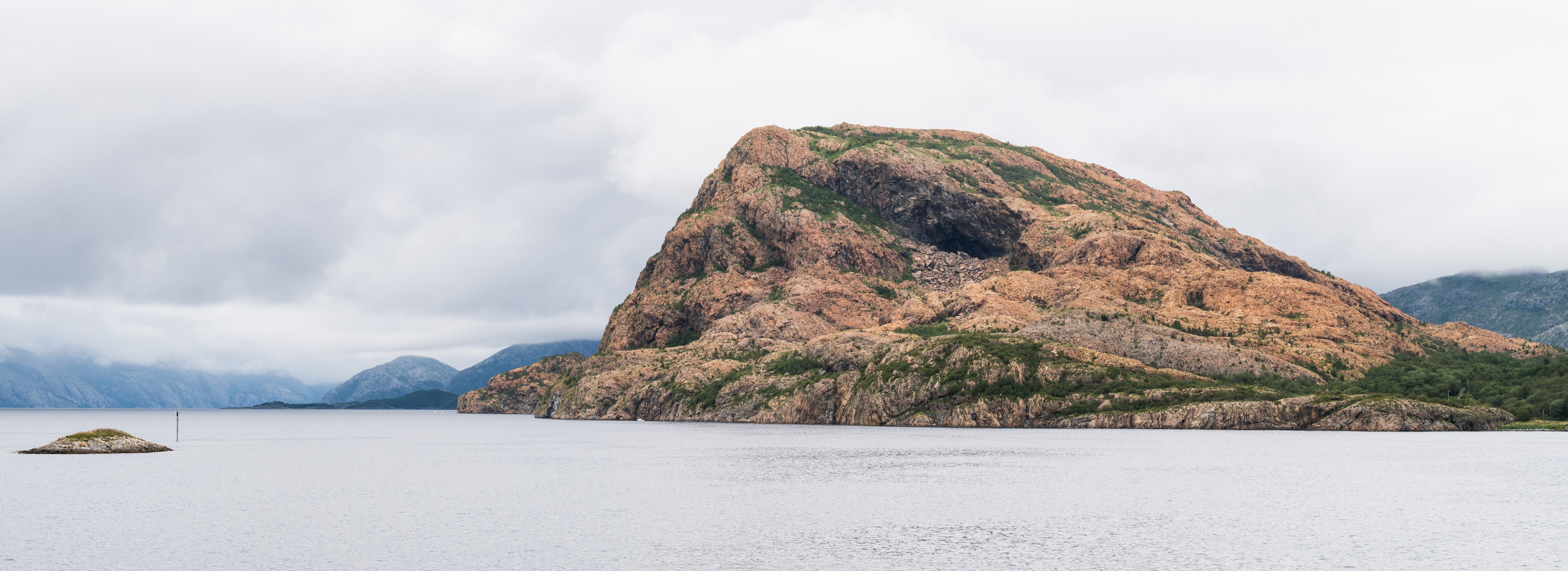
One of my favorite stops along Kystriksveien was the town of Forvik, which is only accessed by ferry. I had read about the Forvik coffee shop which occupies the site of a trading post dating back to 1792. I was eager to check it out but as I arrived later in the afternoon, I opted to camp at Steinmo Bobilparkering, a very affordable and scenic campground, perched right at the edge of the ocean, and visit the coffee shop the next morning.
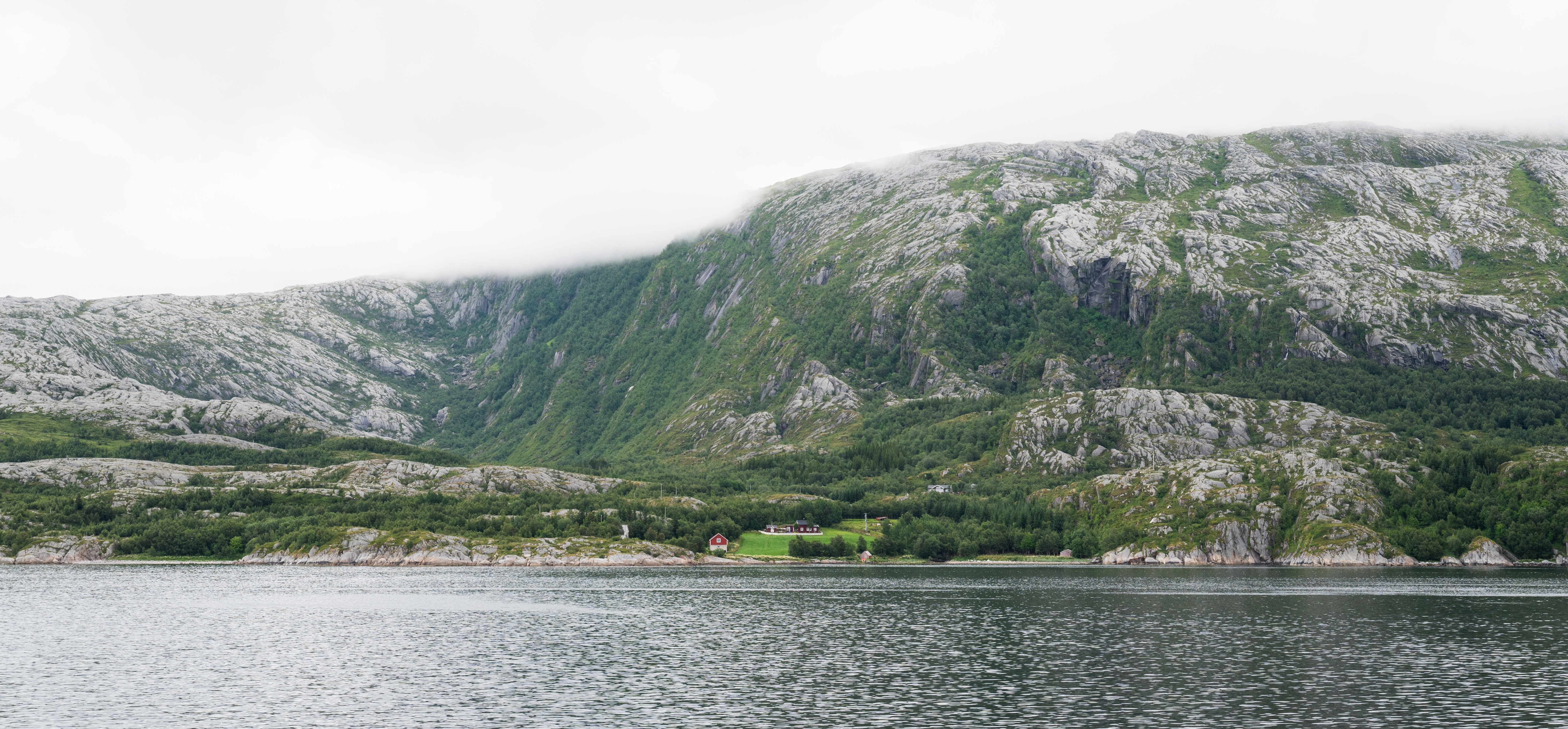
The next morning I made my way to the coffee shop where I settled in with a latte and book for several hours. Surprisingly the barista responded in astonishment when I told her where I was from, “I cannot believe you would come all the way here!”. I found that perplexing but also a testament to how few Americans explore this stretch of Norway.
Before I left I stocked up on gifts of coffee, soap, and candy from the store’s supply.

After walking around the small town I made my way to the next ferry crossing and continued on my way.
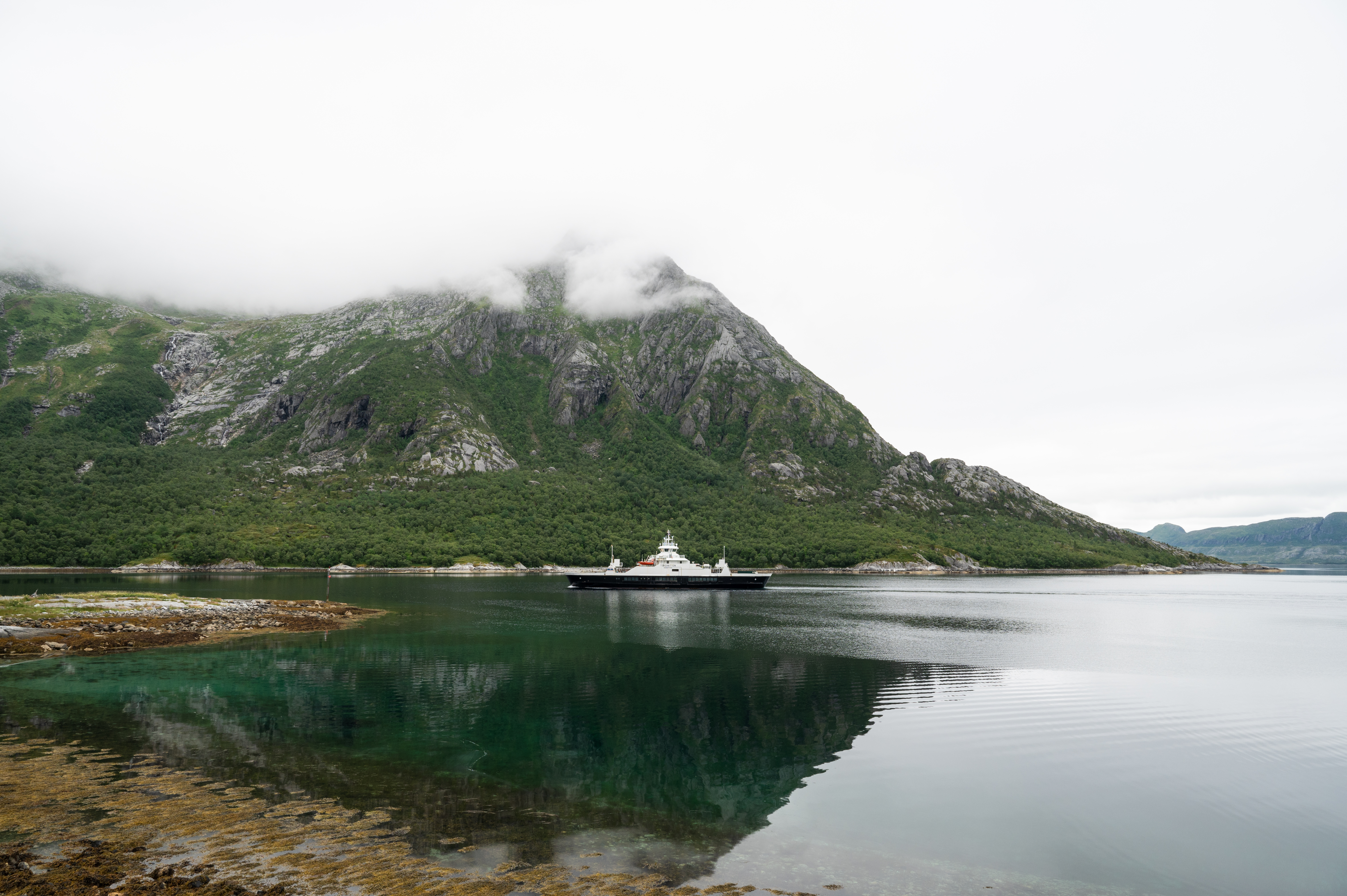
Due to poor weather and my time in Norway dwindling, I traveled through the remainder of Kystriksveien without many stops. I had determined that I wanted to allocate the remainder of my time to the highlands, one of my favorite areas early in the trip. But this time I would be exploring a whole different section and little did I know, I would get the opportunity to see a prehistoric beast with my own eyes.
Lessons from: Kystriksveien- Coastal Hwy
- Kystriksveien is a wonderfully scenic route that has many more tourist opportunities than the quicker and more inland E6 route. I traveled north up the E6 and south down Kystriksveien. If you have the time, I highly recommend exercising this option.
- The coffee shop in Forvik is a must-stop. It is located right next to the ferry, so you can easily stop in as you make your way through the area!
- Kystriksveien is not heavily trafficked by tourists, which makes it a wonderful way to experience some exceptional Norwegian landscape without all of the crowds.
Something interesting: Kystriksveien- the coastal highway
Kystriksveien sounds like a fancy term to those who don’t speak Norwegian. In Norwegian it simply means ‘The Coastal Highway’. This coastal highway is actually County Road 17. That name of course would do it no justice!
Kystriksveien is a 630-kilometer (390 miles) coastal north/south route that runs from the town of Bodø to the town of Steinkjer. There are six different ferry crossings. It is recommended to travel this route over five days, although it can be traveled in two. I spent four days traveling south and cannot imagine going any quicker.
There are countless hikes, scenic stops, a glacier, one of the largest tide pools in the world, cute, isolated towns, and other tourist activities along the way. If that is not enough inspiration, check out this website:
Visit Norway- Kystriksveien
A look behind the curtain.
To be honest, my time in Kystriksveien was complicated. I think it was a combination of coming off the Lofoten Islands’ high, the poor weather, which stole my ability to really experience the remarkable area, and just unbridled exhaustion. I was tired. It was hitting.
Yet, I still very much enjoyed each day for the small nuggets that appeared, sometimes out of nowhere. Two such occasions stand out, and they piggybacked off of each other.
While aboard the ferry from Jektvik to Kilboghavn, I found myself in a trance as I watched the Arctic Circle beacon pass by on the shoreline. I had crossed back south of the demarcation line. Without turning my head left or right, I took in the scenery instead of searching for anything. That approach, along with the cold, fresh air and the gentle sound of the ferry gliding through the water, put me in a meditative trance. I had a sense of complete peace.
Later that evening, I went for a walk at the campground before settling in for the night, enjoying the purple wildflowers and giant fjord walls all around me. Yet despite it all, I was feeling a bit funky and uninspired. As I continued walking, I spotted a young seagull crying out. I sat down and watched it, and before I knew it, tears were streaming down my face. What was happening? At that moment, I felt the fear that the poor juvenile bird was projecting. It was crying out to its mother, who was keeping quite a distance. Tough love, I was sure, but still it broke my heart. I ached for this poor, scared bird.
Suddenly, I was launched into another type of flow state. I looked at the unimaginable beauty surrounding me and at the young seagull, and I felt so connected to the earth and what actually matters in the world- beauty, love, life.
I have not experienced anything like these flow states since returning from Norway. I have come to believe that there is something about solo travel that inspires these raw moments. At its core, each day was just me interacting with nature, and I connected with it in a way I had never experienced before. I am so grateful for these moments. They reshaped a lot of me.



 She Simply Wanders
Leave a comment