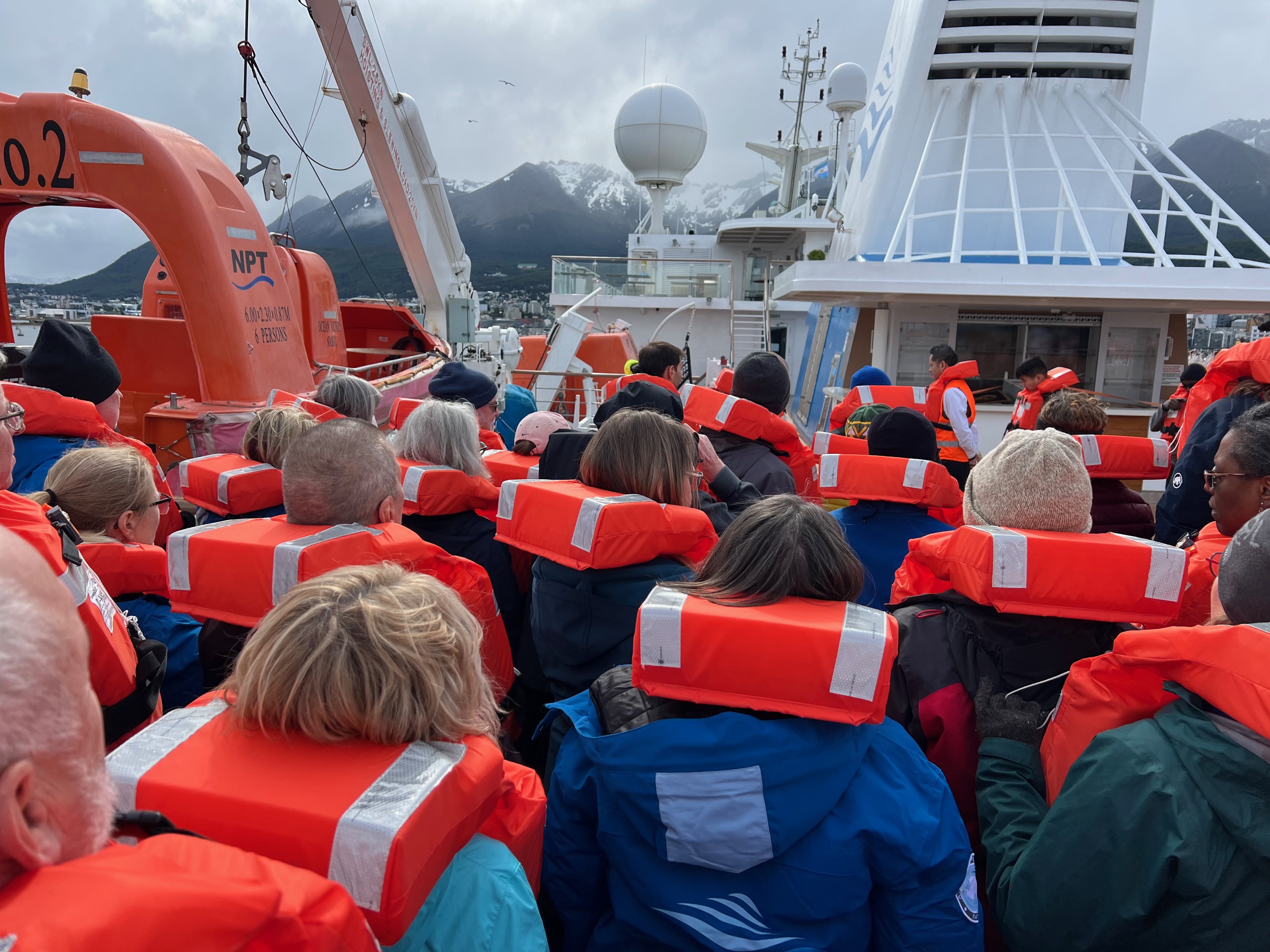
I was in the first group to board the Ocean Victory, the largest boat I had ever been on, yet considered small in its class with space for only about 180 guests. It looked to be the runt docked among the other vessels. It was the smallest boat at port by far. It was perfect!
After the mandatory safety briefings we were off, through the Beagle Channel, then across the Drake Passage to Antarctica! I was beyond excited.
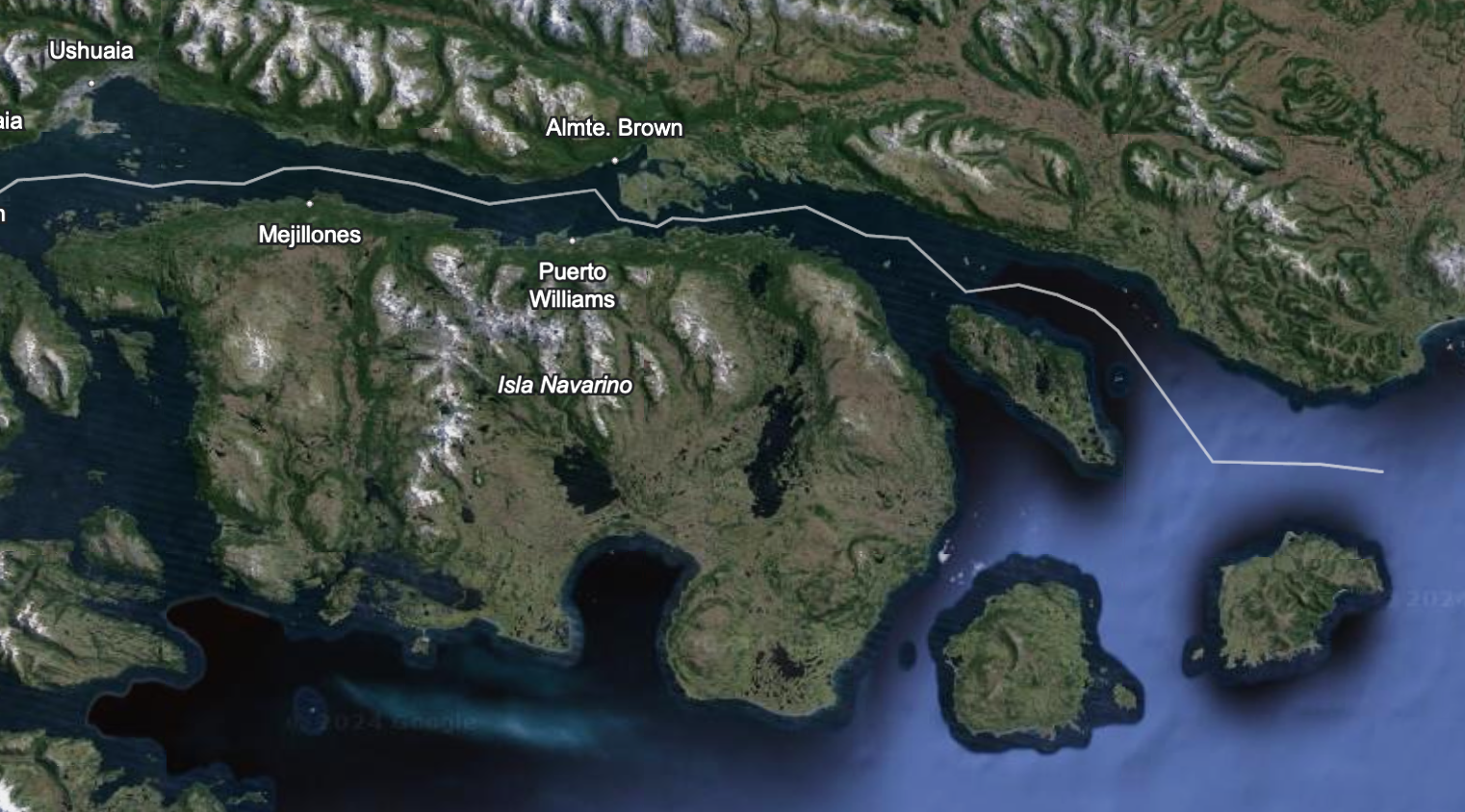
The Beagle Channel runs east/west with Chile to the south and Argentina to the north. The land border runs down the middle of the channel. The stretch from Ushuaia into the Drake Passage is 240 km or about 150 miles long. The waters are calm and the wildlife is plentiful with birds, dolphins, whales, some species of penguins, and seals a common sight.
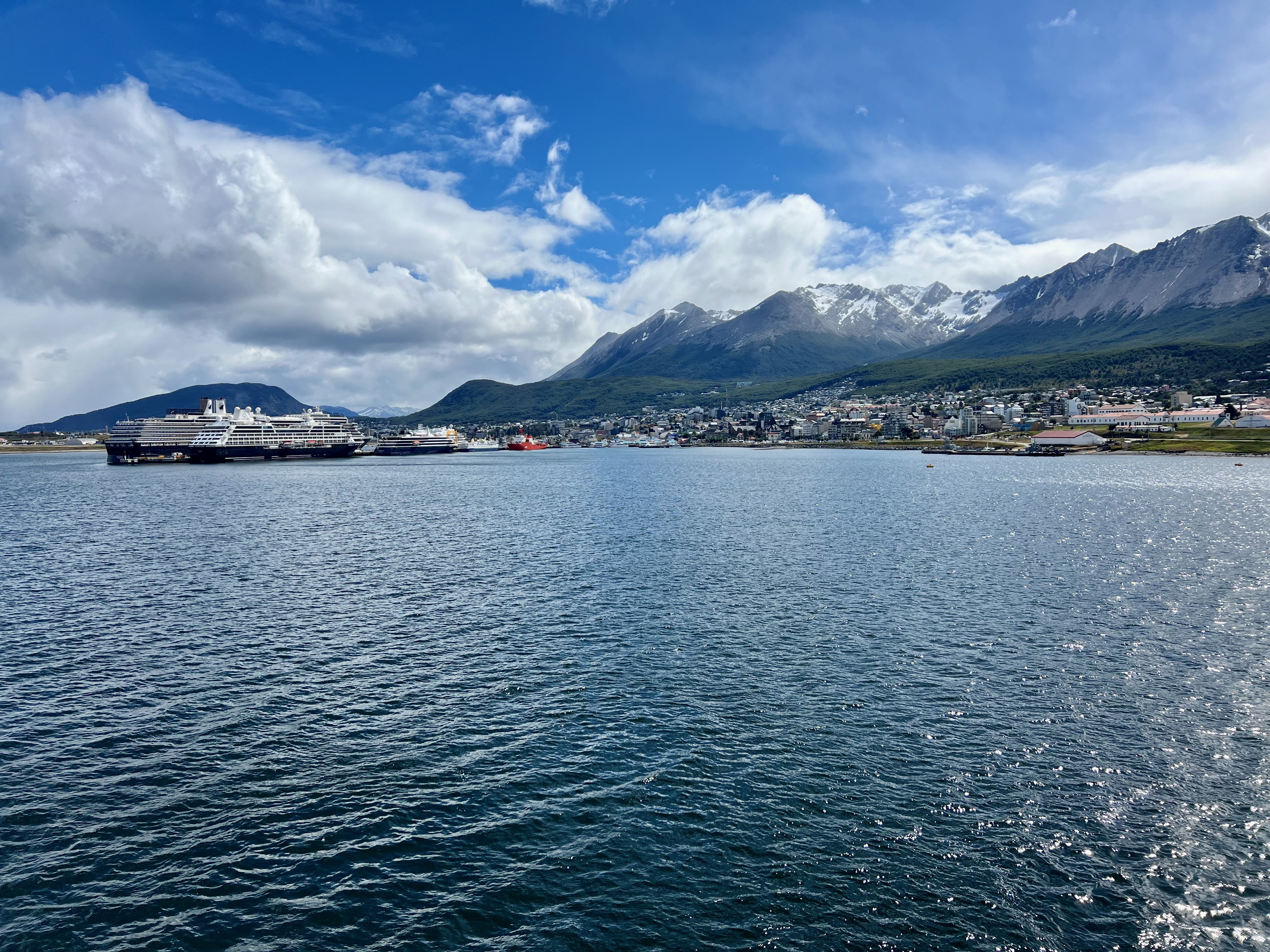
Soon after it was dinner time and I had the urge to pinch myself. I was cruising down the Beagle Channel in Argentina, eating a 5-star meal, with wonderful new friends, one of whom I had only met that morning. Despite that, we were laughing like we had known each other for ages while seabirds sailed right outside the window hoping to snag goods the boat had stirred up. That night we had dinner in Argentina and dessert in Chile.
Later on Ole and I went up to the front deck to take in the Beagle Channel as the sun was getting lower in the sky. It was very cold and we noticed a huge storm heading our way. We both held our ground as a wall of white snow inched its way closer and closer. Everyone else was quickly finding shelter, but not Ole and I. This would become a theme for us on the trip and little did we know, this was just the first of many wild weather events we would experience together on the front of the Ocean Victory.
The winds all of a sudden intensified and the snow hit with incredible force. It felt like small BBs smashing into my cheek. I had to turn my head to weather the blows from nature but I was on top of the world, full of adrenaline and ready for more.
Waking up in the heart of the infamous Drake Passage was exhilarating! I slept longer than expected and rushed to get ready and begin my day. A day that promised nothing more than an endless ocean in every direction. Yet, there was so much to see and enjoy.
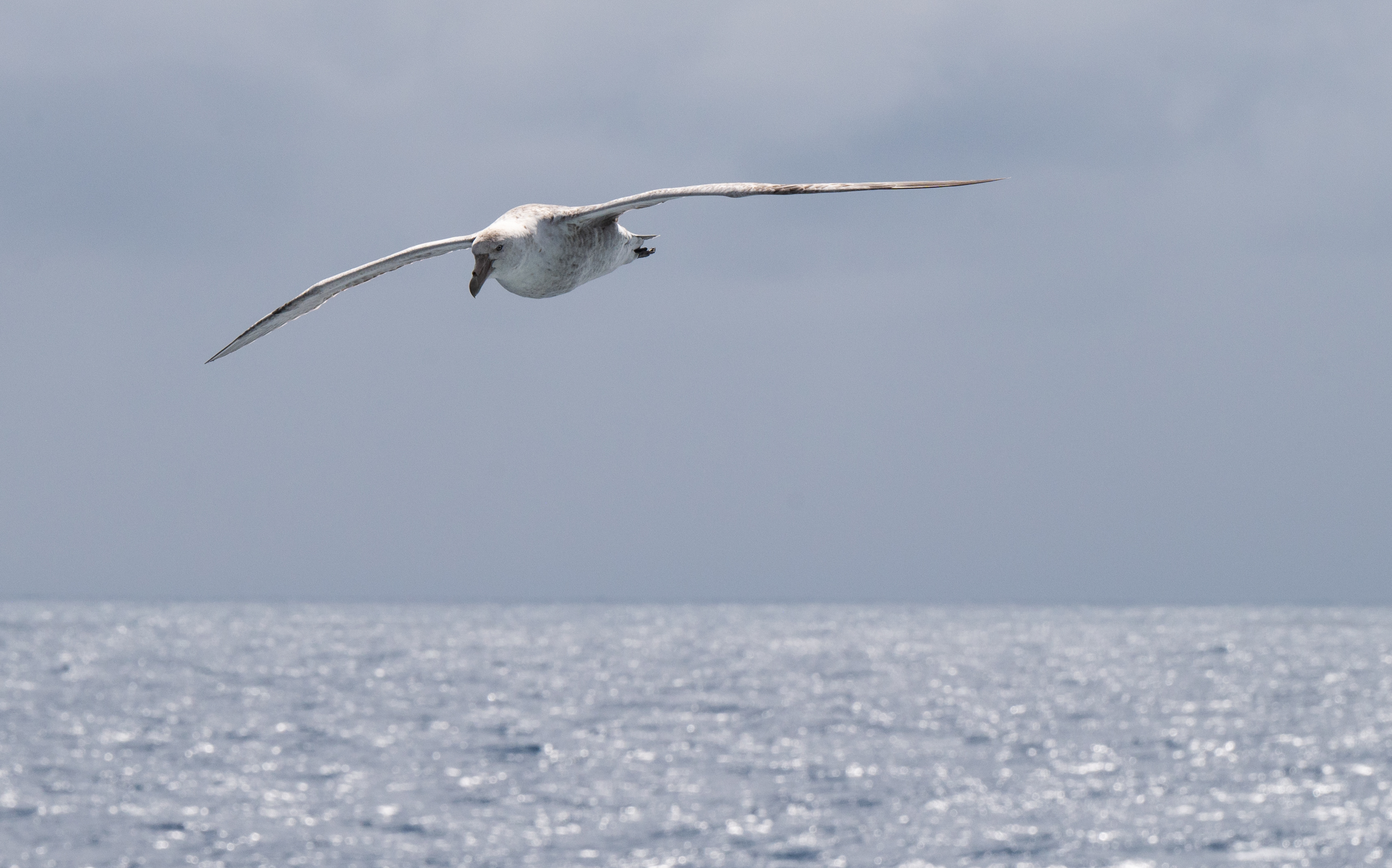
One thing that I will always remember about the Drake Passage was the seabirds. Their lifestyle, their grace, and their endurance were something to witness.
These are birds that can spend their first seven years, before reaching sexual maturity, never seeing land. Their habitat IS the open ocean, only utilizing land for reproduction. They feed on the ocean surface or by diving underwater. They are equipped with the ability to process salt water as hydration. They effortlessly ride the thermals, seemingly expending no energy as they keep a constant eye out for food. And they love to follow ships across the Drake Passage! They proved to be wonderful escorts.
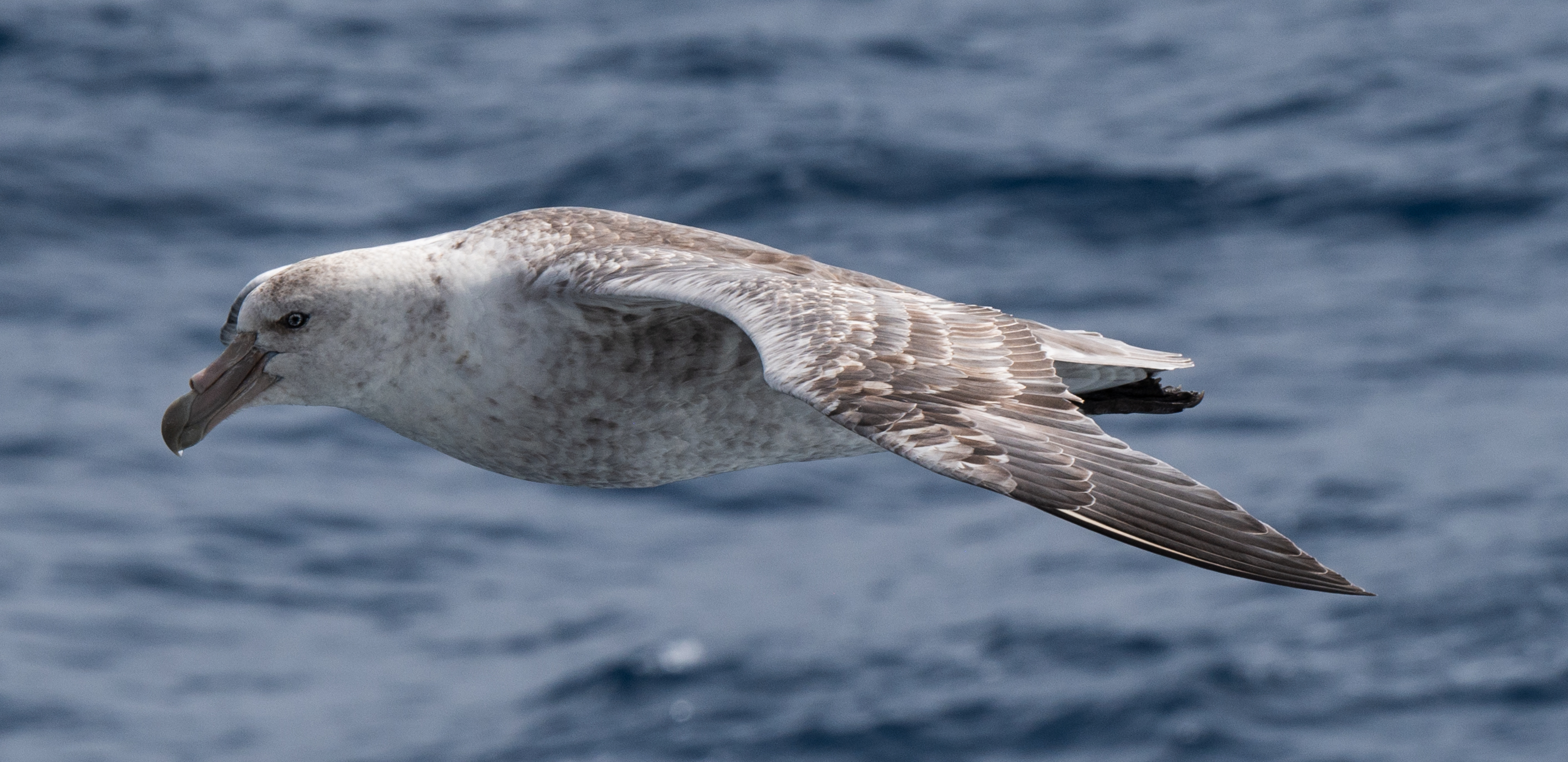
To be seemingly in the middle of nowhere, yet with wildlife circling the boat was an otherworldly experience.

The next morning we awoke to the report from Phil, our Expedition Leader, that we were going to reach the South Shetland Islands in a few hours and make our first landing!
After breakfast, many of us gathered on the front deck to watch as the Islands came into focus. This was a foreign land that looked like nothing any of us had ever seen. We congratulated each other as if we had personally powered our own boats and accomplished something more than being a passenger on a very cushy expedition. It felt like we were the explorers and had finally arrived to enjoy this frozen land before us.
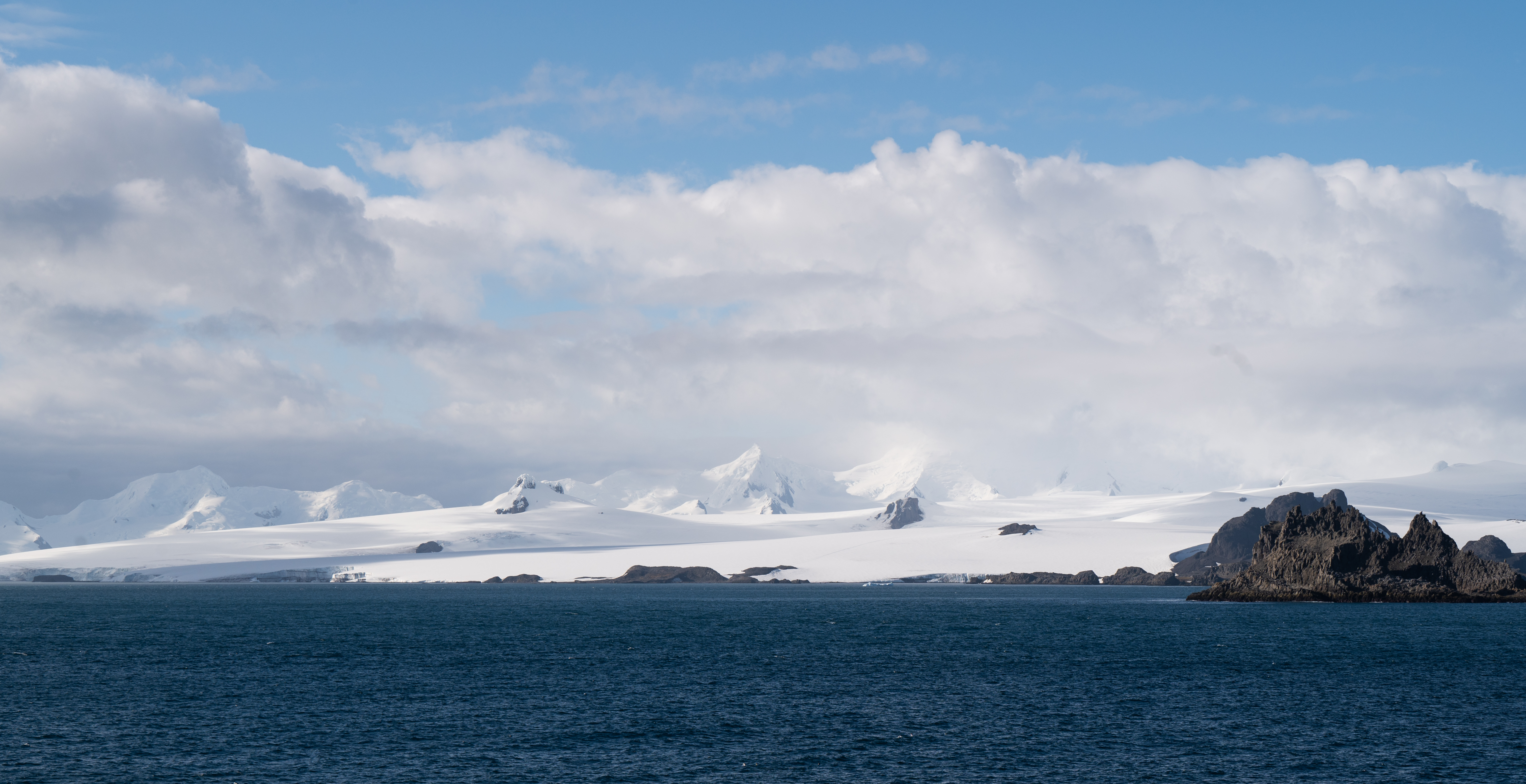
I found that my brain was having a hard time registering this wild beauty.
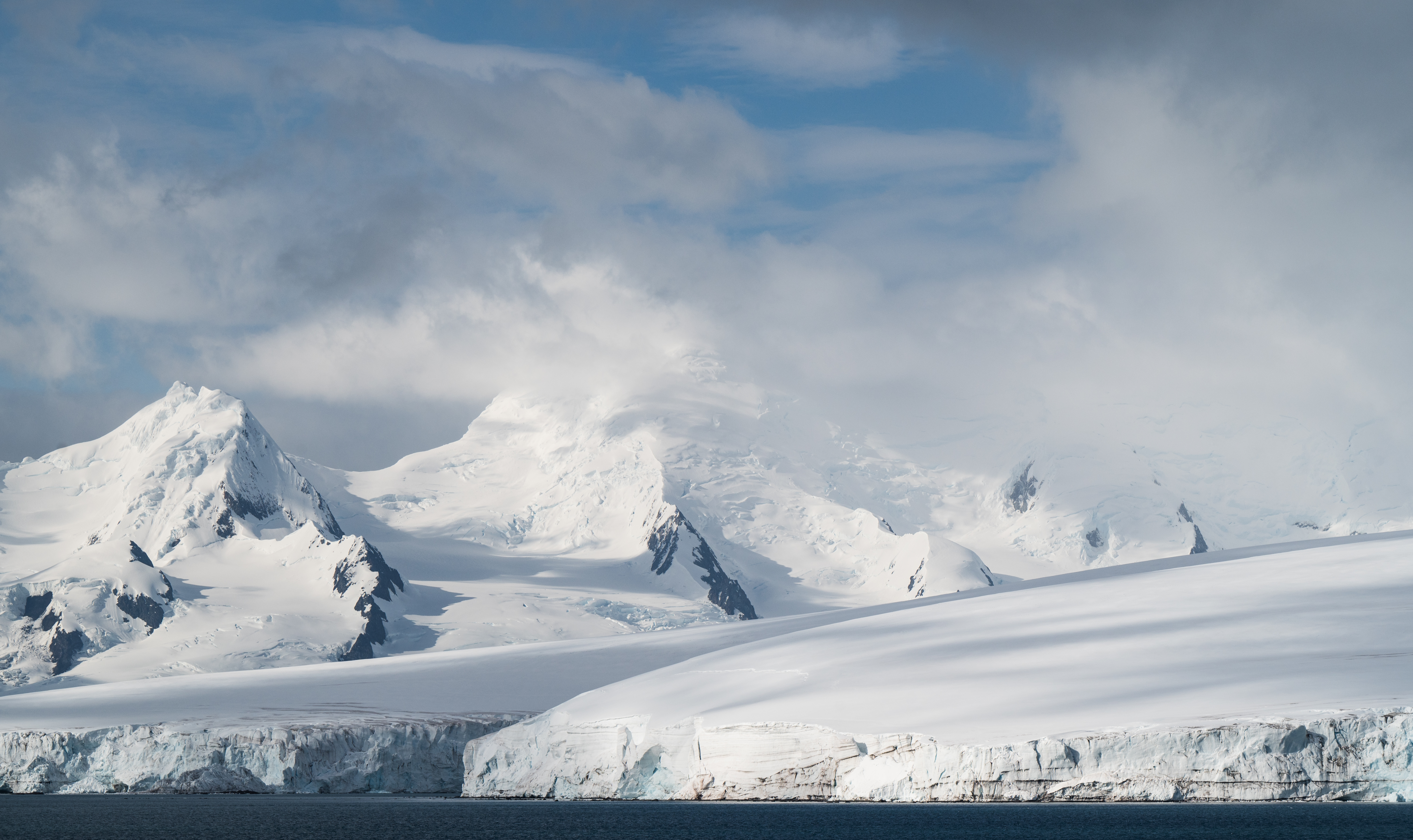
Yet there was so much more to come. We made our way to Half Moon Island, loaded into the zodiacs, and set out to experience the wildlife of the Southern Pole for the first time.
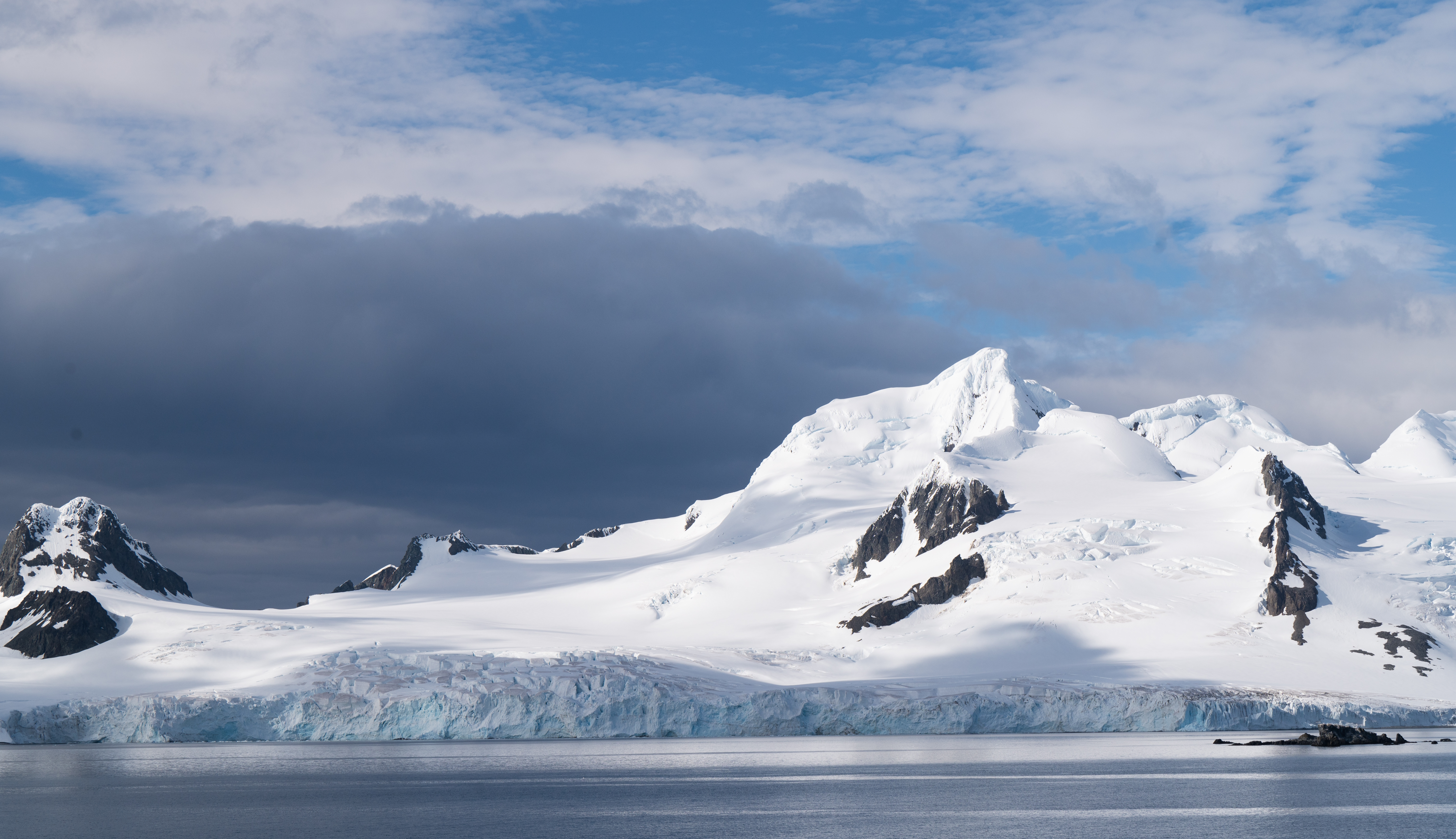
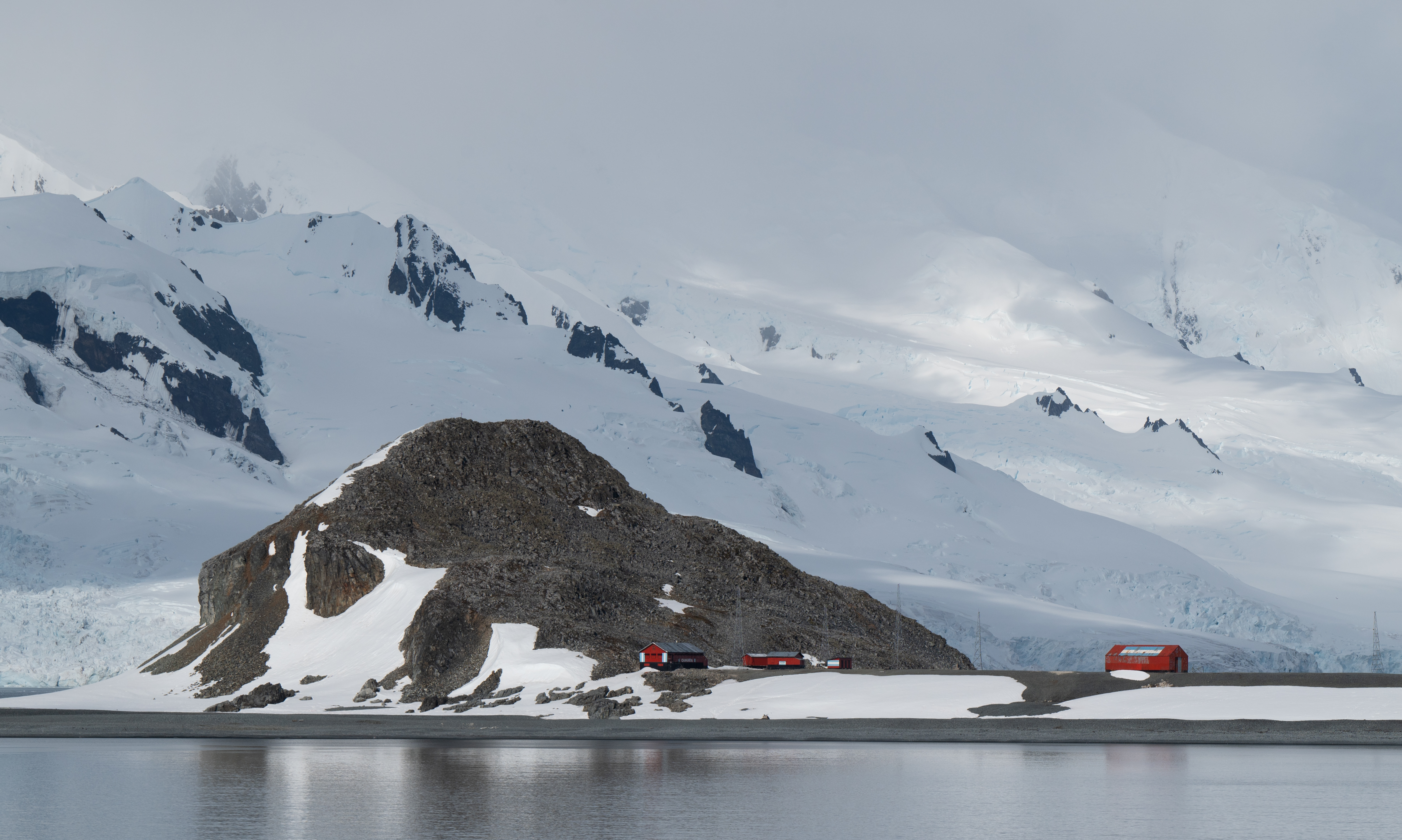
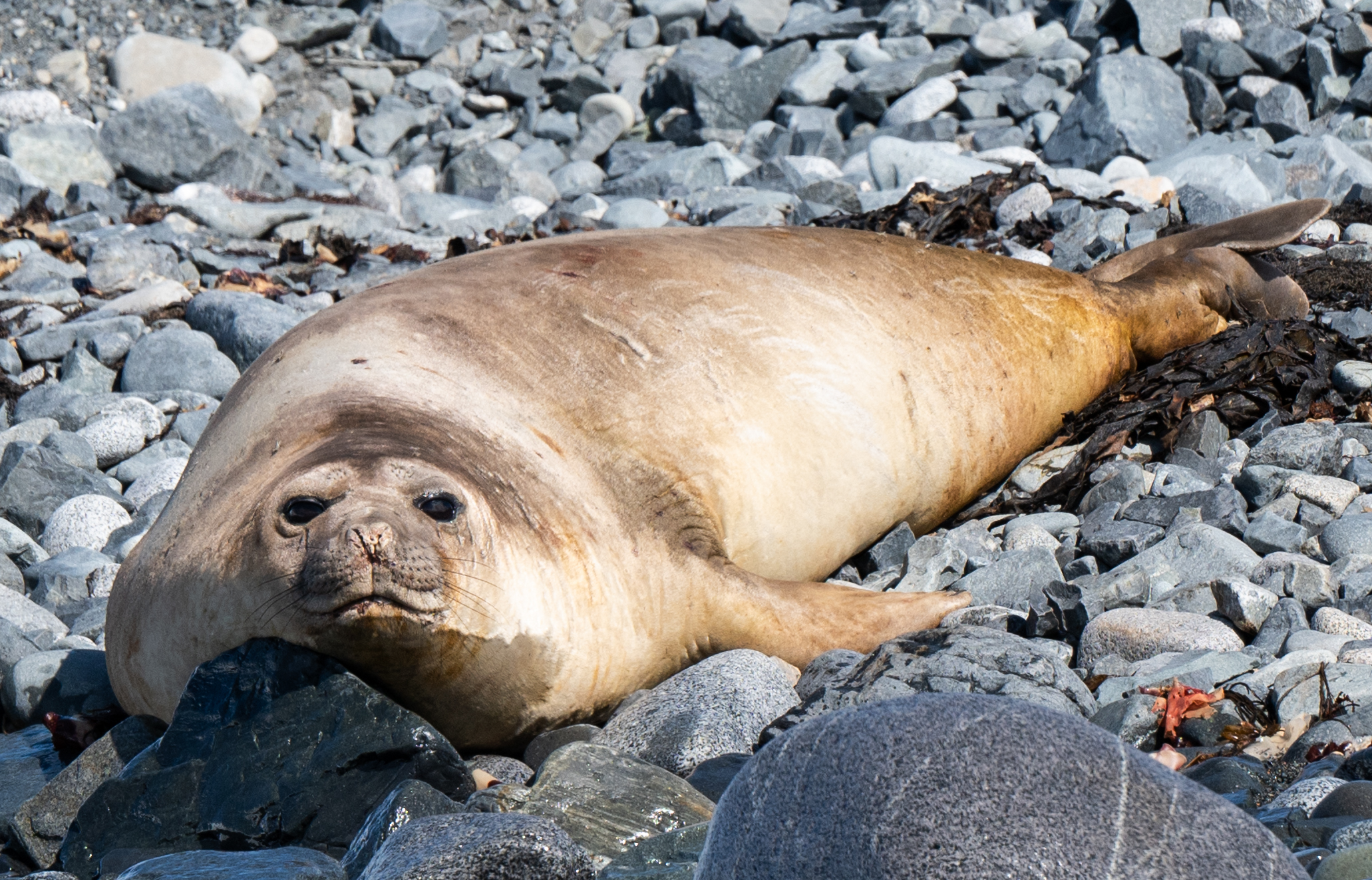
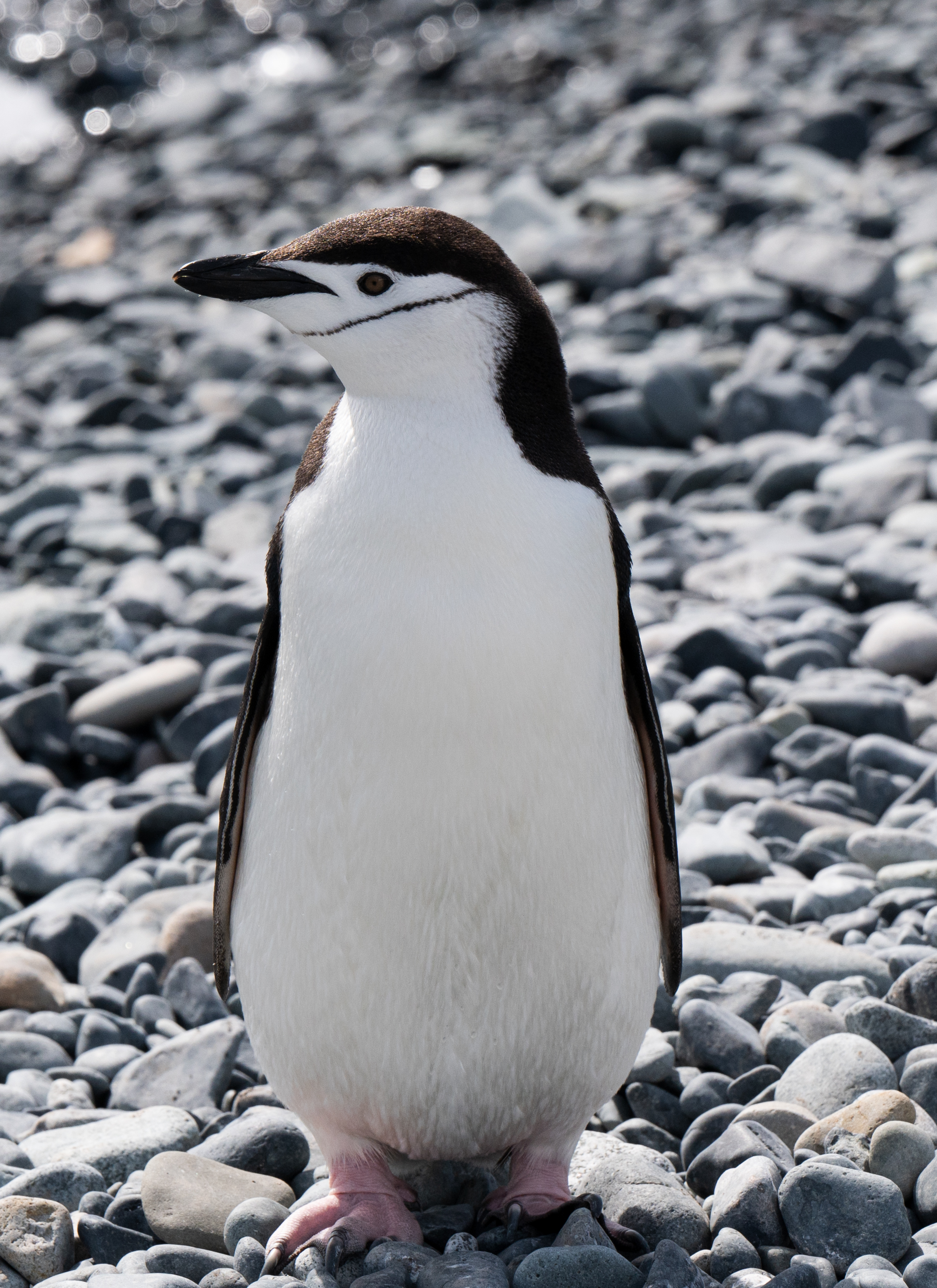
On Half-Moon we enjoyed our first experience with Chinstrap Penguins and pup Elephant seals.
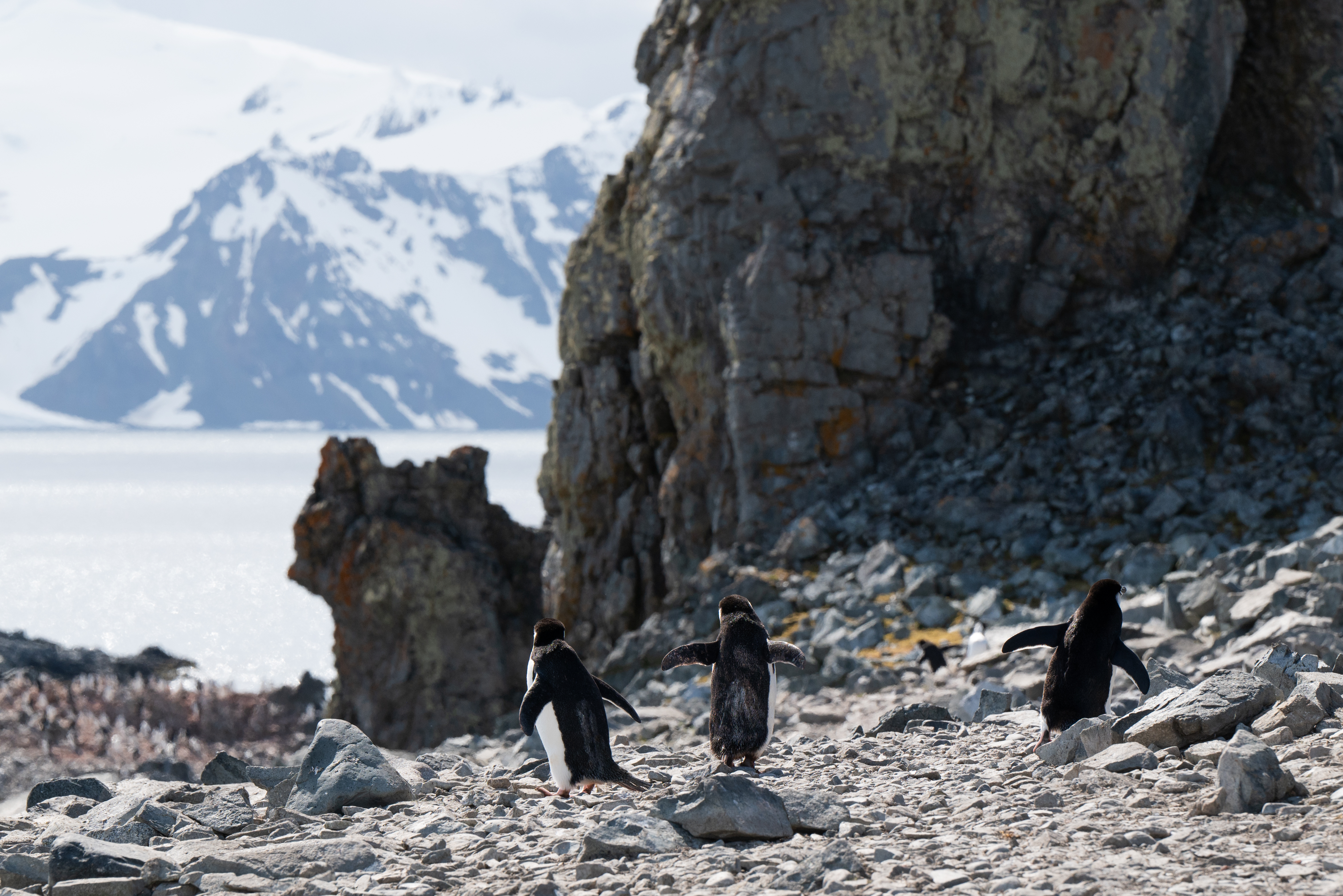
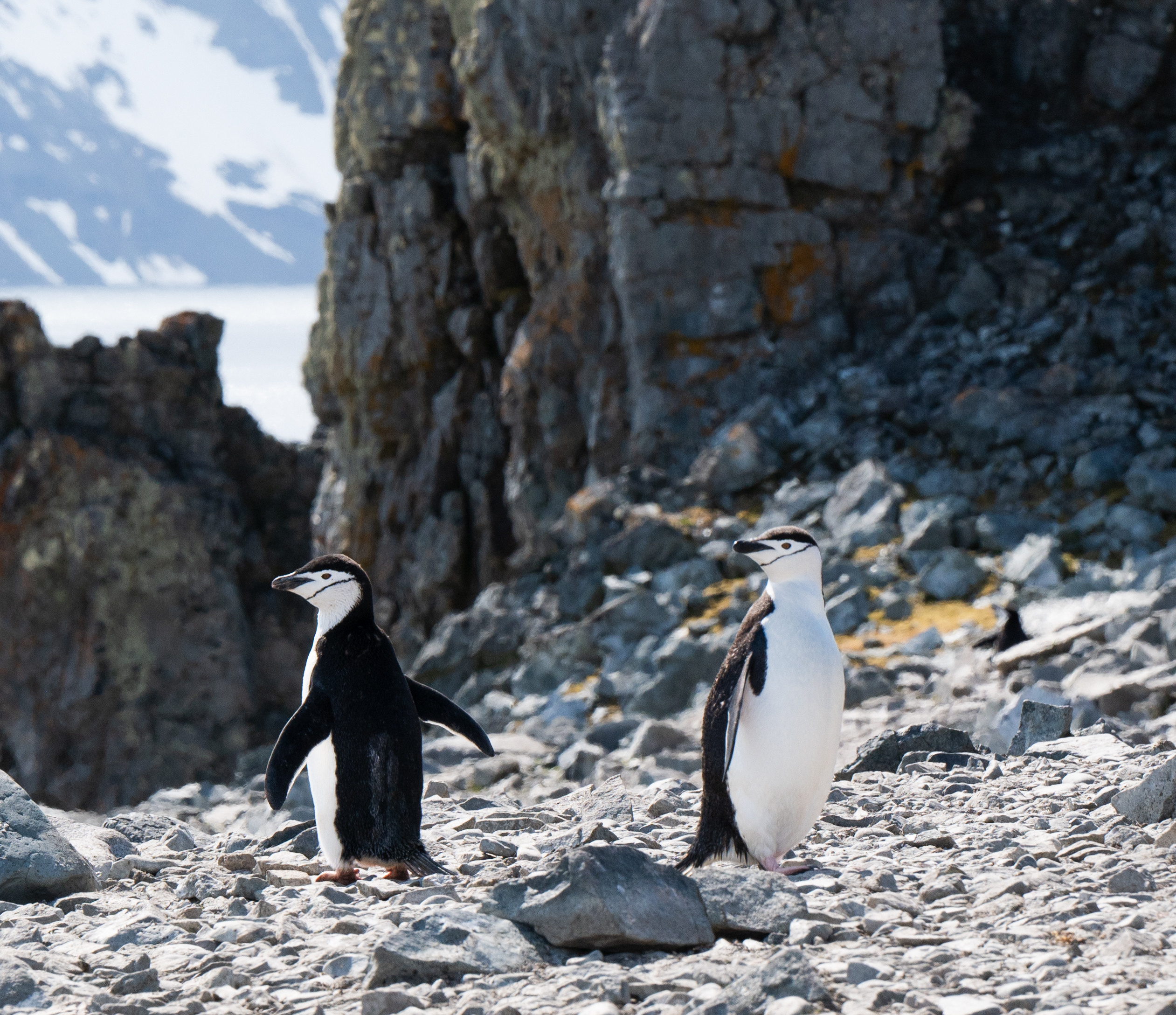
Hanging out with Penguins was so surreal. They seemed to care nothing about our presence though we were very careful to give them right-of-way, stay completely out of their well-traveled paths or “penguin highways”, and go nowhere near their nests.
Amazed at this world, I saw Phil our Expedition Leader, and shook my head, saying in disbelief, “I cannot believe that you get to do this for work”. He smiled and said, “it’s not bad, is it?”. No, in fact at that moment it was impossible to imagine any other place I would rather be.
Lessons from: Antarctica Vol. 1
- Ushuaia is the southernmost city in the world. Or is it? On the Drake Passage map above you will see a town called Puerto Williams. This town in Chile is much smaller than Ushuaia, with a population of around 3,000 vs Ushuaia’s 83,000 yet it has been re-classified as a city. Argentinians, with the force of a strong rivalry at play, believe this reclassification occurred just so that Chile could claim to house the southernmost city in the world. The rivalries in South America are fierce!
- The first penguin that we saw on land was an Emperor Penguin. We had no idea how rare this was, but the guides, in complete amazement, filled us in. You see, the Emperor’s reproductive cycle occurs on the sea ice in the middle of winter. As ocean birds, they live at sea the remainder of the year, so witnessing one on land, outside of its reproductive cycle, in that area, was extremely rare.
- The patch: perhaps you are familiar with this perscription scopolamine transdermal patch to combat seasickness. I was warned that many people experience severe side effects, so I was a bit hesitant. Yet a memory of debilitating seasickness at the Great Barrier Reef was at play. Fortunately, I only experienced two side effects. During the first leg of the Drake Passage (the only section that required seasickness medication on this trip), my close-up vision became blurry. On the final leg, I also experienced cotton mouth. Both of these side effects were much preferable to being seasick!
Something interesting: The Drake Passage
The Drake Passage boasts some of the roughest waters in the entire ocean. This passage is where the Atlantic Ocean, the Pacific Ocean, and the Southern Ocean all converge.
This collision of cold water from the south and warm water from the north creates powerful eddies but that is not the only reason the Drake is sometimes called the “Drake Shake”. Creating a “chokepoint” at 1,000km or 600 miles in width, it has the world’s most voluminous current flowing, as fast as 150 million cubic meters per second in some areas. There are also zero land barriers at that latitude and the weather is notoriously unpredictable.

A look behind the curtain.
I left 24 hours out of this post and it was a notable 24 hours.
When we first hit the Drake Passage there were some sizable waves to contend with and the boat was rocking quite a bit. I loved the movement! I went to bed with the sensation of a large, even weight pushing my entire body deep into the mattress and then the opposite effect took over, a feeling of weightlessness as if I was being pulled out of bed, to hover above it. Back and forth, back and forth. I slept like a BABY.
Unfortunately, the night was not so enjoyable for one of our fellow travelers who suffered a vicious fall when heading to the bathroom in the middle of the night. I was woken in the morning to an announcement from Phil letting us know that at 4:30am he, the captain, and the doctor had made the decision to turn the boat around and head back to Ushuaia. It turned out I was not waking up in the Drake Passage as I had thought, by that point, we were back in the Beagle Channel.
I will admit I selfishly felt devastated and I did not know what this news meant. Was the trip canceled?
At a 9am meeting, Phil assured us that we would drop the passenger at Ushuaia, spending as little time in port as possible, and then head back down the Beagle Channel, through the Drake Passage, and to Antarctica. It was then that we learned that our boat was the ambulance when it came to emergencies in that part of the world and their decisive and professional response was exactly what the situation required.
We set off from Ushuaia for the second time around 4:30pm, about exactly 24 hours since we left the first time. The captain and expedition team made incredible strides to gain that time back. The Drake Passage also cooperated. When we encountered it for the second round, we got to experience what is called the ‘Drake Lake’ which made for a quick journey through.



 She Simply Wanders
Leave a comment