As an American, I am accustomed to the sun rising in the east, traveling nearly overhead by midday, and setting in the west. Sure, in the winter, this all takes place a bit more to the south, and in the summer, it takes place a bit more to the north, but the same pattern always exists. This is not what it is like in the far reaches of the northern hemisphere, where you will never find the sun directly overhead. Instead, in the winter, the sun rises in the far southeast, barely clipping the sky as it makes a small arc across its southern portion before setting in the far southwest. The size of the arc depends on whether you are in Bergen, where the middle of the day shadows resemble what you would see closer to sunset in America, or in Nordkapp, where the sun’s small arc does not even reach above the horizon, and twenty-four hours of darkness sets in. Then, in the summer, something even more interesting happens. In Bergen, the sun rises in the far northeast and sets in the far northwest. It makes a massive arc around the sky, never straying too far above the horizon. Further north, this arc becomes a complete circle as twenty-four hours of light fill the sky. There is so much magic in the sun’s path in the north; sometimes it feels like being on a different planet, and we got to experience the best of it on our trip.
In April in northern Norway, the sun’s arc in the sky is massive with only a small dip below the horizon at night, as twenty-four hours of daylight begins soon. The sky never falls into complete darkness as the sunrise and sunset are only four hours apart. The angle of the sun as it slips below the horizon is so shallow that sunset takes hours to complete. The gradual darkening is so gradual that it almost goes unnoticed.
Reinvigorated in my fondness for the northern sky, we headed back south after Nordkapp, with the idea of fjord-hopping along the way.
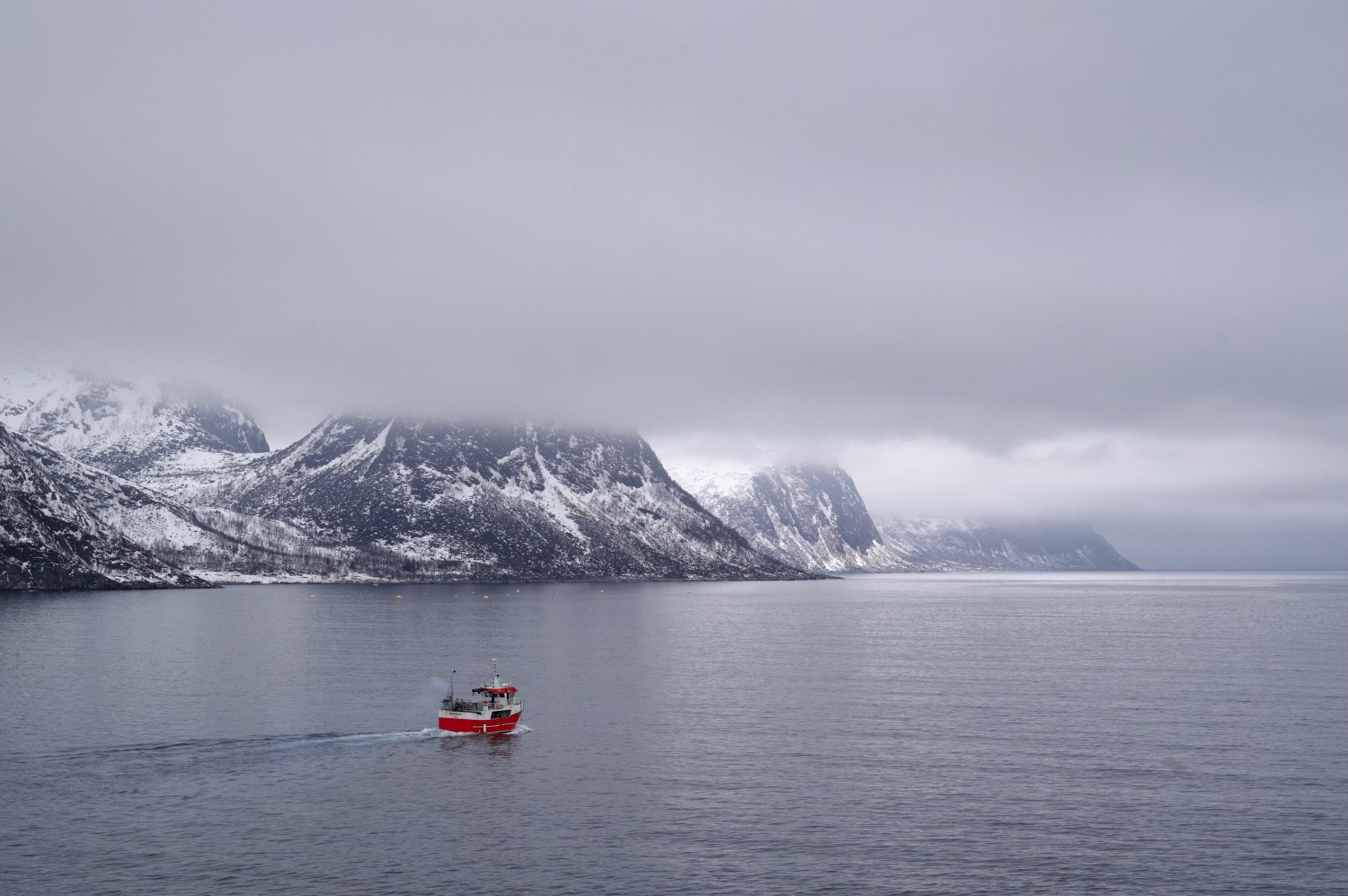
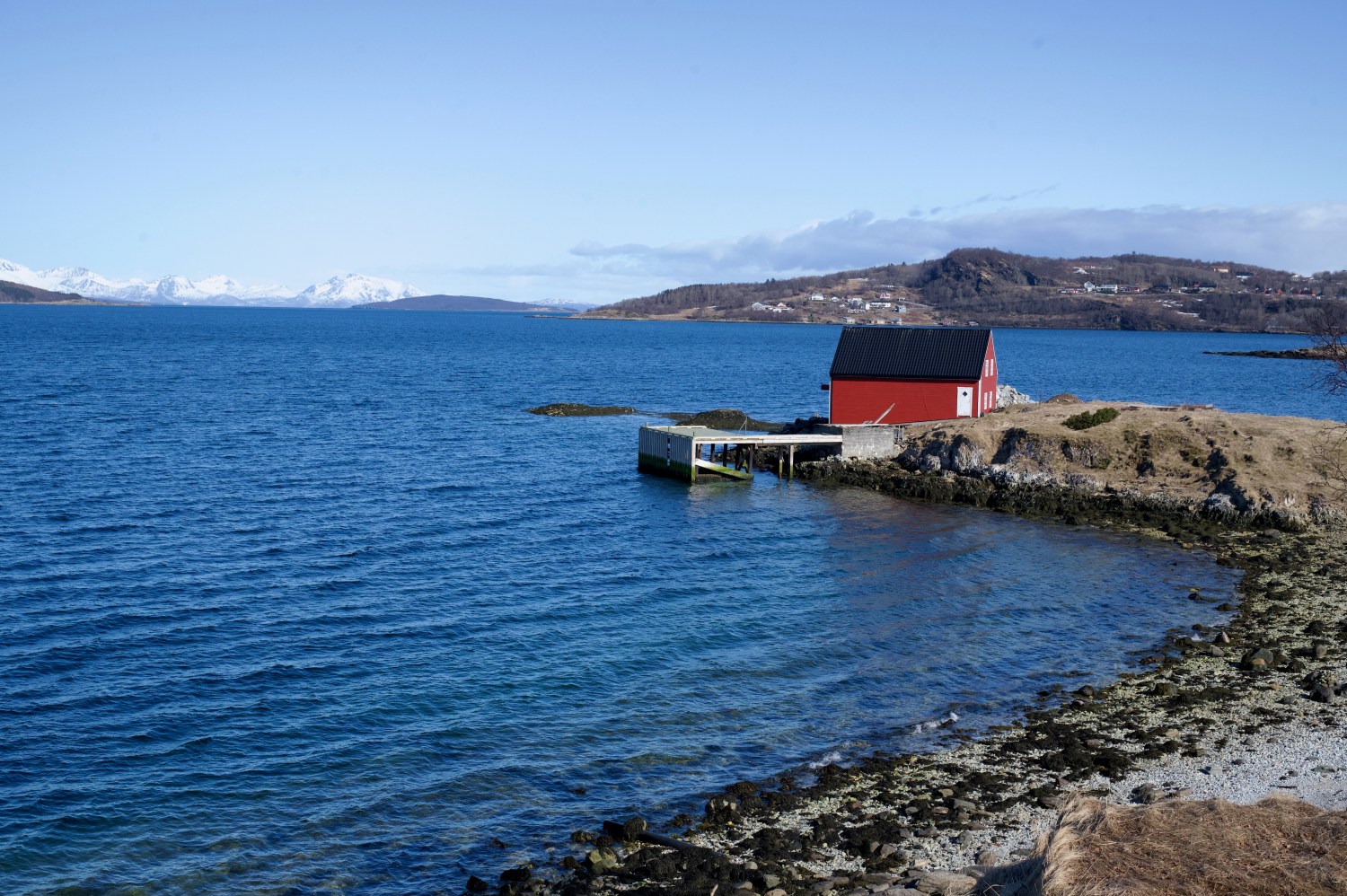
With no solid plan in mind, we knew that we wanted to drive to Tromsø, where we could take a ferry to Senja, a scenic and less popular island north of Lofoten. My plan of hiking had been dashed upon our arrival in the wintery north, so instead of exploring on foot, we picked the most scenic driving route possible, one that would rely on ferries to bring us to many areas that we both would experience for the first time.
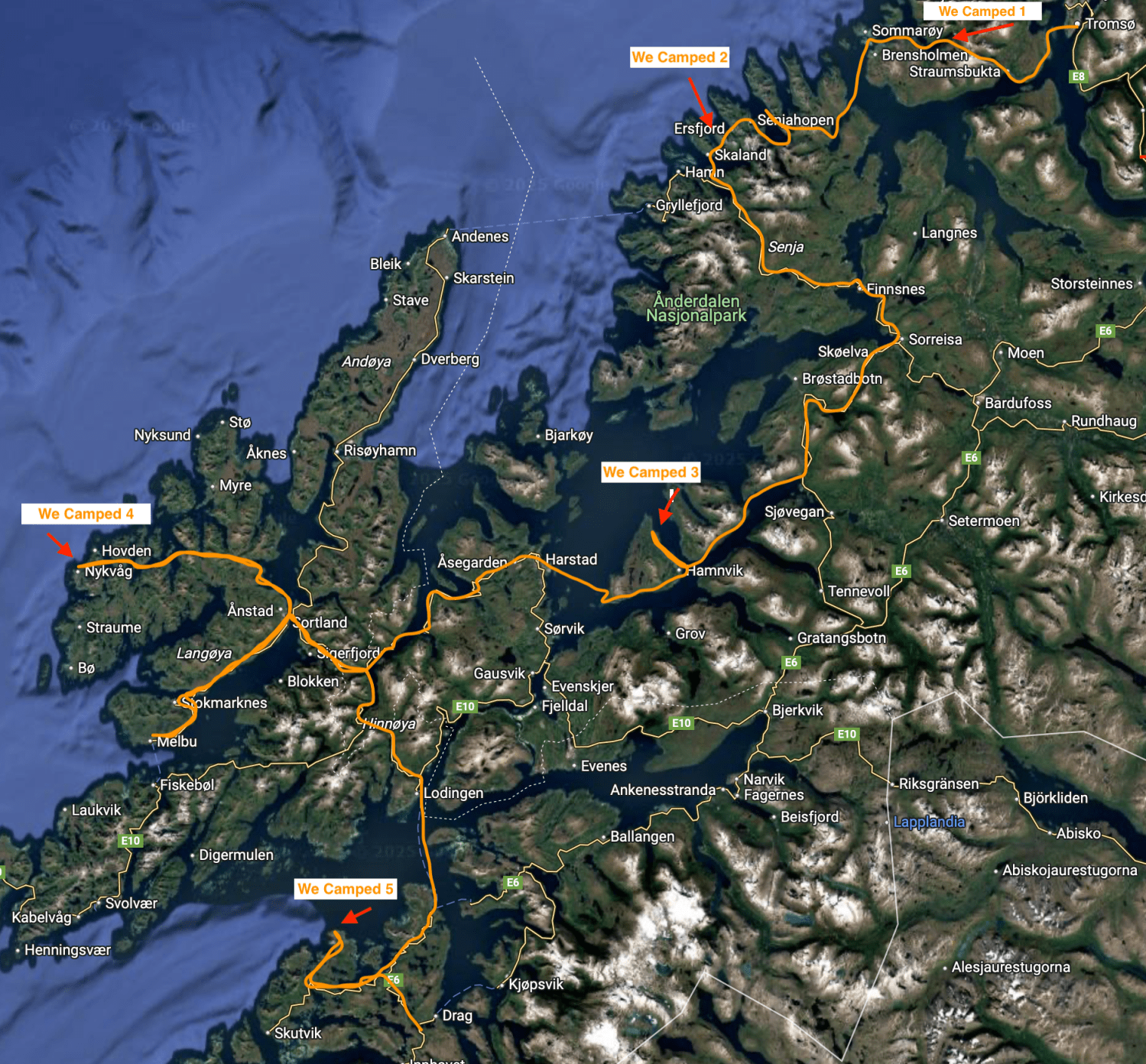
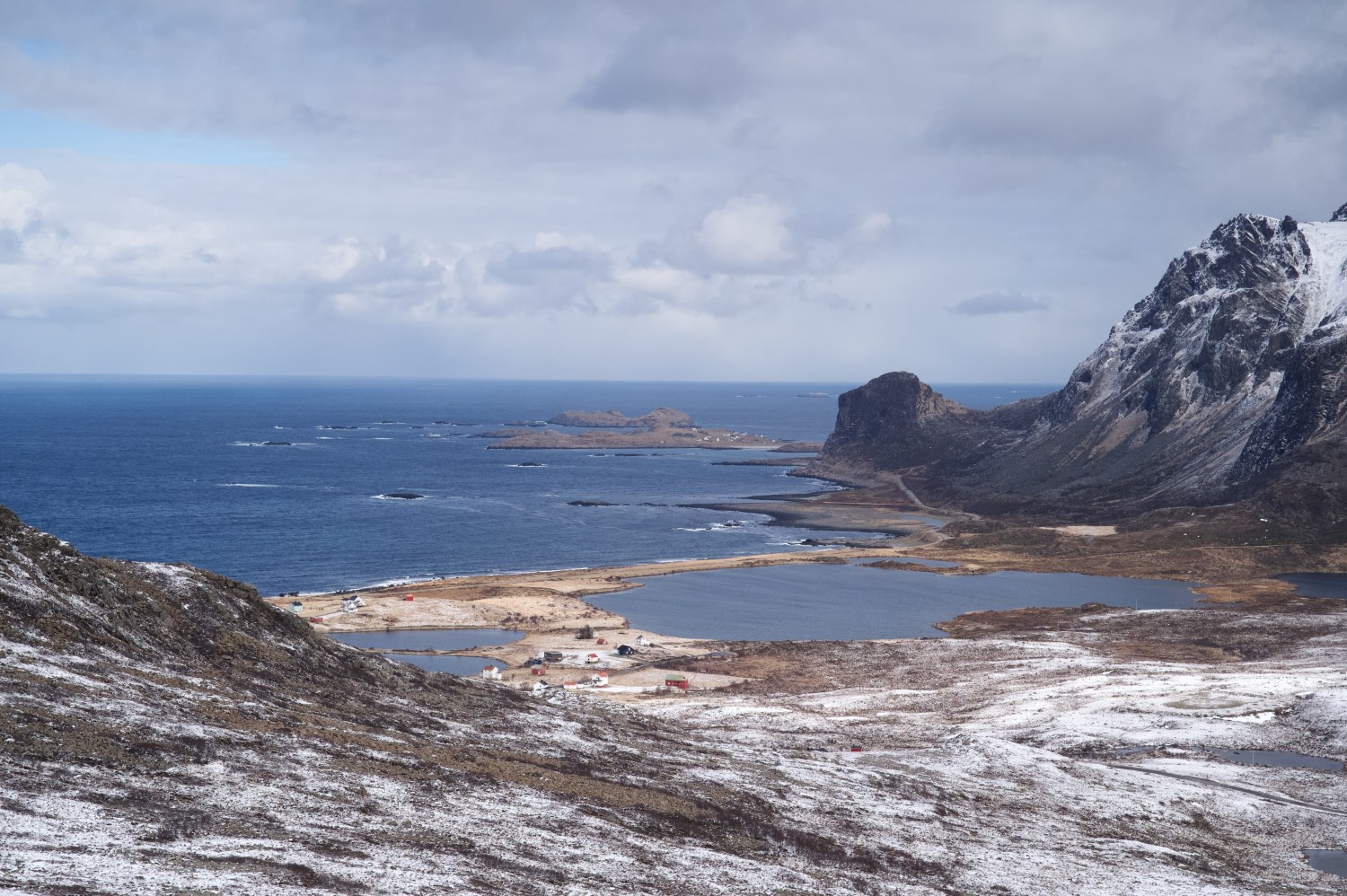
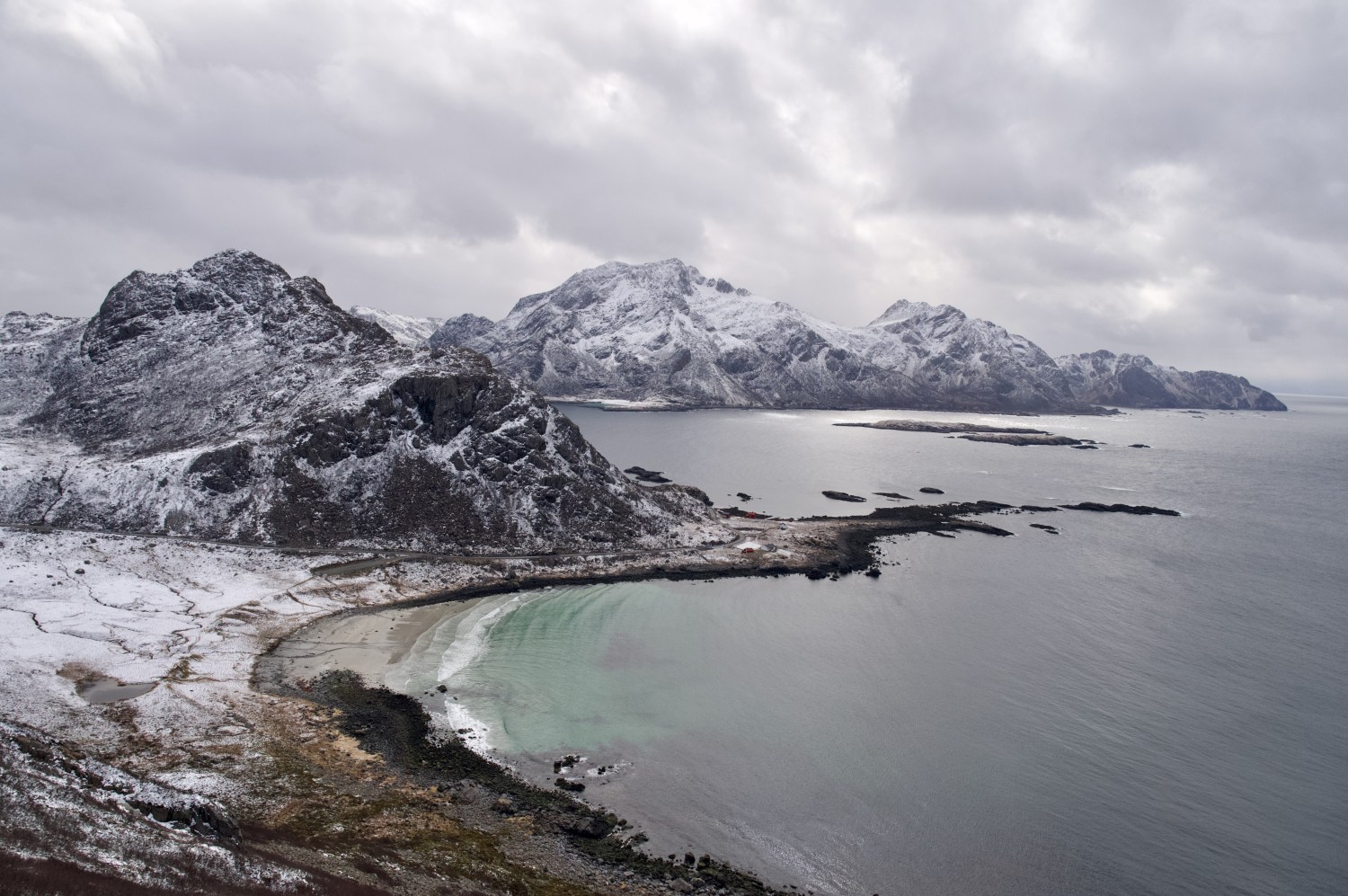
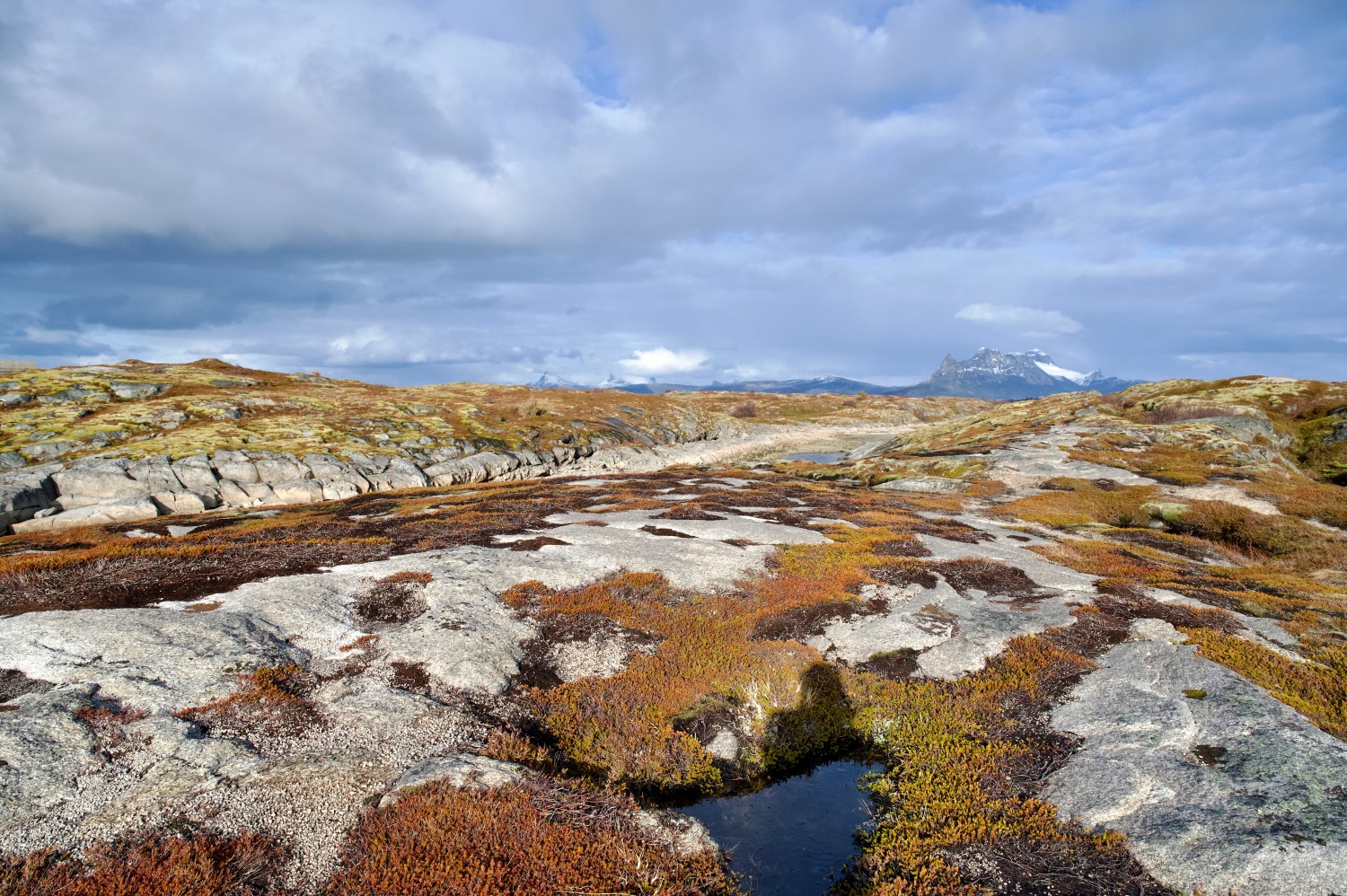
One of the most surprising new discoveries was the town of Nykvåg on the far west side of Norway, just north of the Lofoten Islands, where we camped on the fourth night of our fjord-hopping journey. It felt very off the tourist track and presented us with an area of Norway that looked distinctly different from what we had seen before. With a hard, brown landscape, it felt a bit like Mars, but there was little snow, which meant we could finally put on our hiking shoes!
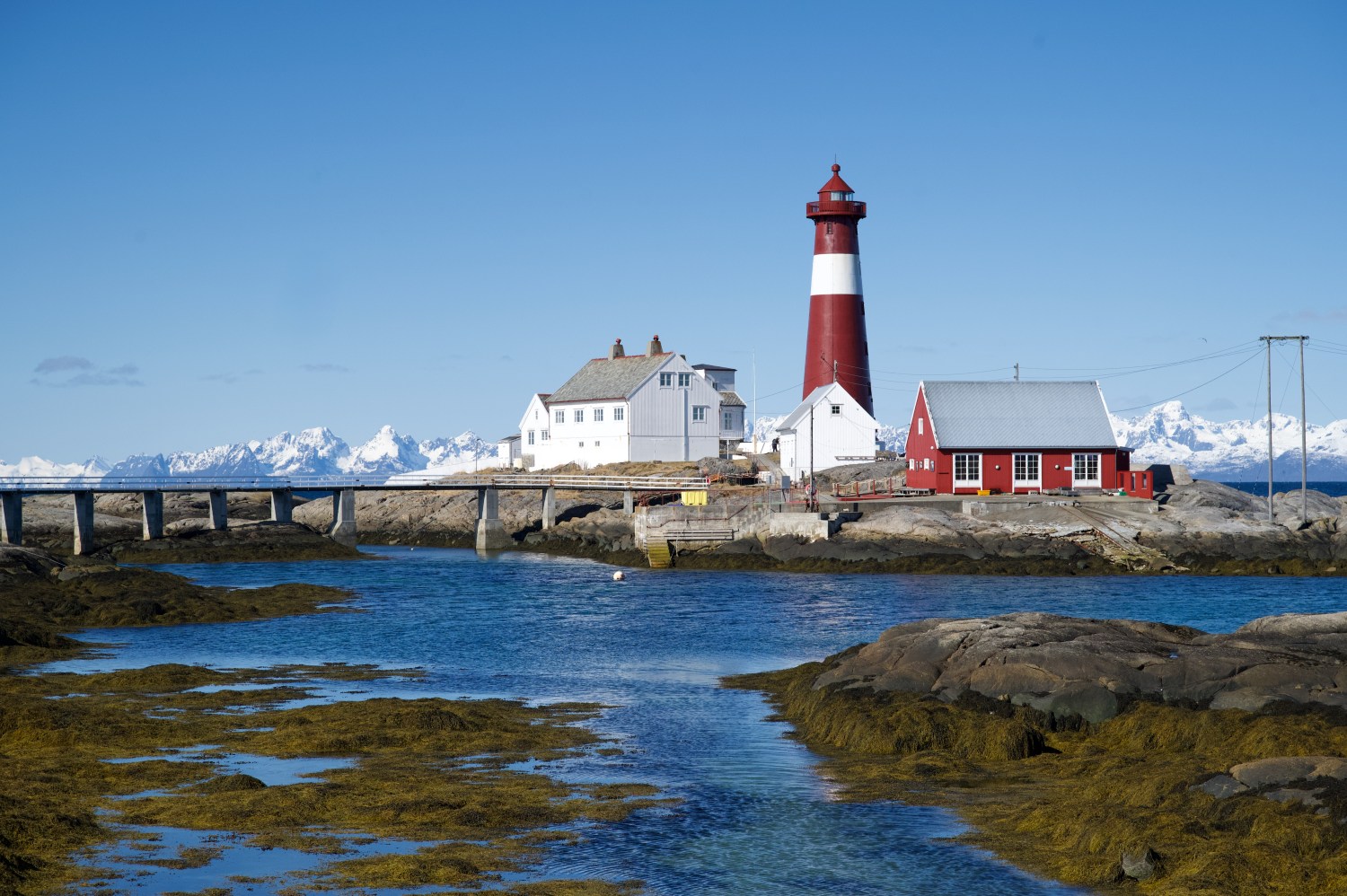
Hiking shoes stowed away, we made our way to Lodingen to catch the ferry to Bognes. We only had one real night of camping remaining. Our final night would be spent near Rent East for an early morning van return. Upon the recommendation of a local on the ferry, we made our way to Tranøy Lighthouse. It ended up being an ideal spot to camp, as mountains stretched out in every direction. It was the perfect summation of northern Norway’s beauty everywhere we looked.
The unusually sunny day that greeted us the next morning was very welcome and thawed our chilled bones after a surprisingly cold night, with freezing temperatures and an incredibly strong wind. It also meant that we could see all the way to the end of the Lofoten Island chain, to where we had begun our journey, two weeks before.




 She Simply Wanders
Leave a comment