
After a brief turnaround at my home base in Colorado, I hit the road again. This trip would take me through Wyoming and into Idaho, with two destinations in mind that I had yet to explore: Jackson Hole and the Sawtooths. To culminate the trip, I would attend a retreat in Idado that I had planned back in June, which would bring my summer in the United States to a close. Ever since I was introduced to meditation several years ago, I had wanted to attend a silent retreat, and life had presented me with the perfect opportunity. I had no idea what Vipassana was, but as usual, I plunged in headfirst.
I have written previously about my struggle with “checking” OCD. It is important to note that OCD is an oppressive and debilitating anxiety disorder that generally has nothing to do with liking a clean kitchen or for your books to be in order, despite the flippant way people speak of it. There are numerous ways that it can play out. Cleanliness or contamination OCD generates impulses to obsessively wash hands, among other things. Hoarding is a type of OCD. Some fear that they will harm themselves or others, or have already harmed others, and have to compulsively retrace their steps to make sure. The list goes on and on. My variety goes like this: at night before bed, I feel that I need to check that the door is locked, or the oven is off, or my wallet is secure, or my car is locked. The volume scales up and down according to my ambient anxiety level on any given day. The penalty for not checking has been punishing anxiety and sleeplessness. As soon as I check, the anxiety appears to vanish. But what feels like a problem solved has only exacerbated the situation for the next time. The neuropathways get deeper and deeper each time the compulsion is fed.
Almost two years ago, I finally worked up the determination to deal with this crippling mind virus. Cognitive behavioral therapy is the trusted remedy, and I began seeing a specialist. The essence of the therapy is simple: you trigger your anxiety (not a problem), and then you don’t act out on the impulse. Over time, your brain will learn that nothing bad will happen if you don’t check (in my case) and that pattern will be broken. The sucky thing is that you have to go through this process for every single compulsion, because they each have unique neuro pathways that have to be rewired. It is unimaginably difficult, as you must learn to ignore all the biological sirens going off in your body. You have to accept that your mind is in full deception mode and that takes an incredible amount of energy and willpower.
I have had a lot of success with pure determination, and because I finally got over the hump of any addiction recovery: I felt worse after checking than I felt if I didn’t check. Turns out feeling like a failure when you know you can do better is way worse than random anxiety. But somewhere deep down, I have known that I have only been treating the symptoms, not the root cause, and without that, my checking can easily be replaced by any number of things.
I consciously went into the Vipassana retreat without expectation aside from wanting to take my meditation practice further. What I left with was an actual method of managing the sources of my anxiety, not by ignoring them, but by embracing them and every negative sensation they can muster. And let me tell you, they have some special forces. As fortunate as I am to have had this experience, I am so glad that I did not know the path it would take to get there.
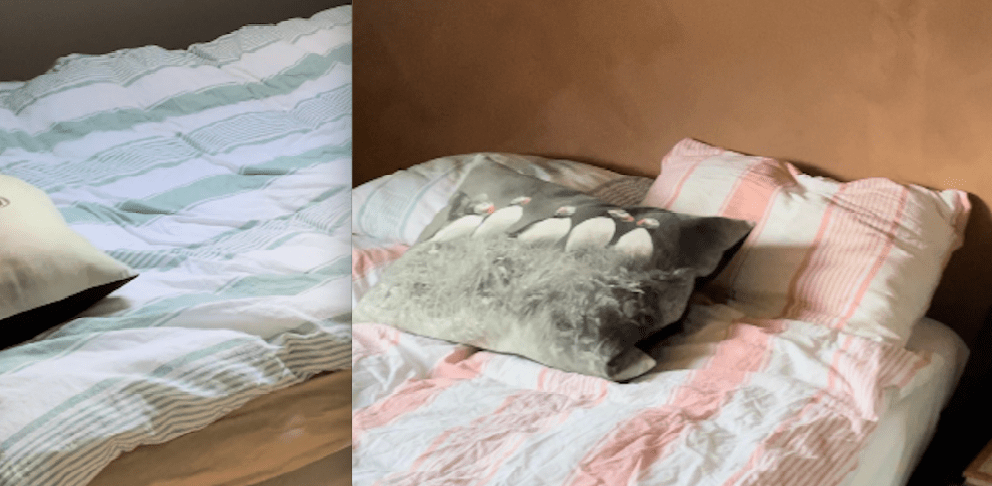
I arrived at the retreat center outside of Lava Hot Springs in Idaho on the afternoon of day zero. I filled out the intake form and checked into my shared room, with a curtain separating the two beds. Then I turned over my cell phone, computer, car keys, and camera. We were also not allowed any reading or writing material. Rest, eating, and normal hygiene activities were the only escape from our minds permitted. After dinner, “noble silence” began. For the next 10 full days, we were not to speak to anyone except the teacher, during an optional private question time, or our dorm representative, if we had a concern with our room, etc. Noble silence also meant that we were to act as if we were alone. No “bless you” when someone sleezed or “excuse me” when we burped. Holding the door for others and waiting patiently in line were the only signs of recognition that others were around. All sixty-something of us took this incredibly seriously. I dealt with a suffocatingly hot room at night because I could not ask my roommate if she was okay sleeping with the window open. This was the real deal. And I was ready.
The schedule was as follows:
- 4:00am: Morning wake-up bell
- 4:30am-6:30am: Meditate in your room or the meditation hall
- 6:30am-8:00am- Breakfast and break
- 8:00-9:00am- Group meditation in the hall
- 9:00am-11:00am- Meditate in the hall or in your room, depending on the teacher’s instructions
- 11:00am-1:00pm- Lunch, rest and the opportunity to speak with the teacher privately
- 1:00pm-2:30pm- Meditate in the hall or in your room
- 2:30pm-3:30pm- Group meditation in the hall
- 3:30pm-5:00pm- Meditate in the hall or in your room
- 5:00pm-6:00pm- Tea break
- 6:00pm-7:00pm- Group meditation in the hall
- 7:00pm-8:30pm- Nightly discourse
- 8:30pm-9:00pm- Group meditation in the hall
- 9:30pm- Lights out
Breakfast and lunch were vegetarian. There was no dinner. During the 5pm tea time, new students were permitted to have one piece of fruit and use milk in their tea. Old students (students who had been to at least one retreat) were only permitted milkless tea. We were not allowed to bring any food into our rooms or bring any outside food to the retreat. We were to make due with the food provided. We were to live like monks for ten days.
The alarm went off the first morning at 4am, and I already wondered if I was going to survive the coming days. I decided to stay in my room and start meditating according to the instructions from the night before: observe the breath in and around the nose, feel the different sensations associated with breathing in, and then breathing out. Okay, easy enough. One hour passed, and I thought: Is it really necessary to go for another hour right now? A few minutes later, I heard my roommate snoring. The first morning clearly wasn’t shaping up so well for her either. Trying to meditate with a snoring roommate at 5:30am is about as impossible as it sounds, but I went through the motions as best I could until I heard the bell ring for breakfast.
We all gathered in our gender-specific dining halls, with a curtain separating the men’s and women’s areas. We were to remain completely separated the entire week. All distractions had been accounted for.
The breakfast buffet was a pleasant surprise. It was very nutritious and generous with oatmeal, stewed prunes, a vegetable soup, yogurt, cereals, bread, peanut butter, fruit, tea, and all the milks: oat, dairy, and soy. All the new students made a heaping bowl, already preparing for the meal being skipped later in the day. The old students in all their wisdom treated it like any other meal.
During the group meditation, we continued to watch our breath and then for two more hours after that. Lunch was also quite satisfying and set us up perfectly for no dinner. Though we all undoubtedly had some angst about how that was going to play out. Our attachments were coming into focus all too quickly.
By the time of the afternoon meditation, I felt pretty bored with watching my breath and wondered when we would move on. I kept at it, knowing that I wanted to look back on this experience and be proud of the fact that I had done my best. But by evening meditation, I felt full resistance to meditating for the 9th hour of the day. Merecifally, the evening discourse, as it would each of the following nights, reinspired my restlessness and aversion to the whole affair, and I went to bed feeling like day one went pretty well overall.
We received the same instruction for day two: continue to watch the breath, but focus on an even smaller area, just the triangle from the tip of your nose to your upper lip. This was to train the mind to focus with great precision. Unfortunately, the pain in my back was becoming unbearable. I had no idea how difficult it would be to sit on the floor with my back straight for an hour at a time. A knot from hell right between my shoulder blades made me want to fold over. The pain became so bad that my heart started to race and my body became covered in a light sweat. It was torture, yet some part of me knew that this was an important part of my journey, and I needed to push through. On day three, I learned why.
What is Vipassana? Vipassana is an ancient meditation technique originating from the Buddha himself, who practiced it over 2,500 years ago. It predates Buddhism and is completely secular. It offers a remedy to suffering and teaches that we are the only ones who can liberate our minds; no one else can do the work for us. The theory is that all of our suffering is self-induced by our mental habitual patterns of craving and aversion. When a thought comes into our minds, it either creates positive sensations or negative sensations in our bodies. They can be very subtle or very gross. Our natural tendency is to cling to the positive (craving) and try to escape from the negative (aversion). Both of these responses create incredible suffering. Why? Because of impermanence, a huge tenet in Vipassana. Everything is always changing. We cannot hold on to the positive. It will pass. Nor should we try to get away from the negative, because that will also pass. The theory of Vipassana is that you have to accept the moment as it is, not yearn for how you wish it to be. You should not cling to any positive nor have aversion to any negative; instead, observe them without any attachment and without trying to control any of your sensations. In fact, by reacting with craving and aversion, we only make the matter worse. If we can observe without a positive or negative reaction, then the thought, which is attached to the sensation, will naturally fade away. When we try to escape our thoughts/sensations, they get empowered; when we try to cling to them, they get empowered, and our suffering compounds. The path to liberation is by not creating any new negative thought patterns (which are generated from craving and aversion), and through regular practice, the old ones will naturally begin coming to the surface. As you react to those with neither craving nor aversion, they too will pass. To be sure, some negative thought patterns have many layers that all have to be dealt with through non-attachment to be liberated from them.
I could not ignore the correlations with cognitive behavioral therapy. Don’t react to the thought, and over time, the impulse will go away. But this took things a step further. With this, it is not just employing sheer willpower; there was actually a practice to train my mind to respond to these highly negative sensations without identifying with them. This seemed like an actual long-term solution. My previous tactic was to feed my aversion: I did not want to feel the negative anymore. This, instead, would teach my mind to accept the negative for what it is, in that moment, knowing that it will pass. If it sounds too good to be true, it is not. Rewiring the mind and all of its habitual patterns can take decades of continual meditation. But there are gradual changes along the way that, if practiced daily, can be experienced.
The practice of Vipassana is surprisingly simple. You begin at the top of your head and scan your body for sensations, inch by inch, all the way down to your toes. Watching our breath for two days was to focus our minds on the subtle sensations. Now we were to employ that technique all over our bodies. Up and down, up and down, observing any sensation and not giving any preference to the positive nor creating any aversion to the negative. To really hit this home, we were now encouraged to not reposition at all for the entire hour of group meditations. This put the fear of god into all of us beginners who had felt that readjusting was the only way we had made it this far. But again, I wanted to have no regrets, so I tried it. About five minutes in, I started to have doubts. Forty-five minutes in, I felt like my back might break, my hip might be ripped out of its socket, and my feet might have deep bruises from what felt like the massive weight being pushed into them.
I stood up after the session ended and wondered if I had permanently damaged my body, but was surprised to find that after taking a few steps, I felt fantastic. My back felt strong, my hips felt open, my feet undeterred. We were told that the goal was not to torture ourselves. If we needed to readjust, we certainly should. However, I was determined not to, as I knew this was the most direct way to experience how aversion and craving play out in my mind. Instead, I tried to envision my back pain as my OCD. Those sensations can be as difficult to view without attachment. This felt like training. And like all sensations, it did pass. Until the next session, that is.
By day six, despite knowing what I was experiencing was gold, I was so sick of meditating and wanted to leave. When we arrived, we signed a document vowing to stay to the end of the course. Now I knew why. And why they took our car keys. I would look down at my parked sprinter and think, I could be camping right now and not waking up at 4am. What am I doing to myself? Unhinged craving and aversion were playing out, and I knew it. And I could feel the suffering that my thoughts were generating, and I began to understand why the retreat was structured as it was. Perhaps the point was to stress the comforts of the mind and see the depth of craving and aversion that are natural go-tos, without any effort at all. The depth was astounding.
Later that day, one of the women had had enough and packed her bags. As we all wandered towards the meditation hall on our way to the 6pm group meditation, we passed her standing next to a van, suitcase at her feet, staring into her phone. In that moment, I yearned for my phone, to be able to reach out to the outside world, to feel normal life again.
Each of the following days got harder and harder in its own unique way. Time stood still. I was trapped in my particular mental cage with only my habitual thought patterns to cope with it. It was exhausting. It was incredibly hard work. It was eye-opening and the most revealing experience I have ever had. I began to understand myself in a way I never had. I began to see how this practice can be employed to reshape thought patterns and bring real relief to all of our troubled minds. I began to wonder how I had coped as well as I had so far. But mostly, I could not wait to leave.
On day ten, after the morning group meditation, the noble silence was lifted to prepare us for entering the outside world again. As we left the mediation hall, I felt no urgency to speak; I did not really even know what to do with myself. As I gathered around with a few other women reading our updated schedule, several other women stepped outside and immediately began talking, loudly and with great excitement. The sound was deafening. The girl next to me put her hands over her ears to cover them. I, too, wanted nothing to do with it. I had no interest in sharing my experience, and I did not want to hear about anyone else’s experience because I did not want it to color mine.
Chatting about randomness over lunch became the perfect transition for me. As soon as I began speaking, I immediately felt reconnected to the outside world. It was incredible how quickly the dynamic shifted. I had taken an express elevator out of the depths of my mind in record time. I understood perfectly why this type of work must be done in silence.
The next morning, I said goodbye to my roommate and walked gleefully towards the sprinter, never so excited for a ten-hour drive. I felt free. I felt accomplished. Mostly, I felt grounded. But if Vipassana taught me anything, it was that that feeling would not last. We had had a taste by learning the method; the real work was yet to come, and it would take incredible discipline to sit and do the work. Time would tell whether I could incorporate these teachings into my life, but I had a pretty good feeling about it already.
*For more information about Vipassanna courses conducted all over the world: https://www.dhamma.org


 She Simply Wanders
Leave a comment