Things got a bit more complicated as we made our way south. I suppose it was predictable; we were headed to the larger population centers and the more touristic areas. The farther south we got, the higher the prices got, and the more crowded it became.
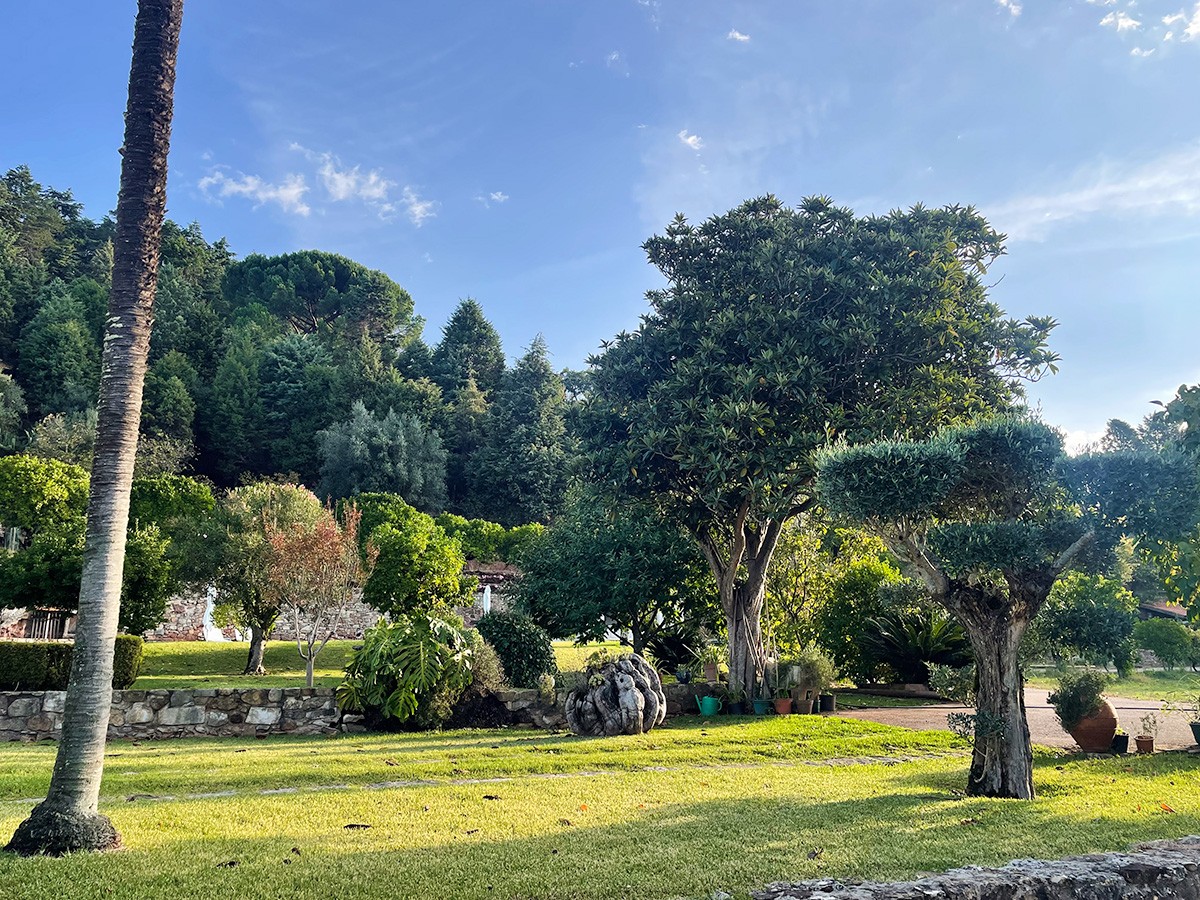
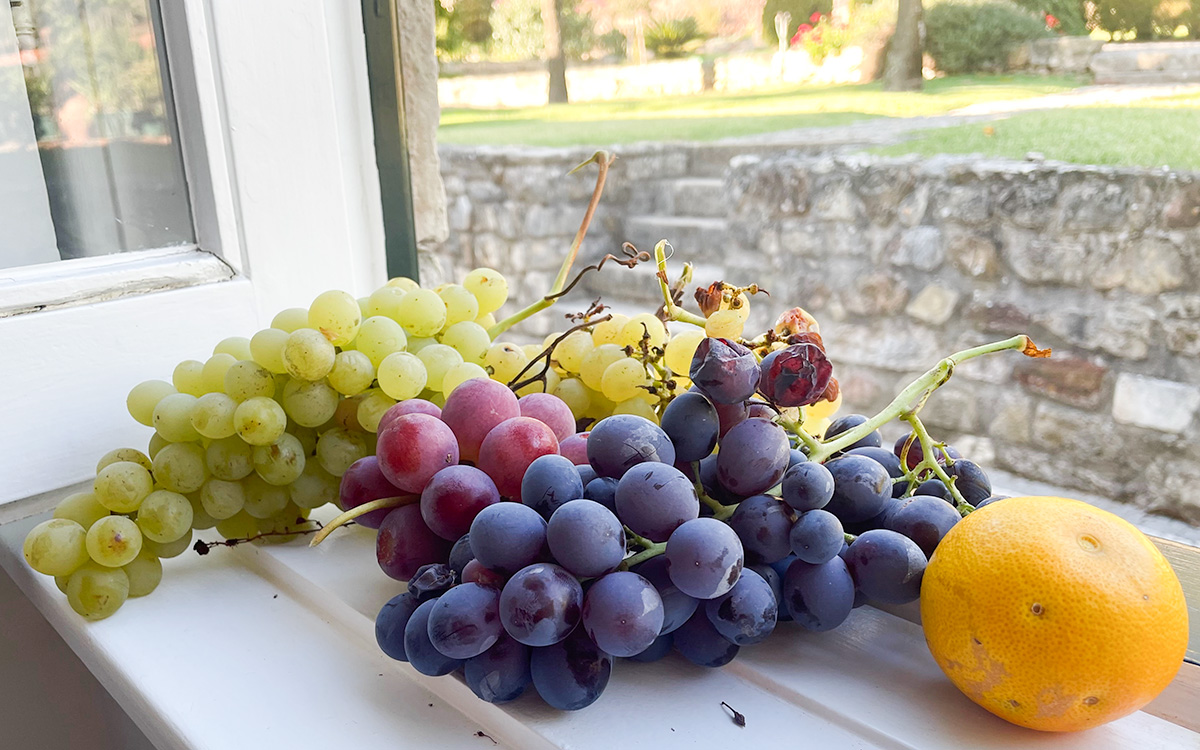
Our first destination was the town of Coimbra, home to one of the oldest universities in Europe and the historic Joanine Library, which opened in 1717. But first stop, getting settled into our guesthouse, which Serhii picked for its incredible gardens, offering a tranquil retreat, and full of ripe grapes, oranges, and persimmons, which we were encouraged to pick and enjoy.
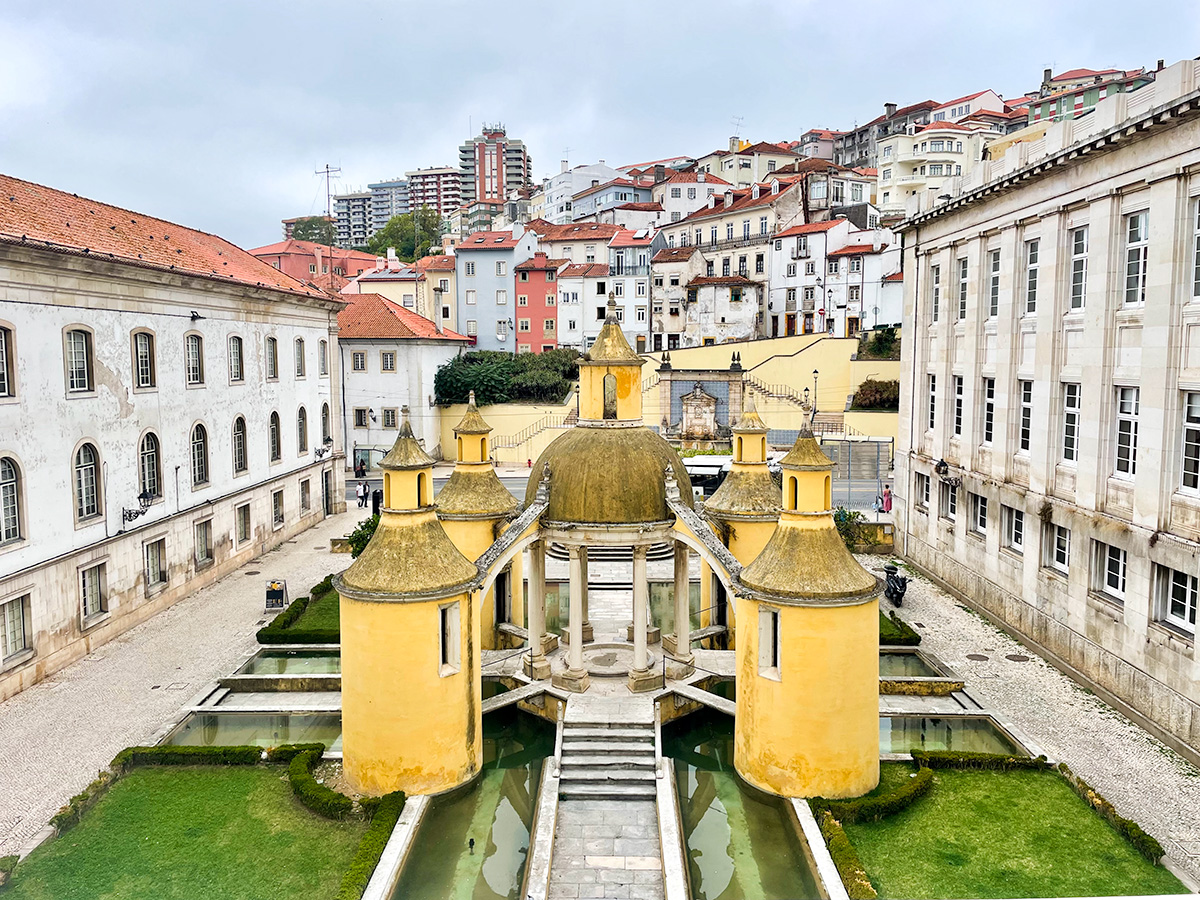
The next day, we ventured into Coimbra for a foot tour and a laundromat. Our plan was to just drop off our laundry, check out Coimbra University and Joanine Library, before returning for our clothes. Our smooth plan imploded when the laundromat only accepted cash. Life in Norway had skewed our perspective on the necessity of traveling with cash, but we should have learned our lesson, as the previous day, we had been turned away from a fantastic breakfast restaurant that only accepted cash. Determined to still go, we hit a nearby ATM, which was unfortunately out of cash, and that quest apparently also went out of mind.
Fortunately, we were able to find another laundromat that did accept credit cards, but we probably burned two hours doing so, and that laundromat took us closer to our car than the old city we were set to explore further. We lost motivation quickly and did not end up returning, though not all was lost; we did stop by the Joanine Library on our way to the second laundromat, but elected not to pay the roughly $20 per person to visit it.
Coimbra was a neat city to see, but what also zapped my energy was how run-down the old buildings were. Plants grew from the cracks, even of ancient churches in the city center; moss and filth covered the exteriors of almost everything, and small ponds were lined with sludge. There was also a lot of graffiti. I read that the graffiti is part of the culture and the experience, but for me, that, along with the lack of upkeep, just made everything feel very unloved. It was also a reminder that Portugal is a poor country.
At this point, we had a decision to make: how to spend our final four days. We had given up the idea of driving all the way to the Algarve region of southern Portugal, which is known for its scenic beaches and cliffs. It just felt too far to drive and would make our remaining time feel rushed. Instead, we picked a guesthouse south of Lisbon that was a bit of a splurge and decided to spend three of our remaining four nights there. It was in a great location to explore the larger area without having to move each night. And it looked magnificent. The owners had built three private cottages with decks that overlooked their gardens and pool. Each morning, we would be brought a generous breakfast at a time of our choosing, which we did not know at the time of booking but would include fresh-squeezed orange juice, cakes made daily, and honey from their own bees.
We packed up our freshly laundered clothes and hit the road for the three-hour drive south.
After checking in, we joked that it felt like we were on a practice honeymoon. If you are new to this blog, we are waiting for our K-1 visa request to be processed by the US government, which would allow Serhii into the United States so we can get married. A fiancé visa is one of the quickest ways to be together permanently (around 1 year, best-case scenario).
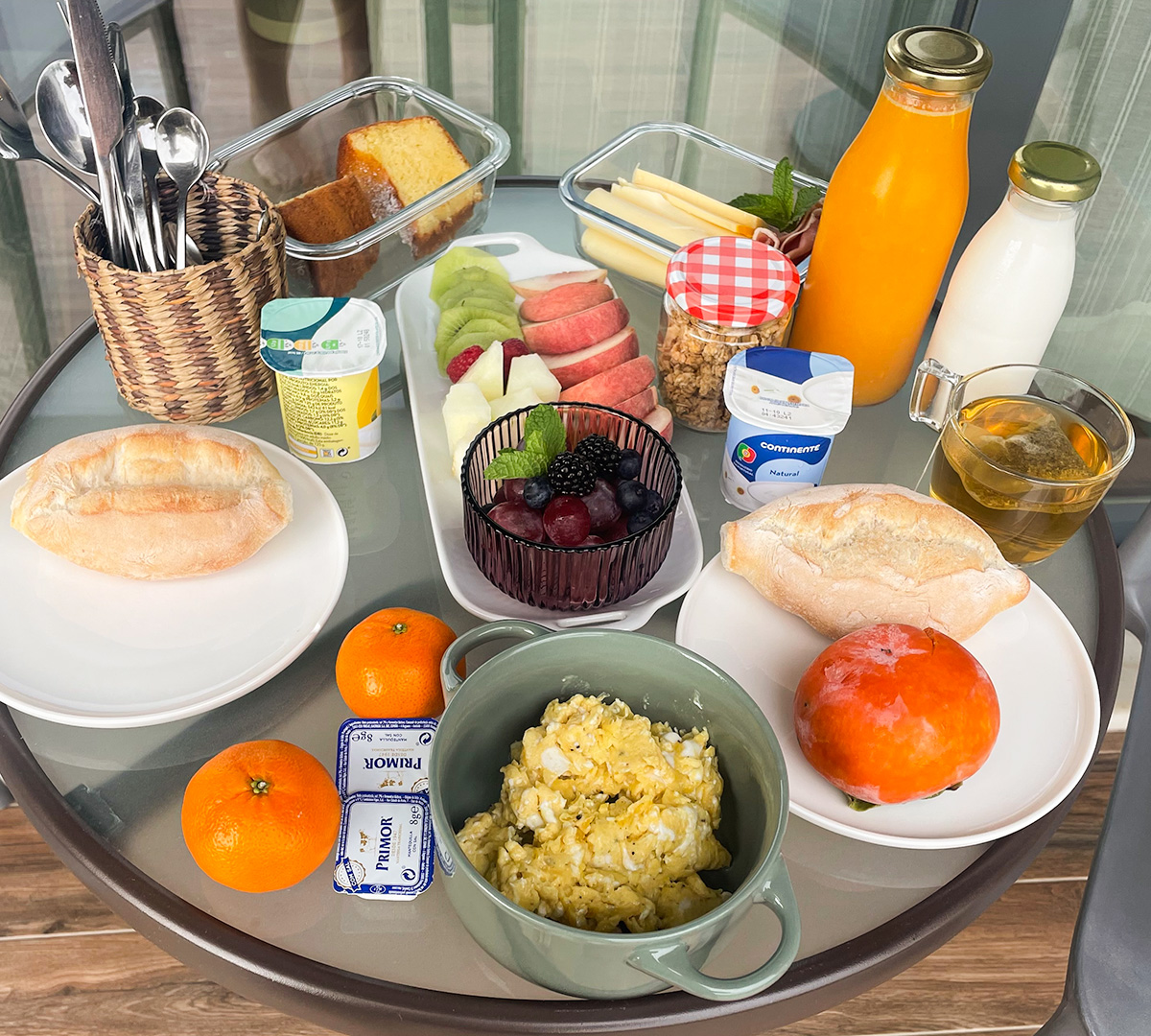
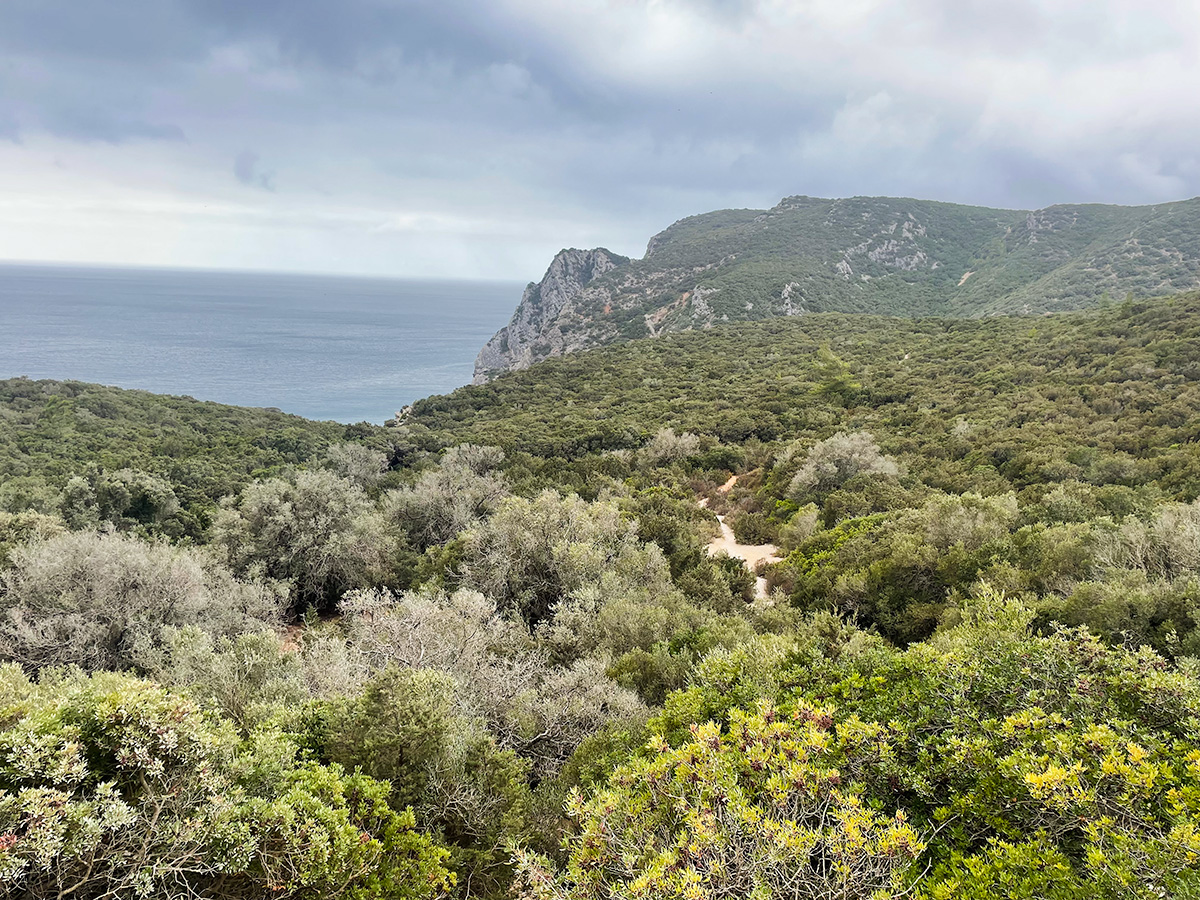
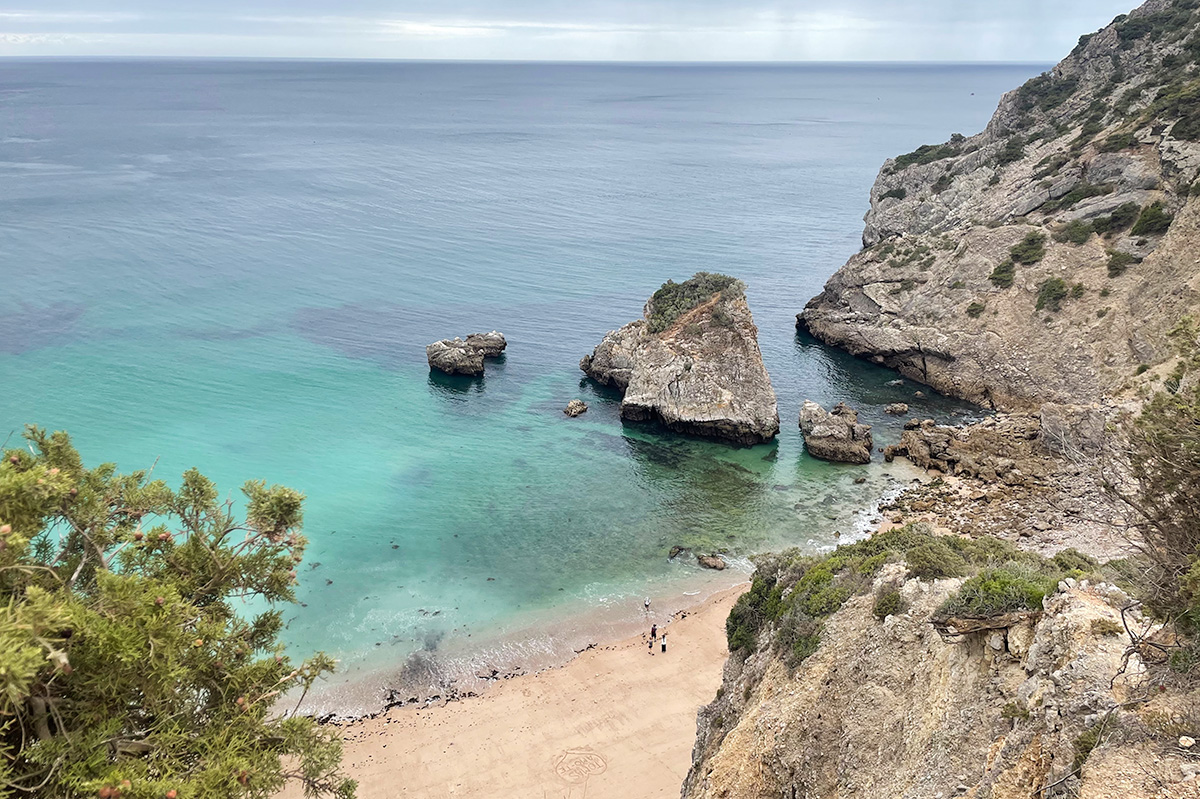
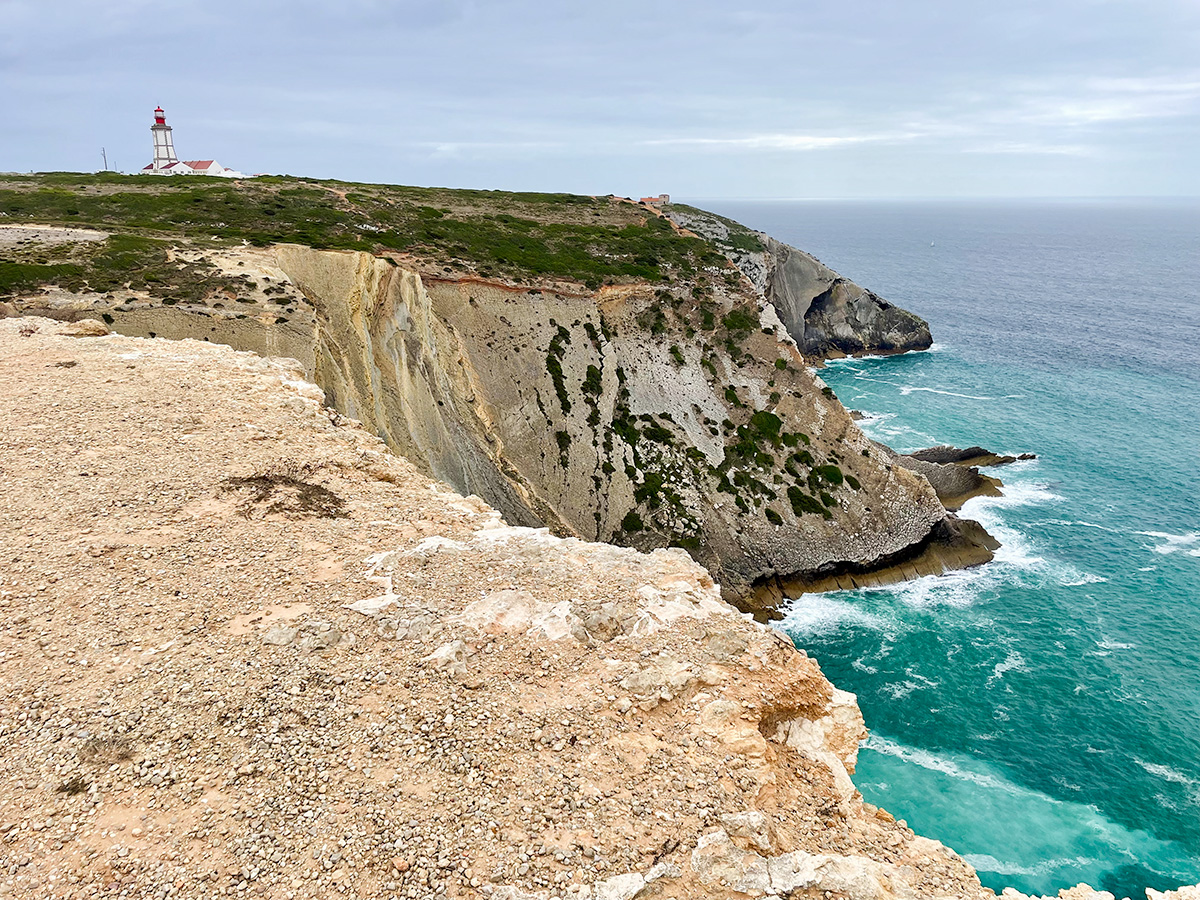
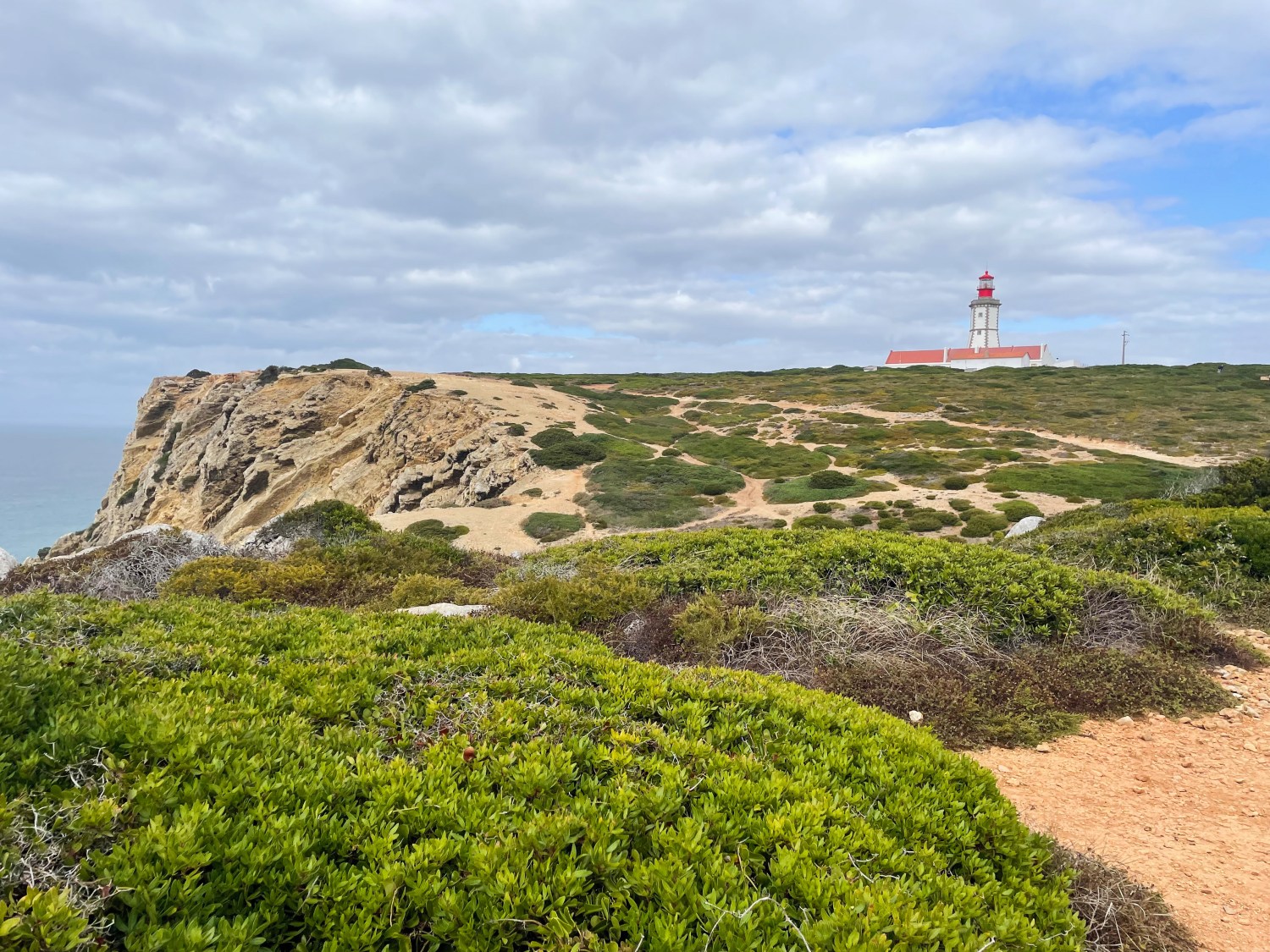
The next day, we explored the nearby Praia do Ribeiro do Cavalo National Preserve and the historic Farol do Cabo Espichel Lighthouse. It turned out to be one of our favorite days on the trip. We were able to save bread, meat, cheese, fruit, and cake from our very generous breakfast and enjoyed a stellar picnic lunch in our car, which offered protection from the cold wind coming off the Atlantic. It really is the simplest things that make the best memories.
Little did we know it at the time, but unfortunately, our favorite day was followed by our most difficult day of the trip.
It all started when we stopped for fuel to kick off the day. As usual, we had no idea how to pay for the fuel at the pump, so I went in to ask. As soon as I walked in the door, the cashier stared daggers at me. I should have known then to just turn around and walk out, but I didn’t.
Generally, in this scenario, I break the ice by asking if it is okay to speak English. It is a good way to soften the language barrier and not make assumptions. I failed to do that this time, which may or may not have helped, and just started speaking English. She responded by speaking Portuguese to me, very quickly, and shaking her head. I have no idea what her words were, but she communicated what she wanted to loud and clear. I drove away, realizing that in all my travels, I have never been treated so poorly. The hostility she displayed for me from start to finish was actually shocking. My only guess was that it was because I was a tourist. I had a hard time letting it go, even though I knew it served no purpose to dwell on it. In truth, this was not the first time we had felt unwelcome in Portugal. On our second night, we walked into a restaurant, and the few customers just turned around and stared at us. What was worse was that the servers did the same thing and made no effort to seat us or help us in any way. We left and found a more welcoming restaurant.
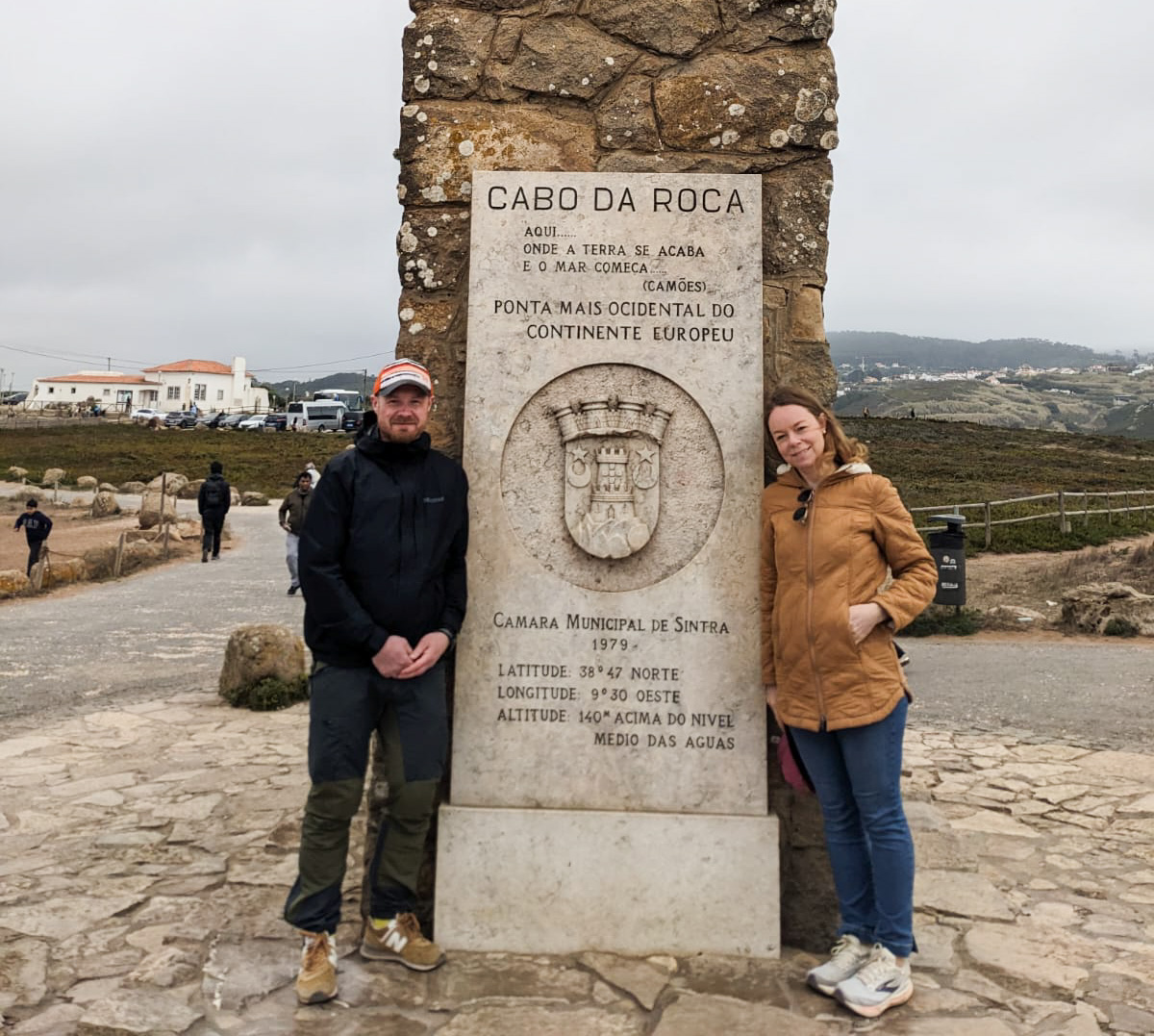
Nevertheless, on we went to Cabo da Roca to check out the western-most point of the European continent. Crowds be damned, we even got our picture at the iconic landmark with at least fifteen people watching us while waiting in line to have their own memory captured.
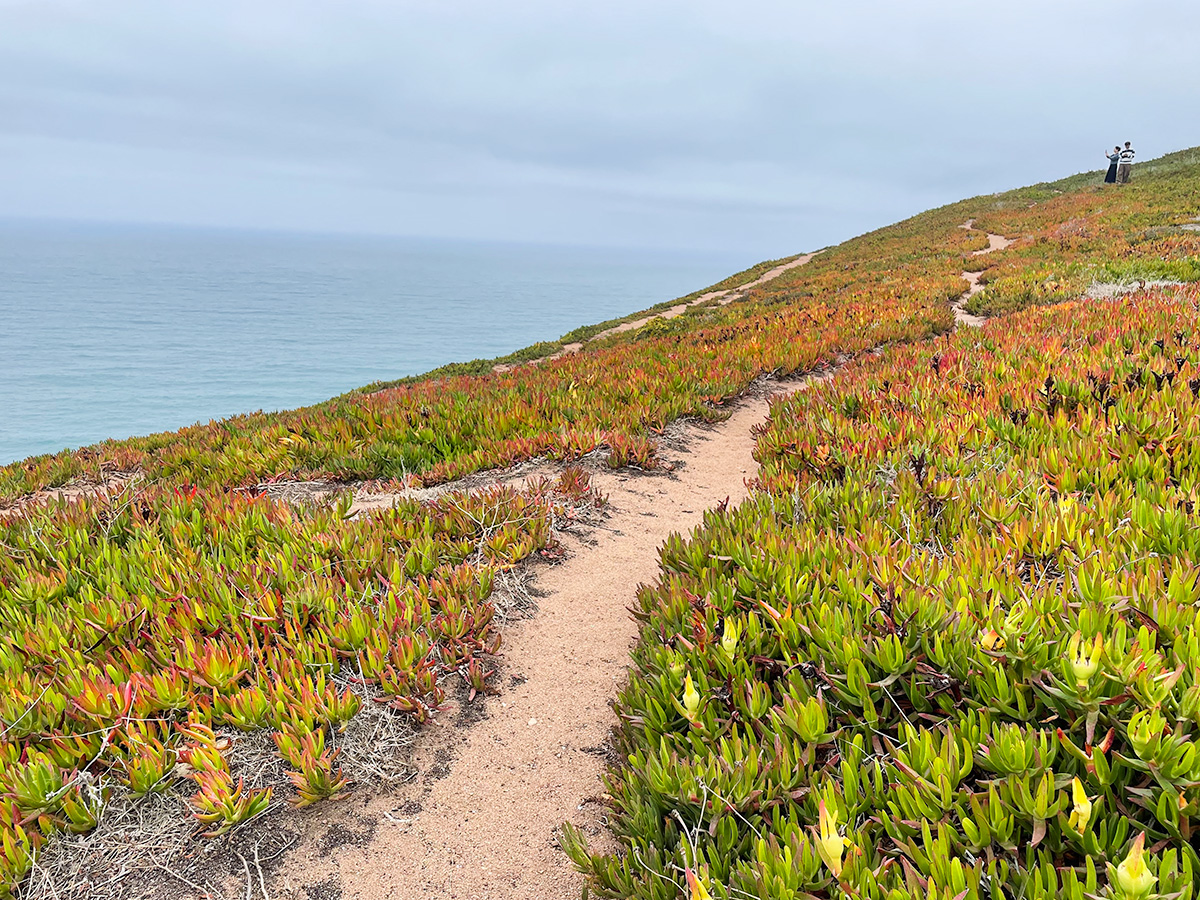
From there, we were off to the very touristy though exceptionally beautiful area around Sintra. The area is popular for good reason, as it boasts many tourist attractions, including the Moorish Castle, the National Palace of Pena, and the Quinta da Regaleira. What we didn’t account for was how completely overrun with tourists it would be. I am sure its proximity to Lisbon doesn’t help.
As we drove to the Quinta da Regaleira in a line of cars, we passed banners along the road that were protesting over-tourism. When we laid eyes on the mystical 19th-century estate, our pleasure was distracted by what looked like ants crawling all over it; there were simply that many people exploring the property. And this was October! We drove by without stopping and onto the Moorish Castle, though we also abandoned that plan long before we even got close enough to see it, and instead opted to make our way home to our wonderful and peaceful guesthouse retreat instead.
At this point, we were feeling exhausted by being tourists, and I personally felt icky just knowing that I was contributing to what was clearly some genuine hostility towards tourists from locals. Neither one of us wanted to be a part of that. We felt so defeated that the next day, we canceled our plan to explore Lisbon in the morning on our way back north. Its sheer size made it overwhelming, and in truth, we were finished.

Our final night was spent back up near Porto, where we had a wonderful long walk along a section of The Camino de Santiago and then enjoyed a peaceful stroll on the beach at sunset, away from the crowds.
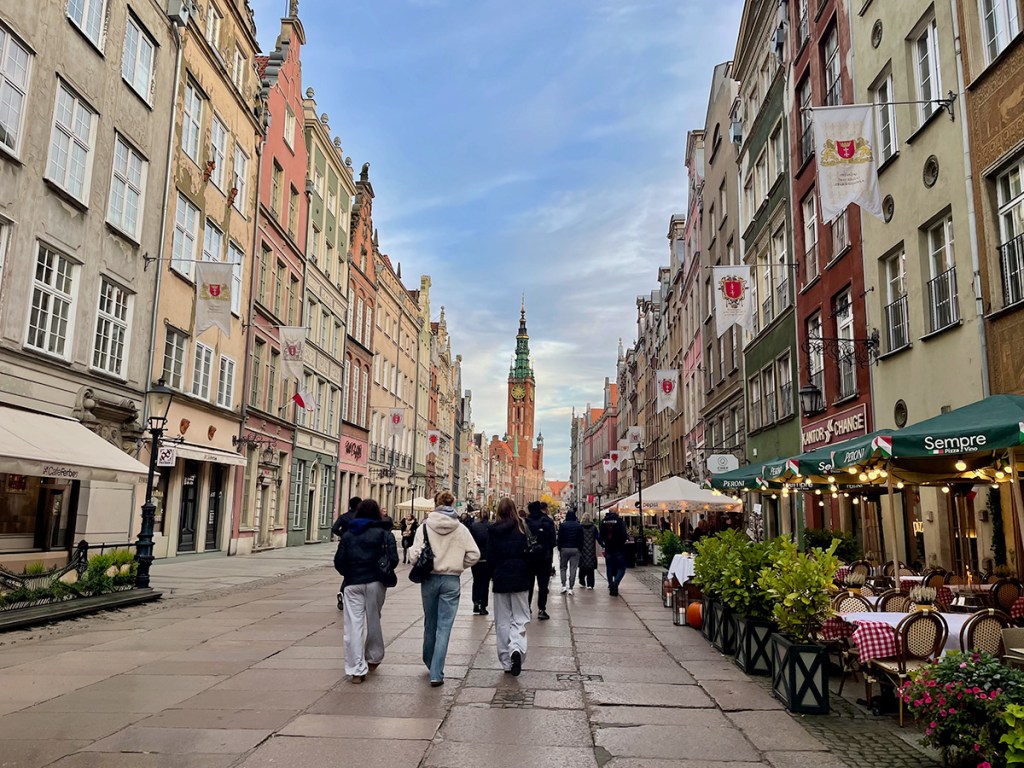
We were off to Poland, where we would spend the final three days of our trip exploring Gdánsk!



 She Simply Wanders
Leave a comment