Spending a few days in Gdánsk was the original inspiration for our trip. Tacking on a second destination was merely taking advantage of a great opportunity. I was excited to get a feel for Poland for the first time.
Poland borders Ukraine and has many cultural similarities, including a language with many shared words, and now a society with many shared people. One million Ukrainians have relocated to Poland since the war began. Perhaps due to this, there are many services available for Ukrainians to handle their official matters without returning to Ukraine, which is what brought us there.
Because Poland also has a larger economy than a lot of the former Soviet Union countries, many other immigrants also speak Russian, which means we did not have the language barrier that we struggled with in Portugal. Case in point, on our Uber ride from the airport, Serhii sat in the front seat and chatted with our Uzbekistan driver in Russian. This made Poland already feel like a more familiar place than Portugal had, and that feeling would only continue from there.
The next day, we took the train out to Cales Spot along the Baltic Sea. The walk out to the pier took us through a popular and bustling area where Serhii randomly got picked with three other men to help a street performer with an amazing ladder maneuver. The street performer was speaking Polish, but I assumed he was speaking Russian or Ukrainian because Serhii seemed to understand him. I was assured later that, no, he was speaking Polish, but there are enough similarities that he could figure out what he was saying. It seemed to me that Polish is much similar to Ukrainian than I was led to believe! And this made more sense because speaking Russian is a last resort for many these days, especially for a Polish street performer. Poland historically has no love for Russia. And, more relevant, the Poles don’t even speak Russian!
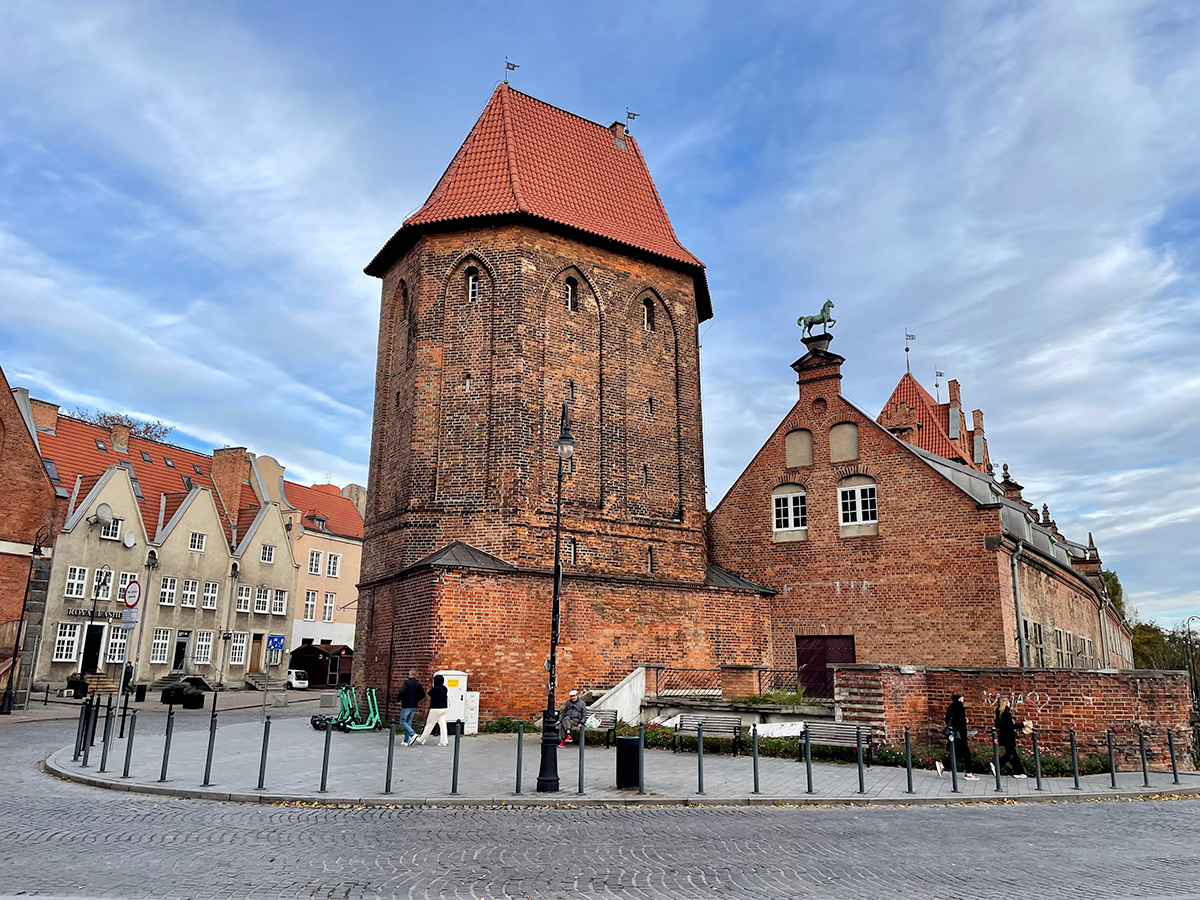
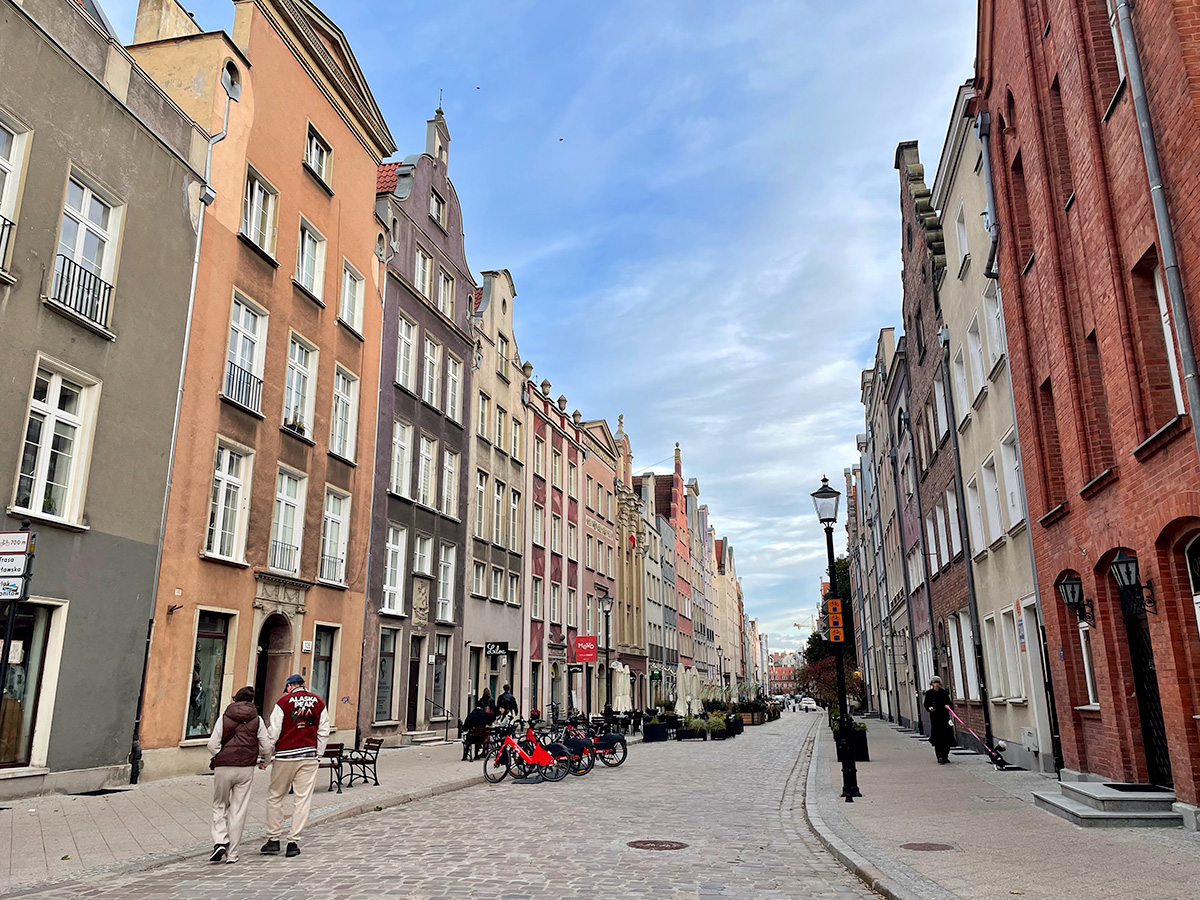
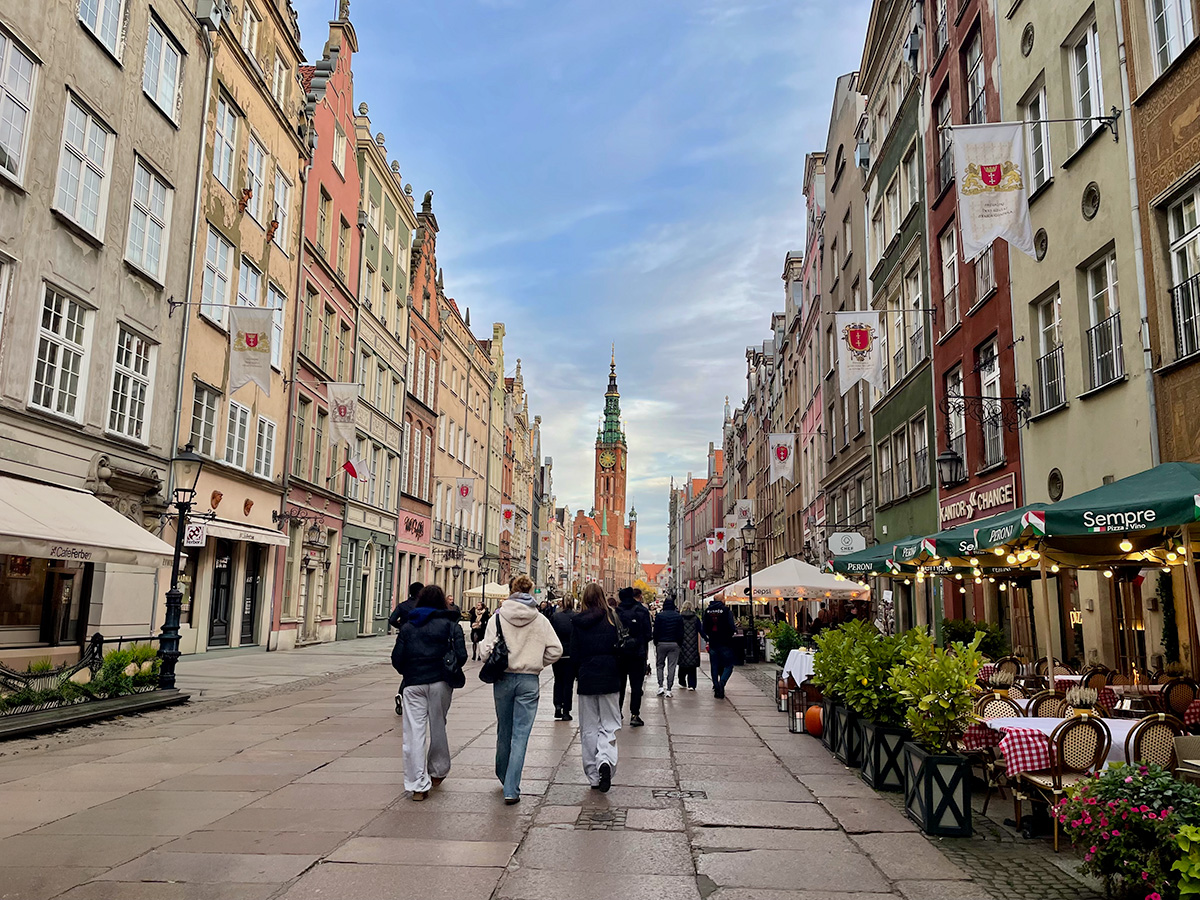
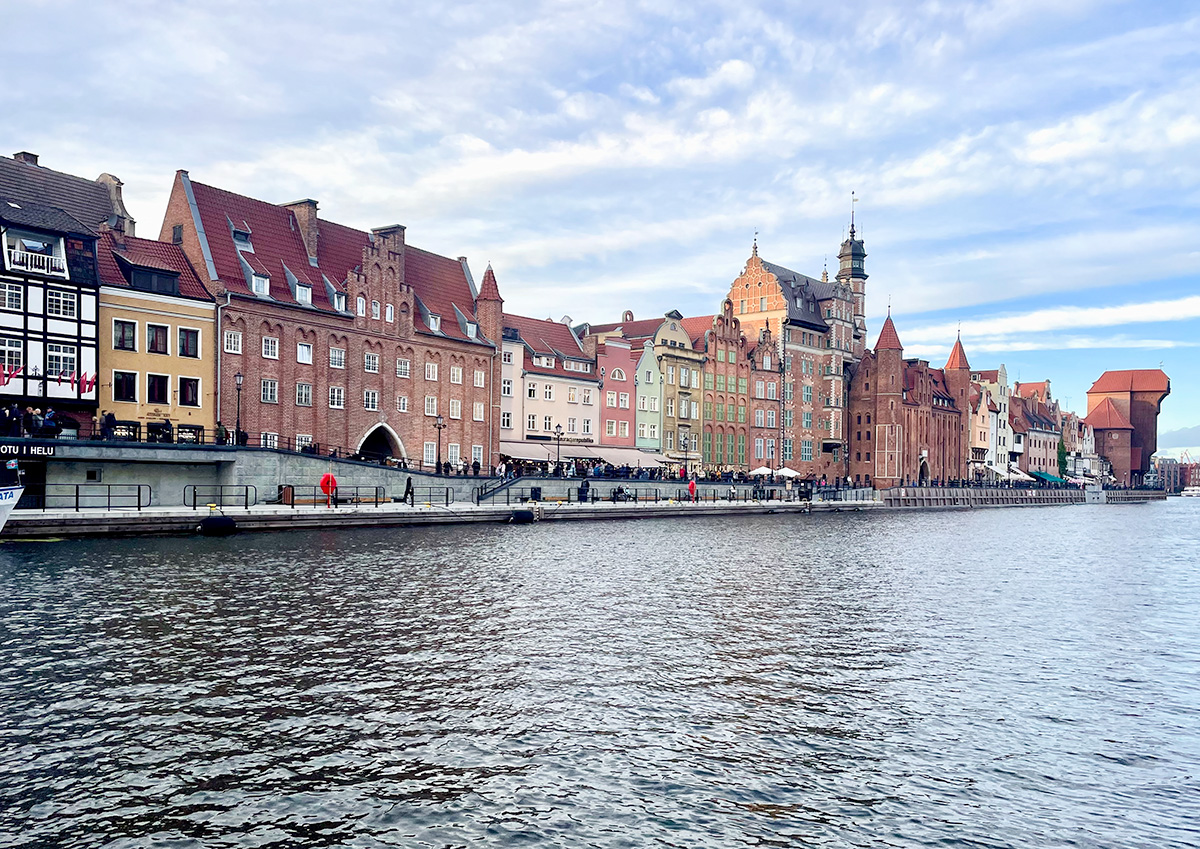
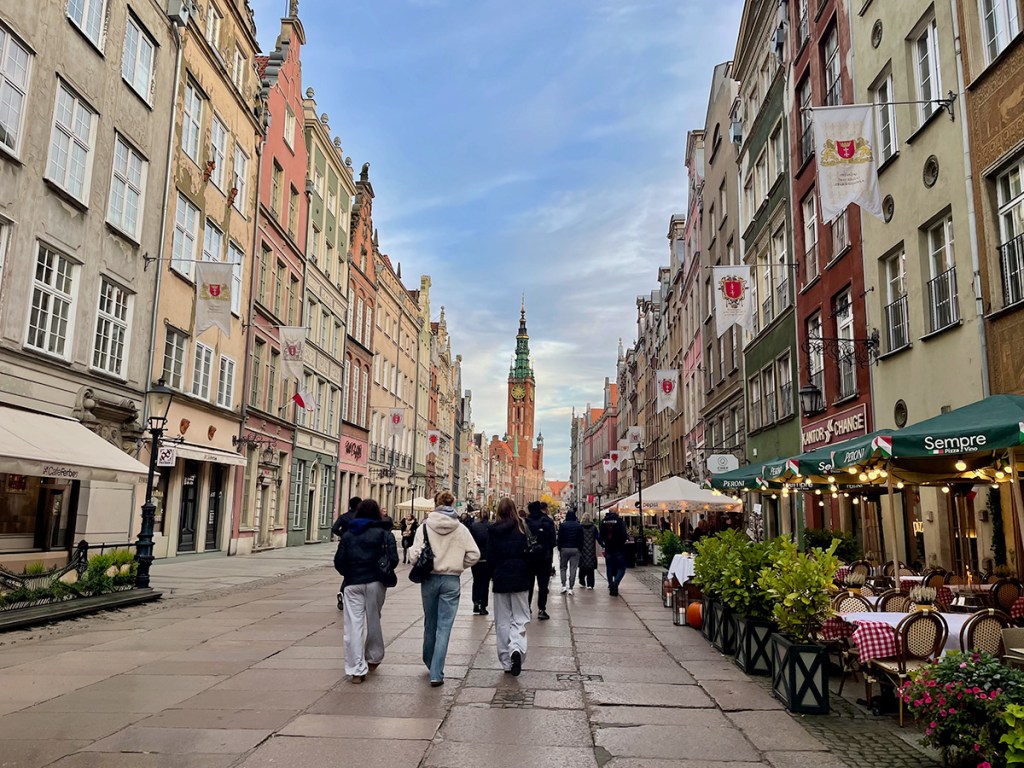
The walk along the pier and beach was beautiful and brisk. We had found fall again. The vibrantly colorful hillsides testified to this as well. The evening took us back to the old city center, where I was wowed by the beauty. Gdánsk was not heavily damaged during WWII, unlike many other Polish cities.
For dinner, we opted to try the traditional Polish pierogi and figured there was no better choice than a restaurant with pierogi in the name! We feasted on tomato and black pepper soup and several different types of pierogis. The flavor was incredible and made us realize, in an instant, that the food in Portugal was truly quite bland. We were quite happy to be enjoying an abundance of flavor dancing in our mouths once again.
The next day, Serhii was off to deal with his business while I took a stroll around the city with a delicious cup of coffee in hand, another thing we had managed to miss out on in Portugal.
It hadn’t taken Serhii and me long before realizing that we felt so much more at home in Poland than in Portugal. The truth of the matter was that we just did not connect with the food, the culture, or the people in Portugal. Poland was so much more of what we are used to, and we felt welcome there. It was quite a contrast to go from one country to the other in a matter of hours and feel that strong distinction.
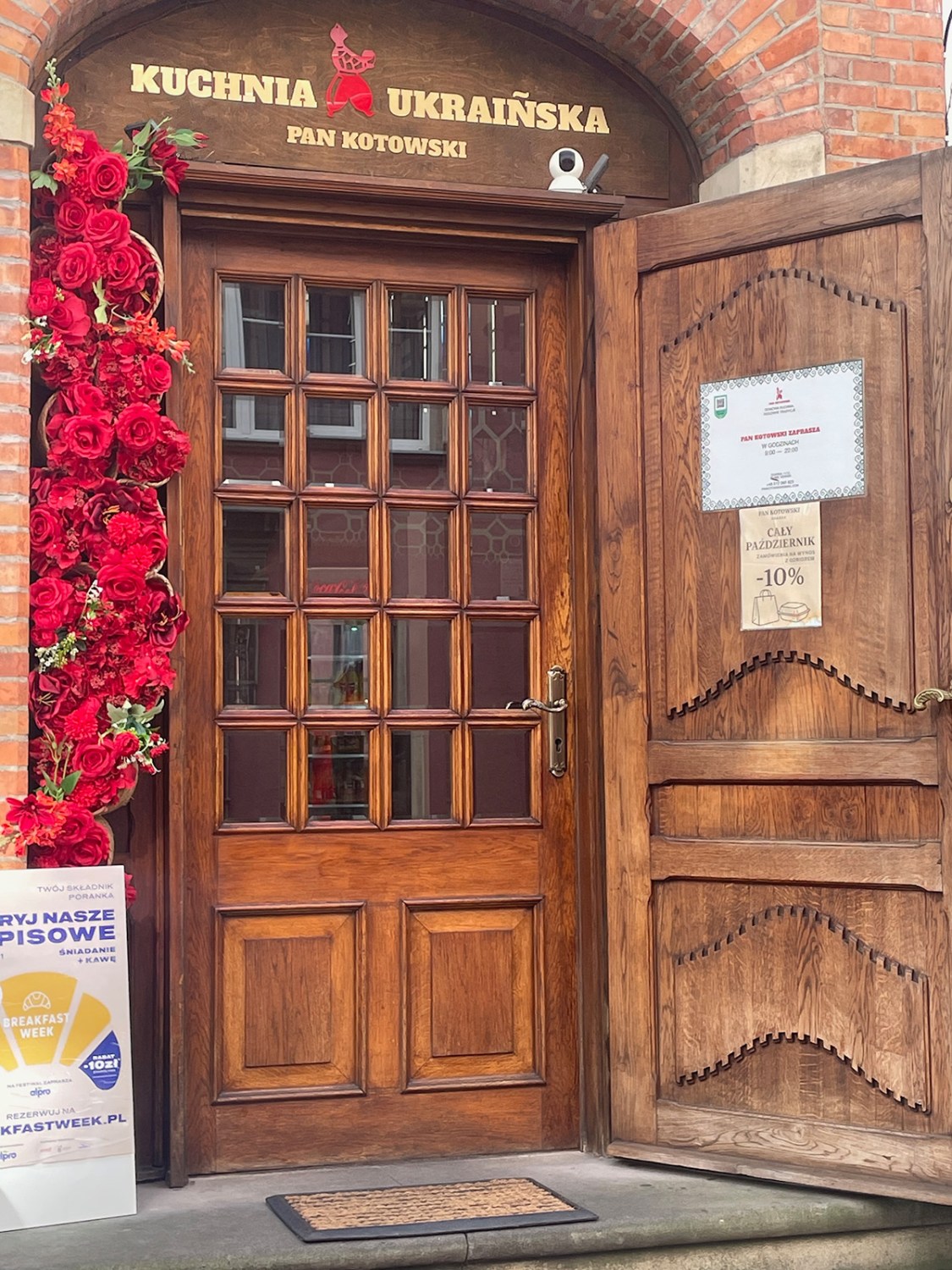
Before I headed back to our apartment, I noticed a Ukrainian restaurant. I had only ever had Borsch and was excited for the prospect of trying more Ukrainian food. And that is just where we ended up for dinner.
Serhii happily studied the menu in Ukrainian while I read the English version. He shared with me all the wonderful and diverse foods that were so familiar to him. There was a glow in his eyes and a smile on his face that made my heart quite warm. I was witnessing a connection to his roots that I had never seen before.
We feasted on Ukrainian Golubtsi, which are cabbage leaves stuffed with meat, rice, and tomato paste and served with plain yogurt for dipping. We also ordered their version of Borsch and Syrniki for dessert. Syrniki are small pan-fried pancakes made with farmer’s cheese or Tvorog, which is similar to cottage cheese but with a distinctly unique flavor. They were served with a dense, unsweetened whipped cream. I found these incredibly delicious! For drinks, we enjoyed Kompot, which is a bright red homemade drink made from boiled fruits, and Kvass, a slightly sour, sweet, and fizzy fermented drink.
And if the evening was not shaping up perfectly enough already, as we were finishing our meal, I glanced over at my phone and saw I had a text message from my parents’ office employee. A letter had arrived from USCIS (United States Citizenship and Immigration Services). Eight months after we had applied for the K-1 visa, we were getting our first news. I asked her to open the envelope to find out that our application had been approved. I cannot think of a better time for us to receive this news. It was like our worlds we syncing in the most beautiful way.
To be clear, we still have several steps and several months to go. Our petition then transfers to the National Visa Center, which then transfers it to an embassy in Scandinavia, which then schedules a medical exam and an interview. This all takes time and patience, but this was a huge development. And the longest wait was surely over…


 She Simply Wanders
Leave a comment