Oh, how I loved Reine. My introduction was actually two days prior. It was just past Reine, in the town of Moskenes, that I was turned away by the full campground sign.
Trying my luck, I returned to the same campground. Once again, the sign at the entrance read full. There were two reasons that I was set on Moskenes Camping. The first was that aside from Lofoten Beach Camp, it was the only other campground in the area. The second, I had scheduled the 4-hour Moskenes to Bodø ferry for the following morning.
Fortunately, their full sign had not been updated and I secured a spot perched above the ocean with an exceptional view. Then onto the main part of the day, exploring Reine on foot.
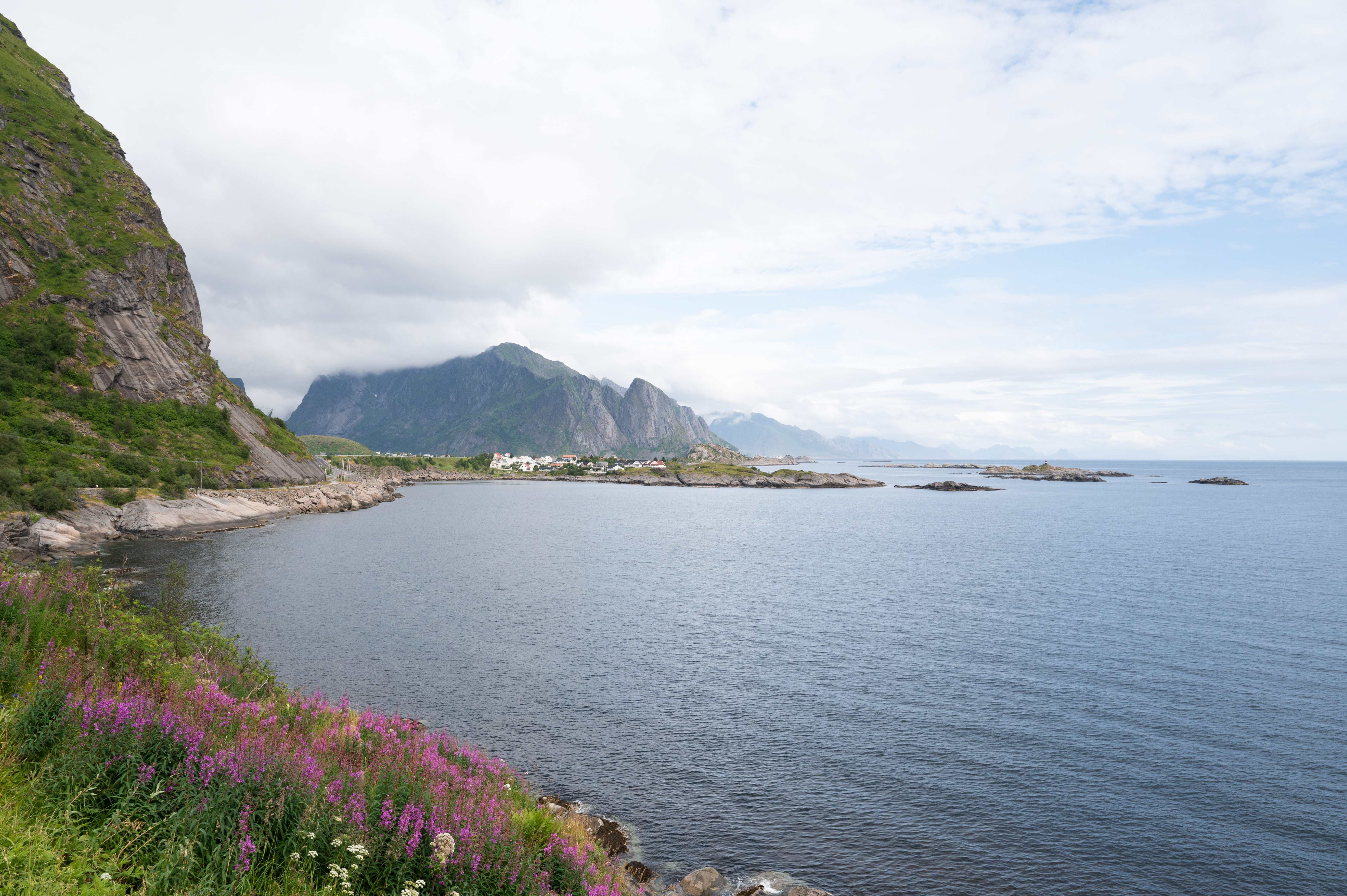
I had grown tired of navigating my camper around this area of the Lofoten Islands, with its narrow roads and numerous vehicles, so I was very excited to park my van for the day at 11:30am. Fortunately, a 5 km (3+ mile) walking path connected Moskenes to Reine. I set out in search of some lunch.
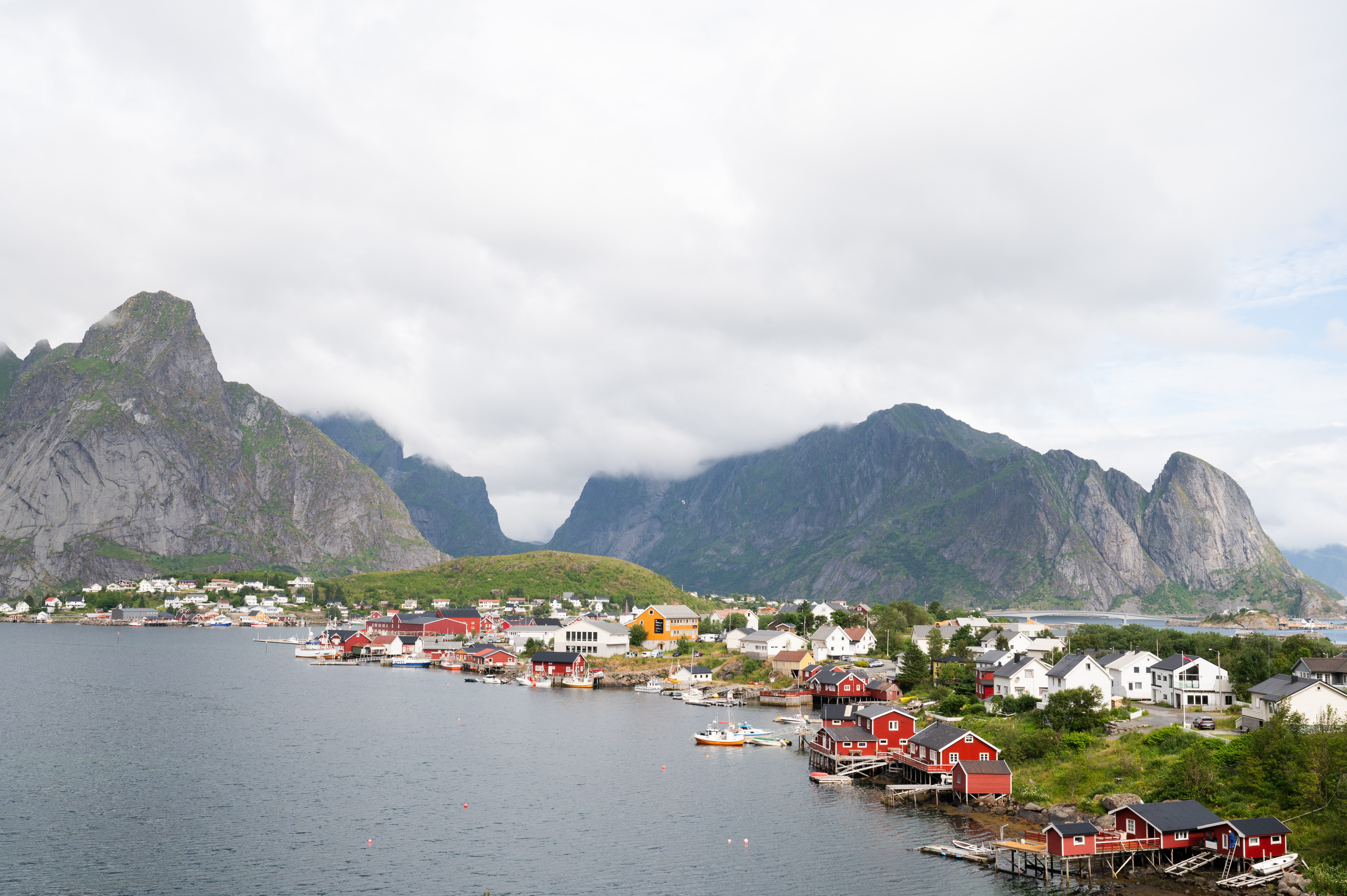
Another advantage of exploring the area on foot was that I was free to pause wherever I liked to take pictures or just simply stare at the remarkable landscape. Any sense of urgency had been eliminated.
For lunch, I opted for the Tapperiet Bistro where I enjoyed a Stockfishburger with a view of Reinebringen, a popular mountain hike that I would not be attempting. Not on this trip anyway.
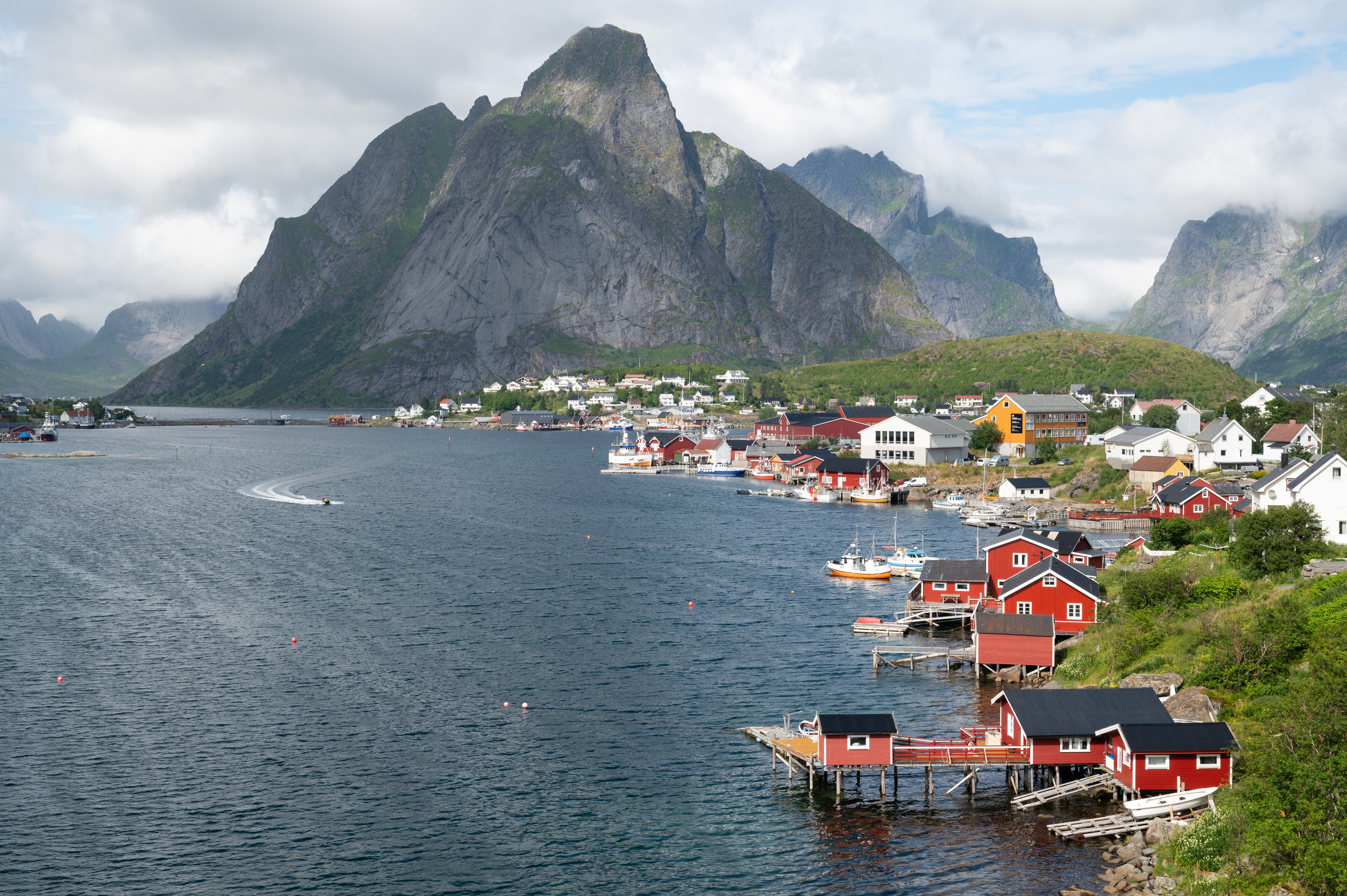
Feeling full, energized, and not nearly ready to return to the camper, I continued past Reine, walking towards the town of Hamnøy.
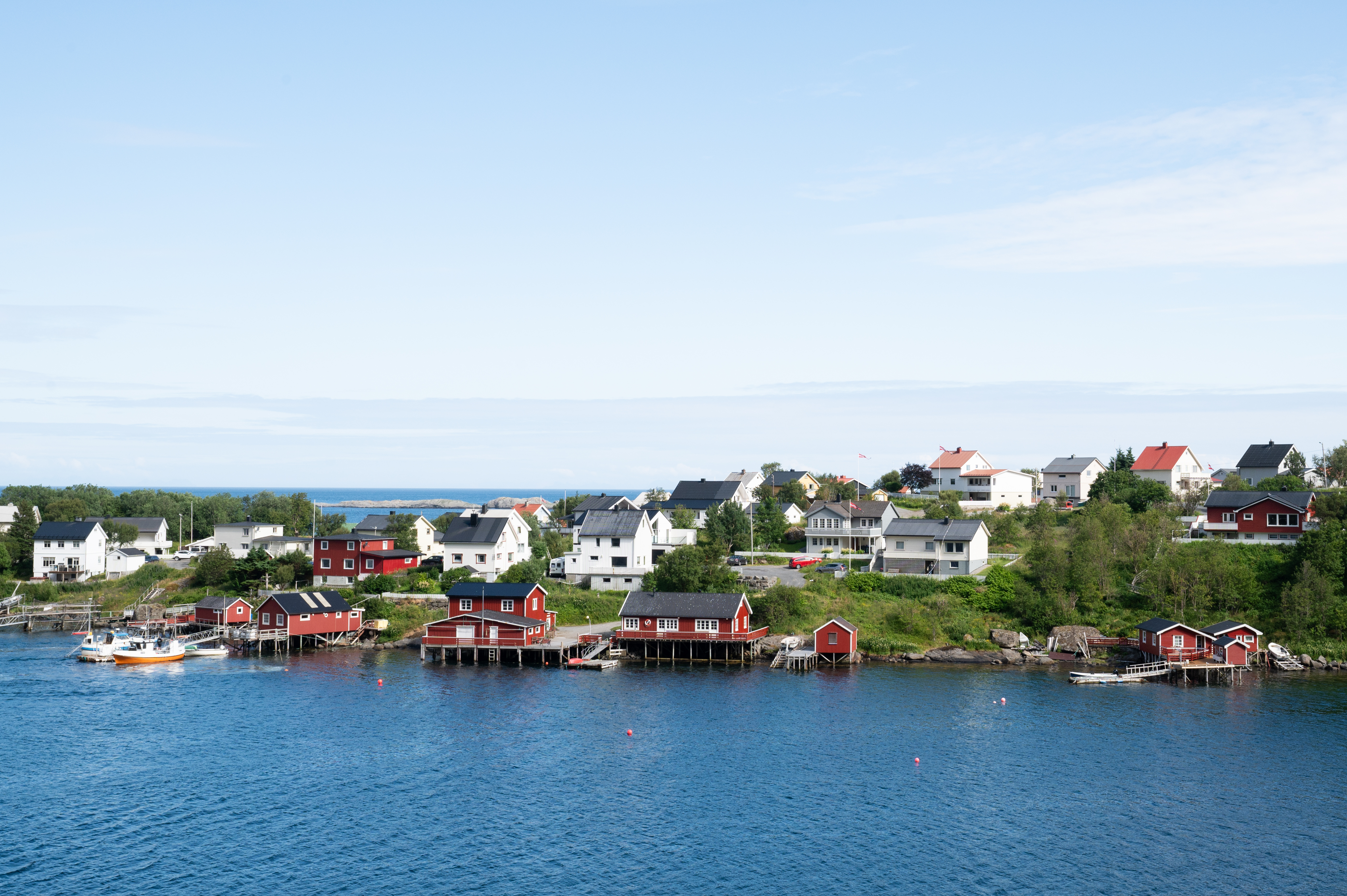
For my turnaround point, I chose the highest spot in the area: Reine Frisbeegolf. From there I had a view of the entire area, including Hamnøy, where I had hoped to photograph the fishing cabins which have become an iconic image of Norway. But, my 105mm was not nearly up to the task. Here is what I am referencing.
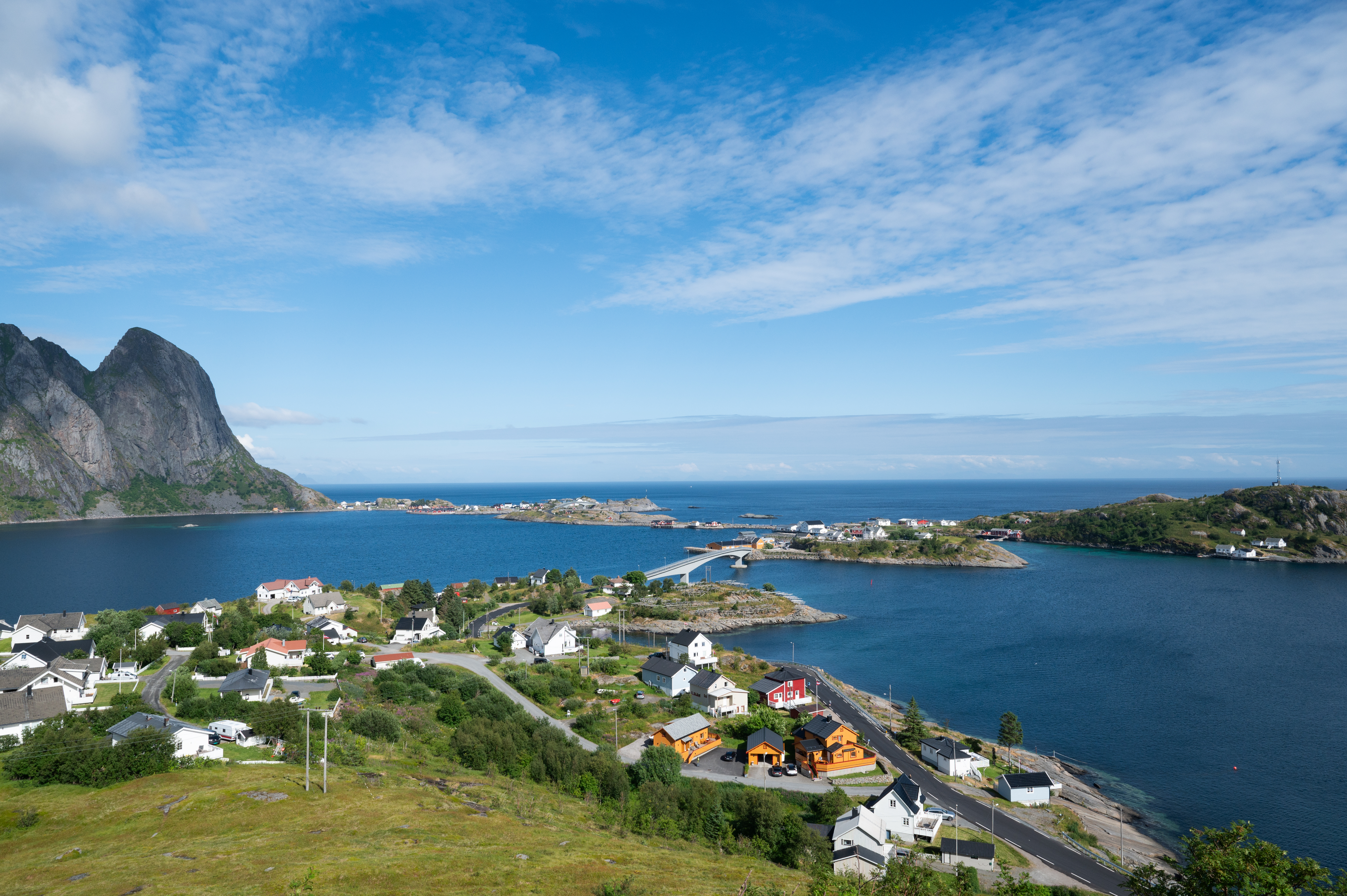
As I made my way back to the campground, I found myself turning around constantly to take in the views another time. When at last the town began to disappear behind Reinebringen, I found it impossible to continue on. Why would I leave this place? It was then, that I knew, I would be back. It was just a matter of time.
Lessons from: Reine, Norway
- The Moskenes to Bodø Ferry is a fantastic option to return to mainland Norway without retracing the entire length of the Islands. It is also a common route into Lofoten for tourists who fly to the area. One can fly into Bodø, rent a car, and take the ferry to Moskenes.
- In the summertime, it is prudent to reserve a spot on the ferry to ensure that you will not be turned away. Here is the website to do so.
- Walking from Moskenes to Reine is a wonderful option for those who have the energy for the 10+km (6+ mile) excursion. The pedestrian path runs along the ocean side of E10.
- Reinebringen is a 3 km, (2-mile) round trip hike that gains 510 meters (1,677 feet!). It is so steep that most of the hike is now an actual staircase to aid with erosion. It is also incredibly crowded as it offers sweeping views of the popular area. This hike might be best enjoyed in the offseason.
Something interesting: driving in Norway
Narrow roads were nothing new when I entered the Lofoten Islands. I had traversed many of what I referred to as one-and-a-half-lane roads in Northern Norway. How does this work? With a combination of slowing down to ease by and pullouts built into the narrowest sections.
Another interesting feature of driving in Norway is that there are no stop signs, only yield. At first, this seemed like a wild concept, until I realized that yields actually made MORE sense than stop signs. After all, if a car is approaching while yielding, you, of course, do stop, but if there is no car approaching, stopping is a nuisance. It was wonderful to roll through intersections much of the time.
The speed limit signage fascinated me, and it took me quite a long time to catch on. 80 km/hr was the speed limit on almost all of the non-freeway roads in Norway, but I never saw a sign that posted 80 km/hr. There was signage for every other speed limit. There was also signage with every other speed limit greyed out with a slash through it, indicating that that speed had ended. When a designated speed zone ended, and no other speed was posted, it was understood that the speed limit was 80km/hr. If I had not been using Google Maps, which noted the speed limit on the app, I may have never figured this out!
A look behind the curtain.
While in Reine, I acknowledged how much I appreciated the slow pace of travel in Norway. The combination of the slow speed limits (a top speed of 50mph, 80 km/h, on most roads), the many narrow roads and bridges (requiring one vehicle to pull over and let the other pass), and the pace of ferry travel equated to a complete loss of control over how long it would take to get anywhere.
In addition, a wonderful dynamic of cooperation was built into the system. Each time two vehicles approached the narrow sections, a dance began over who was going to proceed and who was going to wait. Generally, the car that reached the narrow section first had the right of way. Naturally, all the cars behind this vehicle would just tag along. I noticed that no one was ever impatient or took a turn that was not theirs. And the passing of vehicles always came with a wave and a smile, a thank you for waiting.
I really loved ferry travel. I did not follow the ferry schedules because I did not see the point. I certainly was not going to organize my day around them. I would arrive at the launch point having no idea how long I would have to wait. Sometimes there was no wait, and sometimes I had to wait over an hour. It did not matter to me. I would grab my book or close my eyes, or just relax. Sometimes the ferry rides were 20 minutes, sometimes 50, or 4 hours! It took the time that it took.
Granted I was on vacation. But there must have been other people who were traveling with a time restriction. Yet they too exhibited patience and calm. It was the accepted pace of Norway.




 She Simply Wanders
Leave a reply to Kate’s Cancel reply