I was resistant when Sergii confessed that the key to traveling cheaply with budget airlines in Europe is to travel with only a backpack that fits under the seatback in front of you. Even utilizing the overhead compartment substantially increases the price. I couldn’t quite even wrap my head around what it would mean to travel for two weeks in Portugal, in the fall, no less, with only what would fit in a minuscule bag. No second pair of shoes, no laptop, no camera, only one sweater, and very few other clothing options. I have been traveling all around the world for the past two years with everything I might need. This was hard to comprehend. But once I did, I realized that it would mean traveling delightfully simply. Every garment would have to be considered through a strict filter. The bulkiest items must be worn on the airplane, no matter what the temperature. This was all about being practical, and the image of hopping on and off flights with my hands free, not waiting at a luggage carousel, checking in and out of guesthouses without lugging a bulky bag, became very appealing.
Sergii, a master of simple travel, packed so efficiently that his clothes took up less space than the five bananas he included. Never wanting to waste any food, they went with us as well.
The first flight took us from Bergen to Copenhagen, and the second landed us in Porto, Portugal, a destination I had never heard of one month prior. Instead of the campervan, we opted to rent a car and stay in guesthouses. After traveling this way in Albania last August, I felt that it would be the best way to experience the culture and food, and make our lives a bit simpler as well. In reality, it made our lives simpler in some ways and more complicated in others. The beauty of van camping is that you always have a bathroom, a bed, and a fridge stocked with food. Our days in Portugal were disproportionately consumed with searching for food, a bathroom, and a bed.
Our plan was to explore Porto and then head north, before looping back south to Lisbon and beyond. We would pick up the car on day two after a foot tour of the second-largest city in Portugal.
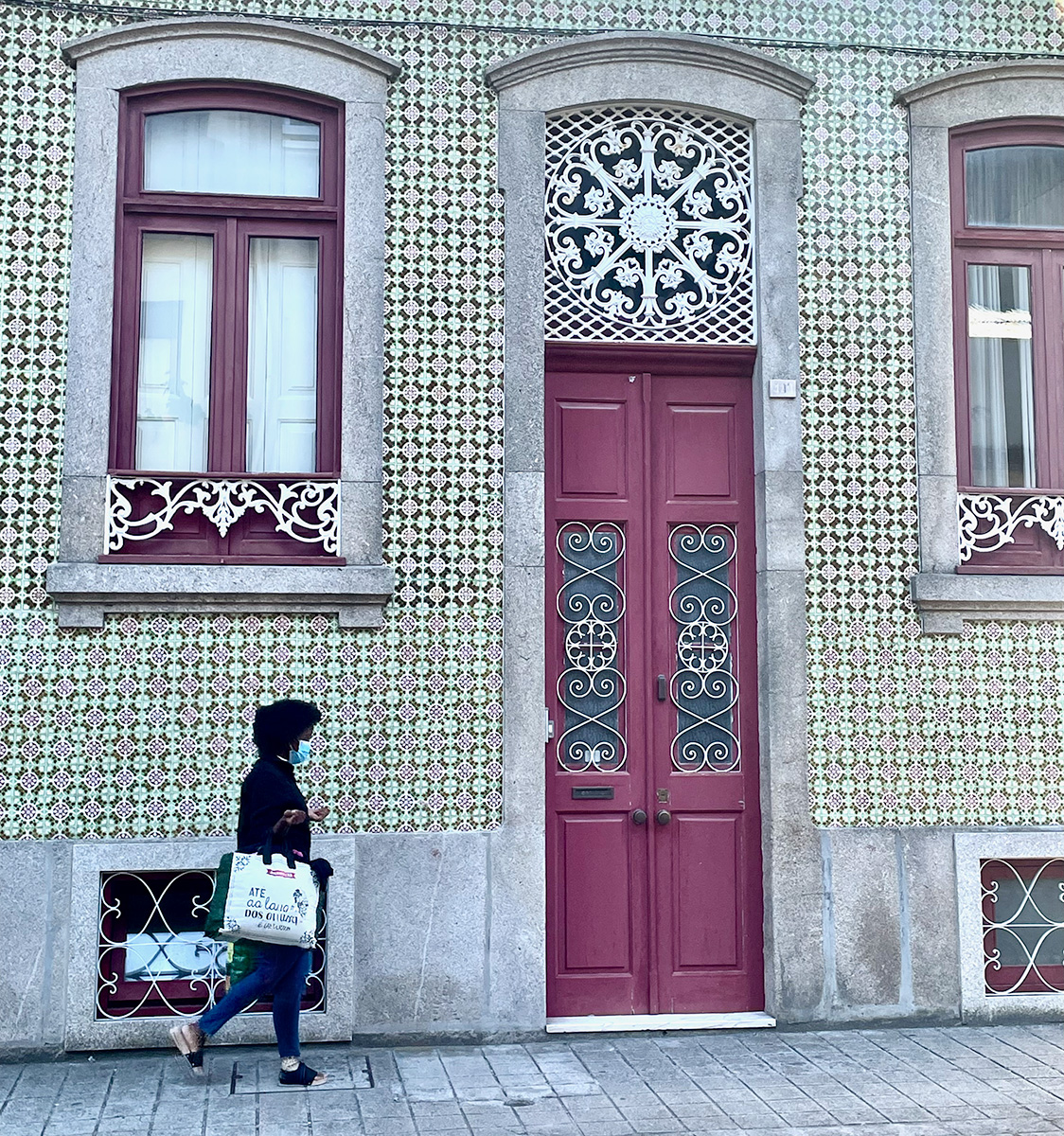
We landed and were promptly horribly confused with the train system. We had guessed our way through the purchase of two tickets from an automatic machine that refused to offer us an English translation. Unfortunately for us, Portuguese is really not that similar to the Spanish I studied in school. We brought our receipt up to the train platform but were promptly confused about which train to board. Sergii’s go-to is to ask a local whenever he’s confused, so he approached a young couple to do just that. They pointed to the correct platform, recognizing our intended destination from Sergii’s Google Maps. They then asked if we bought tickets, and we showed them the receipt. They shook their head, communicating no.
Over the next five minutes, the young girl took us back to the automatic machines and walked us through how to purchase our tickets correctly, relying on Google Translate to give us the bad news that our first purchase was useless and we had to buy two more tickets, then wait for a cardboard card to come out after the receipt, and then take our cards to a machine to be validated. Surely showing a ticket inspector our receipt would be sufficient. No, we were told, we would get a fine. We thanked her profusely, recognizing that she did not have to take so much care in ensuring our fine-free travel.
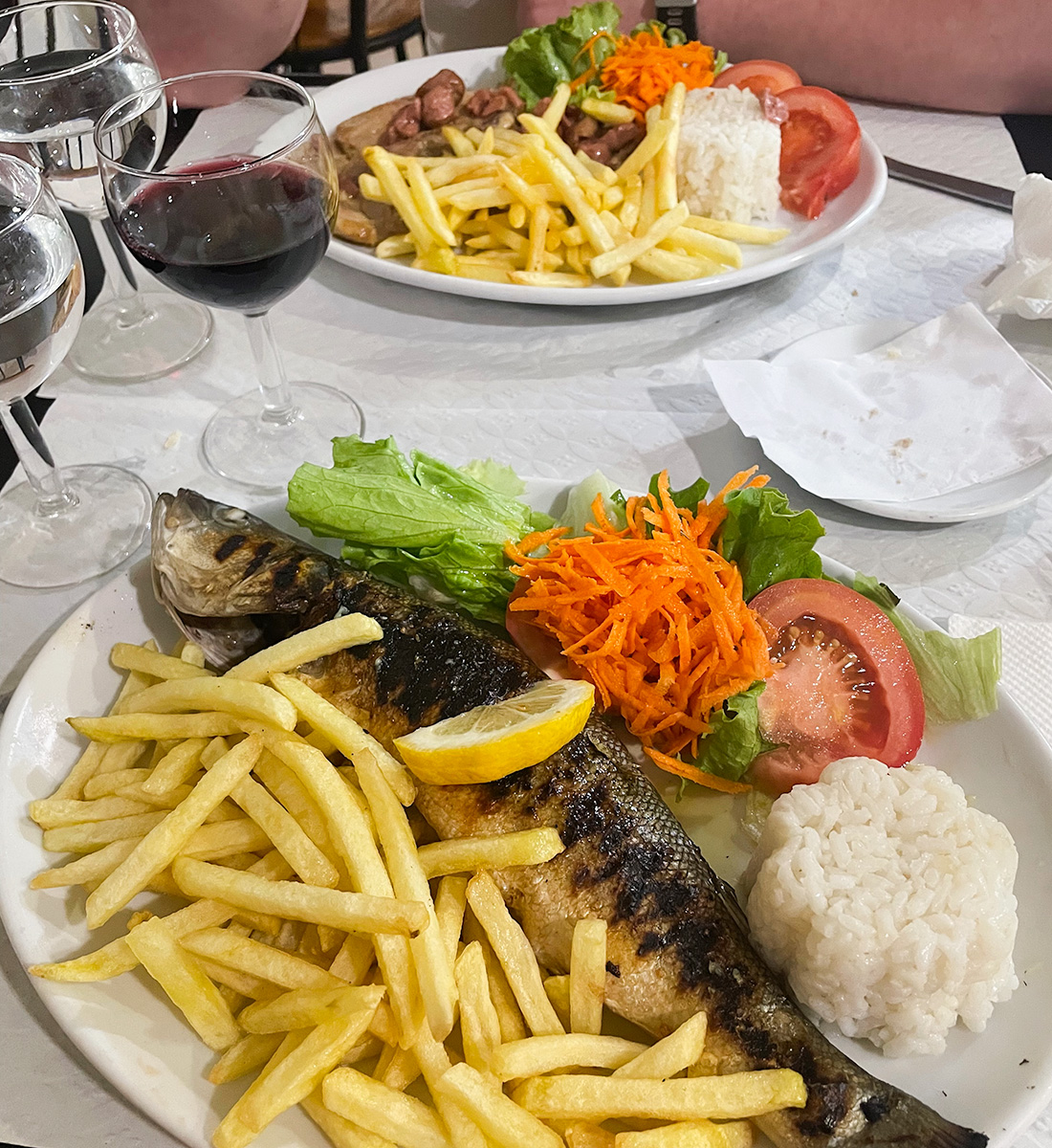
Just short of our guesthouse, we stopped at a little restaurant to try our first Portuguese meal. The owner assured us that if we did not love our meal, he would pay for it. He brought bread and olives to the table, which we devoured as my perch and Serhii’s porch chop were being prepared.
Let me just take this opportunity to tell you about our experience with Portuguese cuisine. It is good. The ingredients are fresh and simple, and everything is cooked with great care. Fish is a staple as well as a variety of meats. Often these proteins are served with a small, simple salad and French fries or boiled potatoes plus rice. At times, it felt like French fries were served with everything. Our omelets one morning were served over French fries.
There is not a lot of variety, and as far as I can tell, breakfast is not a big part of the culture, though they do pride themselves on the pastel de nata, a delicious personal-sized pastry that has a crispy and flaky phyllo dough crust with a flan, custard-like interior, complete with the burning of the top with a handheld torch. Spices are not commonly used aside from salt and pepper. Some meals bordered on bland, but the care taken in cooking and the freshness of the ingredients helped them still be enjoyable.
Restaurants take a lot of pride in what they serve. Eating out is an event, not to be rushed. It is customary to finish the meal with dessert and coffee. Bread is always brought to the table. Often, olives are also included. At times, butter comes as well. When we were South of Lisbon, cheese was added to the mix. But nothing is free; whatever they choose to set on the table when you arrive is added to your bill at the end. Apparently, this bothers a lot of tourists. It did not bother us because whatever they sat down we wanted, and bread was often only 1 euro. The most that was added to our bill was 10 euros, which did feel steep, but for that we got bread, olives, butter, and an entire round of guey, aged sheep brie. Of course, you can always refuse anything that is set down and therefore not pay, but where is the fun in that? It helps that eating out in Portugal is much cheaper than what we are used to in either Norway or the US. For example, wine is unimaginably cheap, often 1.50 euros (less than $2) a glass.
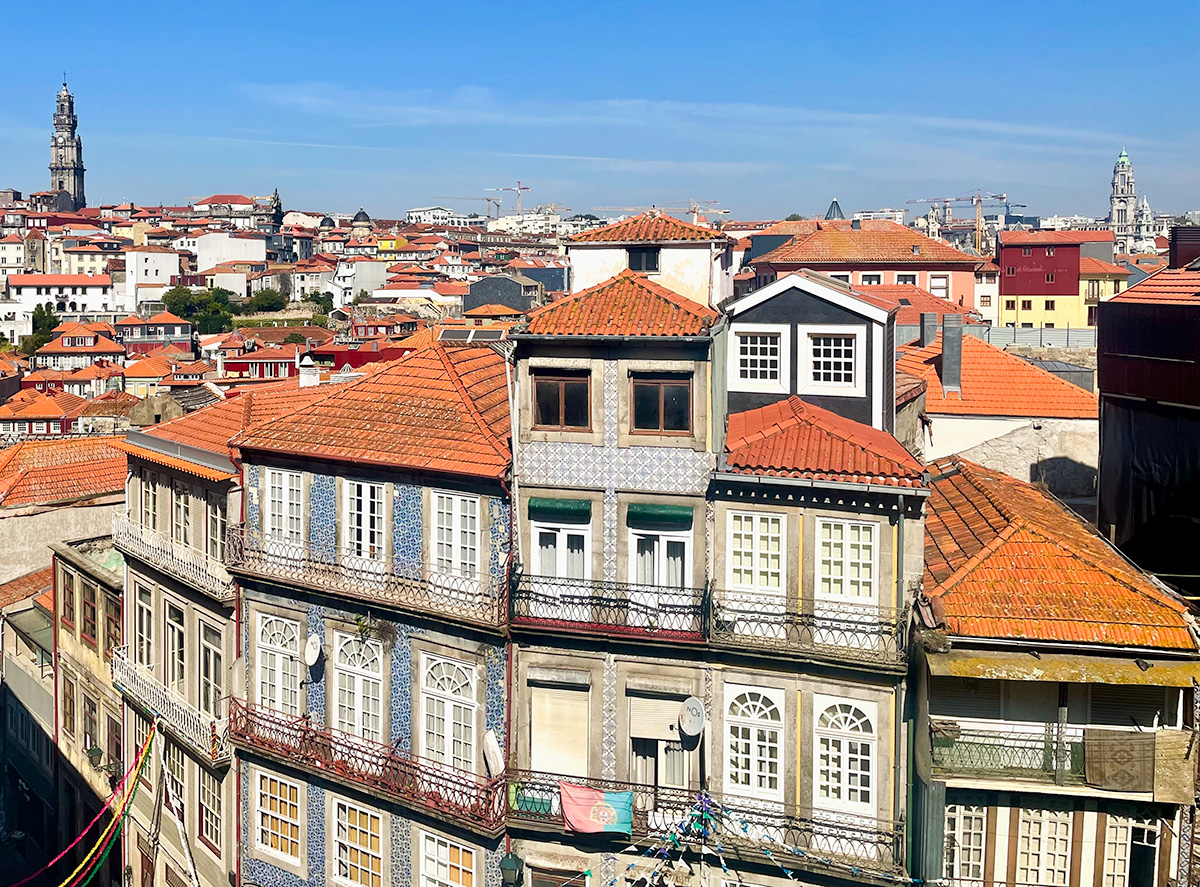
After a delicious guesthouse breakfast of fresh pastel de natas, yogurt, cold cuts, cheese, and bread, we set out to explore Porto, whose history dates back to the 8th century BC when it was inhabited by Celtic tribes. Later, in 136 BC, the Romans established a formal settlement called Portus Cale. The name Portugal is derived from this Roman name.
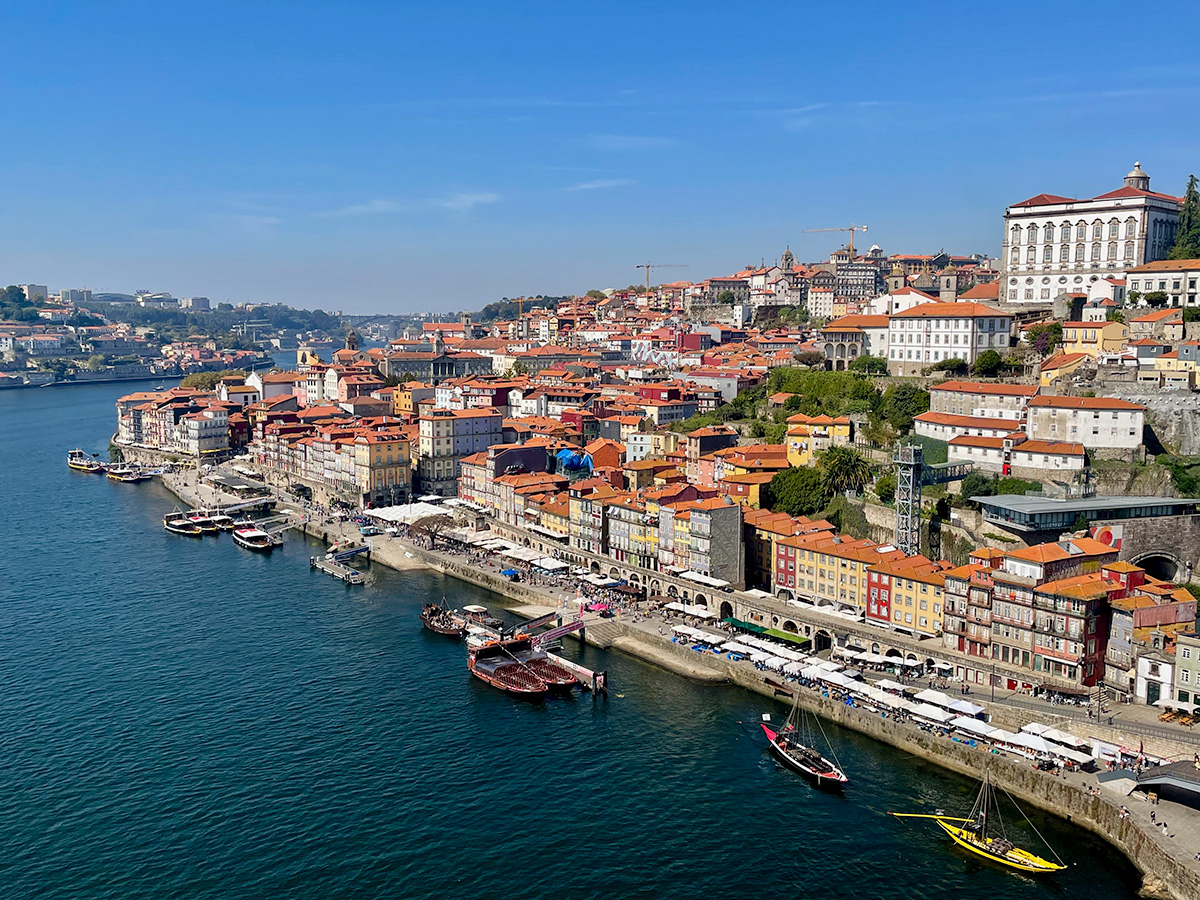
By afternoon, it was time to pick up the car and head north to explore the town of Viana do Castelo and the Peneda-Gerês National Park on the Spanish border.
Why did we pick Portugal?
Sergii had time off for høst ferie (fall holiday), and first proposed traveling to Italy on the train ride back from the airport, not 30 minutes after I landed in Bergen for my fall stay. My response was sure!, feeling that when in Europe, it is only responsible to take advantage of traveling in Europe. But by the time we actually got around to planning the trip, the flights to Italy had jumped in price. Porto was cheap, actually the cheapest destination in Europe at the time. It was really that simple. And since both of us had been to Italy but neither of us had been to Portugal, it felt meant-to-be.



Leave a Reply